
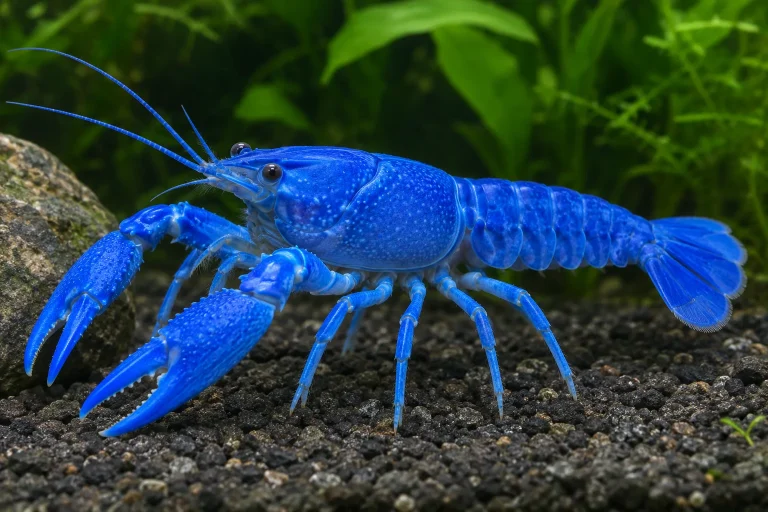
Blue Crayfish
Procambarus alleni
- Care level
- Advanced
- Adult size
- 10–15 cm
- Minimum tank
- 75 litres
- Temperature
- 20–26 °C
Species profile
Procambarus clarkii
Common names: Red Swamp Crayfish, Louisiana Crayfish, Louisiana Crawfish, Red Swamp Crawfish
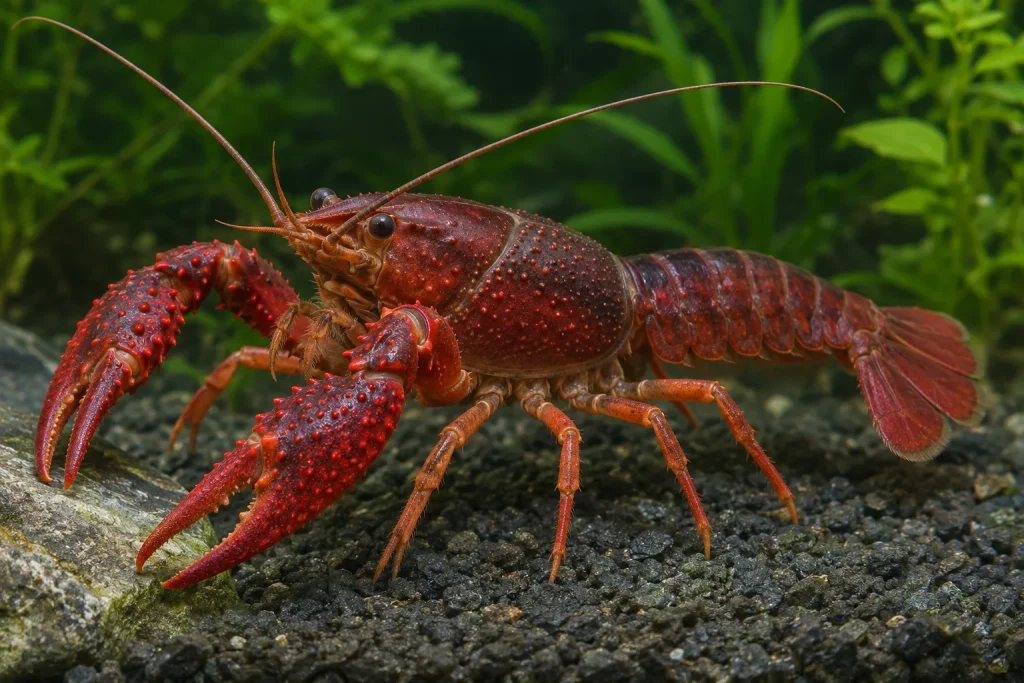
Up to 12 cm
Typical adult length 8–12 cm.


A large, adaptable and highly invasive crayfish that is powerful, destructive, and best kept only where legal in a secure species aquarium.
Dark red to brick-red adult coloration with raised tubercles on the claws and body; juveniles and some forms may be brown, olive, or differently coloured.
Procambarus clarkii is the Red Swamp or Louisiana Crayfish. It is widely introduced and regulated in many regions, so identification and local legal checks are essential.
Sexes are identified using reproductive structures and abdominal features rather than colour.
Use a heavy escape-proof lid, protected equipment, deep shelters, and décor that cannot collapse. Never release this species or aquarium water containing juveniles outdoors.
Aggressive, adaptable crayfish that digs burrows, climbs, leaves water when able, rearranges décor, and captures tankmates.
Safest kept singly. Adults may seriously injure or cannibalize one another.
Highly territorial, particularly around shelters and during moulting.
Use a species-only aquarium. Fish, shrimp, snails, plants, and other crayfish are at high risk.
Provide hard, well-buffered water, powerful filtration, shelters, and a tightly fitted cover. This robust crayfish is destructive and highly opportunistic.
Opportunistic omnivore with strong predatory and scavenging behavior. Feed a balanced complete diet with plant material and moderate animal protein.
Remove leftovers, monitor waste production, and provide minerals and secure shelter for moulting.
Females carry large numbers of eggs and hatchlings beneath the abdomen. Reproduction can be rapid under suitable conditions.
You can write a note about what worked for you, or send a photograph. We check everything before it appears here.
Procambarus alleni
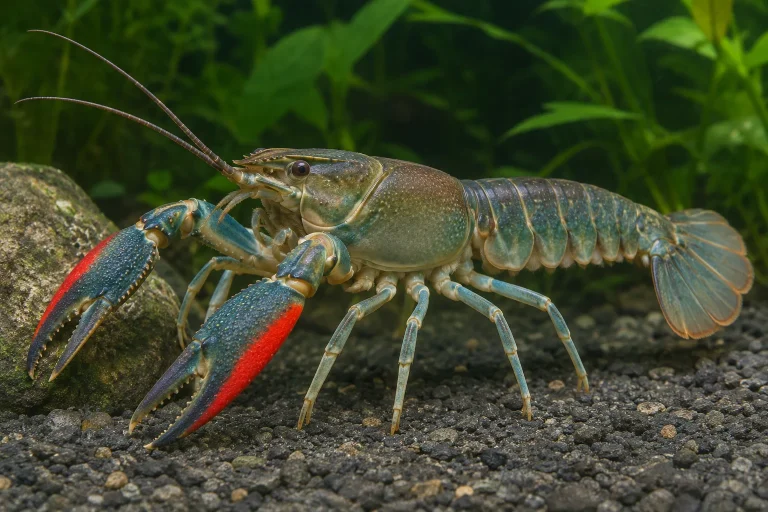
Cherax quadricarinatus