

Barito Loach
Kapuasia falaris
- Care level
- Specialist
- Adult size
- 3.8–5.5 cm
- Minimum tank
- 60 litres
- Temperature
- 22–27 °C
Species profile
Pseudogastromyzon changtingensis
Common names: Banded Hillstream Loach
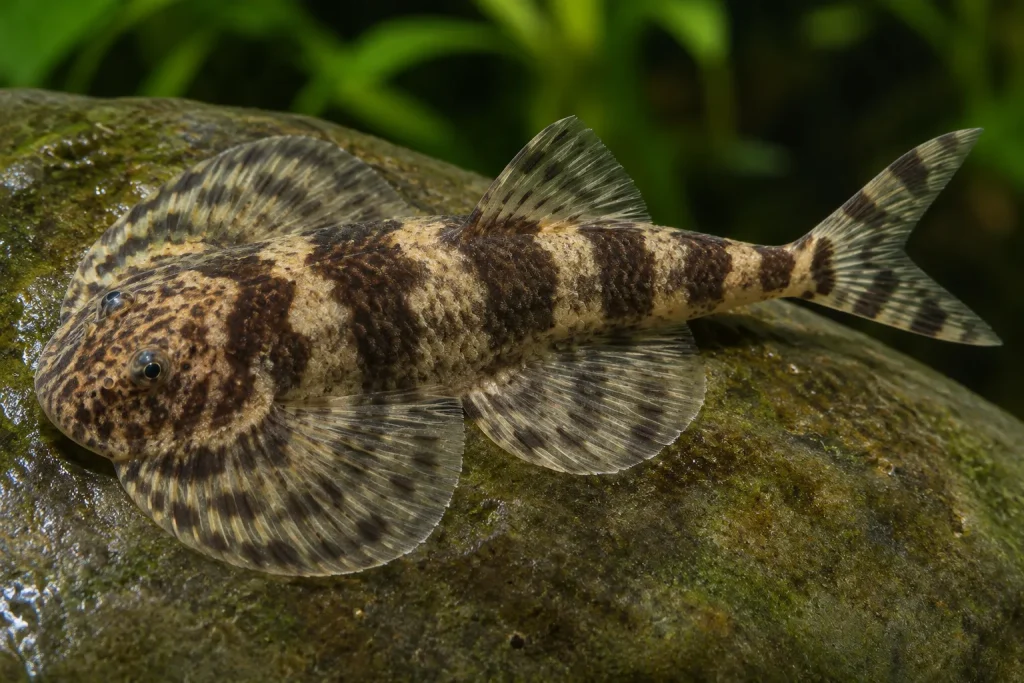
Up to 8 cm
Typical adult length 5.6–8 cm.


Banded Hillstream Loach is a bottom-dwelling loach requiring a 75 cm or longer aquarium, suitable substrate, stable water, and species-appropriate social housing.
A flattened cream-to-brown hillstream loach patterned with dark saddle-like bands and broad paired fins that form a gripping disc.
Also listed as Labigastromyzon changtingensis, and sometimes misspelt as Pseudogatromyzon changtingenis.
Mature males may have a squarer head, stronger pectoral-fin rays, or breeding tubercles, while females are usually fuller through the abdomen. These differences are subtle and species identification should come first.
Use a mature aquarium at least 75 cm long with high dissolved oxygen, strong but varied current, and smooth stones exposed to bright enough light for biofilm growth. Provide quieter pockets behind rock and wood, keep nitrate and organic waste low, and use a tight cover.
Banded Hillstream Loach spends most of its time attached to stone, glass, or wood while grazing and moving between current-facing positions. Males may posture or chase over favoured rocks, but serious injury is uncommon when the footprint contains several feeding territories.
Keep at least 3, preferably 5 or more, where space allows. Multiple grazing zones and broken sight lines reduce competition.
Adults may defend prime feeding stones for short periods. Spread hardscape and food across the footprint.
Choose small to medium peaceful fish that enjoy clean, oxygen-rich water. Avoid warm, stagnant setups, aggressive bottom dwellers, and fish that monopolise all grazing surfaces.
Prioritise high dissolved oxygen, cool-to-moderate temperature, strong surface movement, and very low organic waste. Heat reduces the oxygen safety margin.
Some links may earn us a commission on qualifying purchases, at no extra cost to you. Check suitability, price and availability with the seller. How affiliate links work
 Manual aquarium siphon and gravel cleaner
A manual siphon for routine aquarium water changes and accessible waste removal. The seller lists a hose approximately 1.6 m long.
Control the flow and keep the intake clear of fish and delicate planting. Clean the areas appropriate for your substrate and layout rather than disturbing the entire planted bed.
Grazes biofilm and algae on stones in strong flow. Offer algae wafers, spirulina-based foods and small frozen foods to supplement mature grazing surfaces.
Distribute food across several stones so dominant fish cannot guard one feeding point. Do not rely on algae growth alone.
Captive breeding is uncommon but may occur in a mature stream aquarium. Condition adults with abundant natural grazing and small live foods, provide gravel, rock crevices, and quieter pockets, and avoid disturbing any eggs or newly emerged fry. Parental care is not expected.
You can write a note about what worked for you, or send a photograph. We check everything before it appears here.
Kapuasia falaris
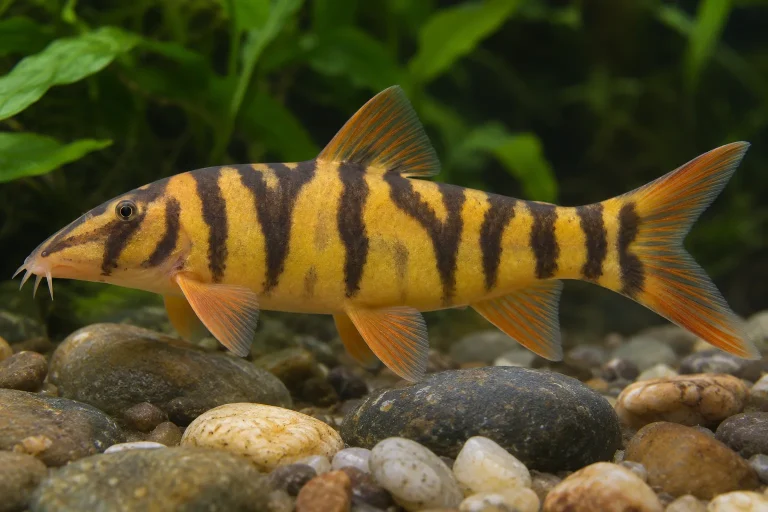
Botia dario
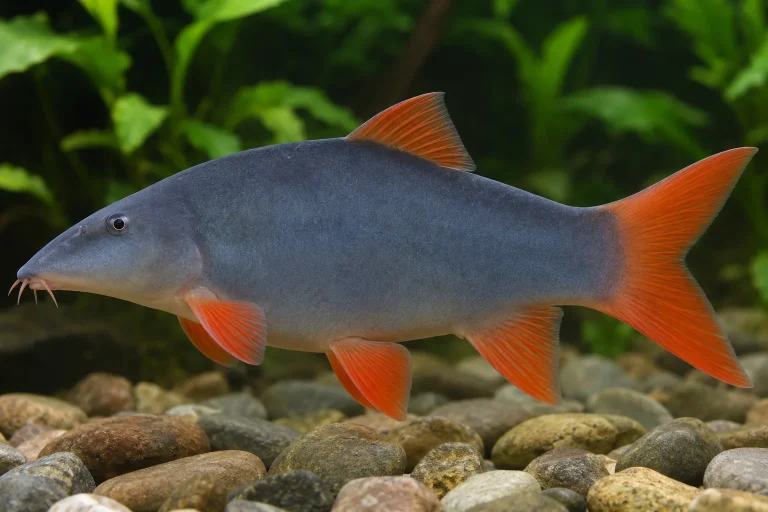
Yasuhikotakia modesta
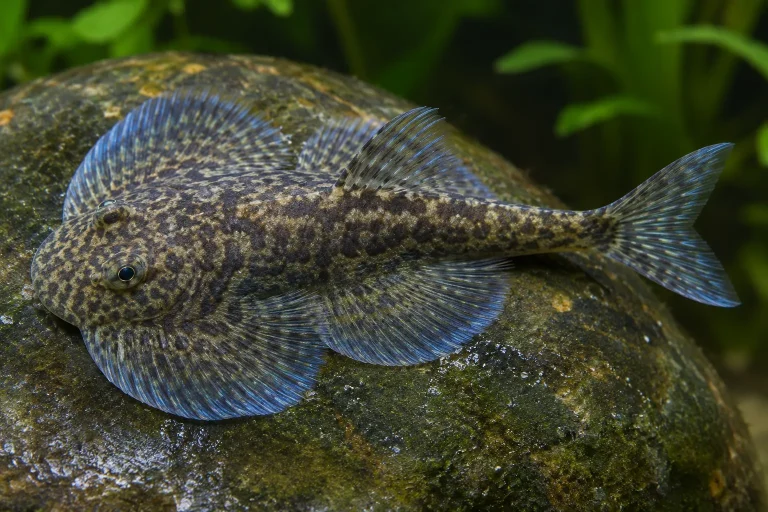
Gastromyzon aeroides