
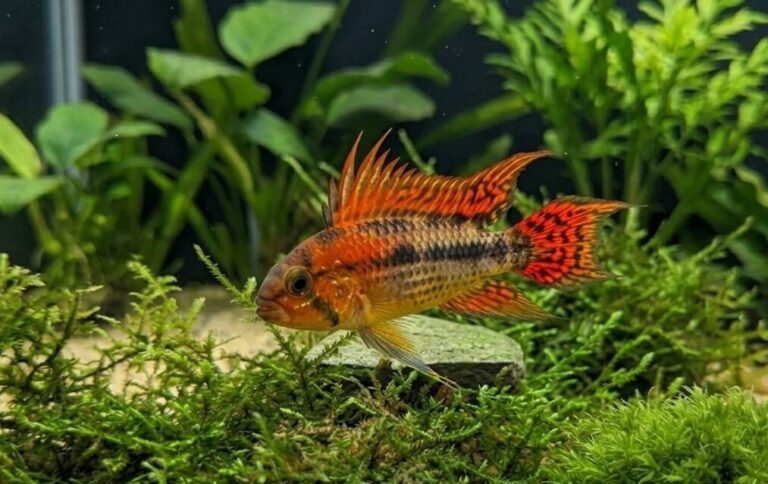
Cockatoo Dwarf Cichlid
Apistogramma cacatuoides
- Care level
- Beginner
- Adult size
- 5–8 cm
- Minimum tank
- 60 litres
- Temperature
- 24–28 °C
Species profile
Apistogramma panduro
Common names: Blue Panda Apistogramma, Panduro Dwarf Cichlid, Blue Sky Apistogramma
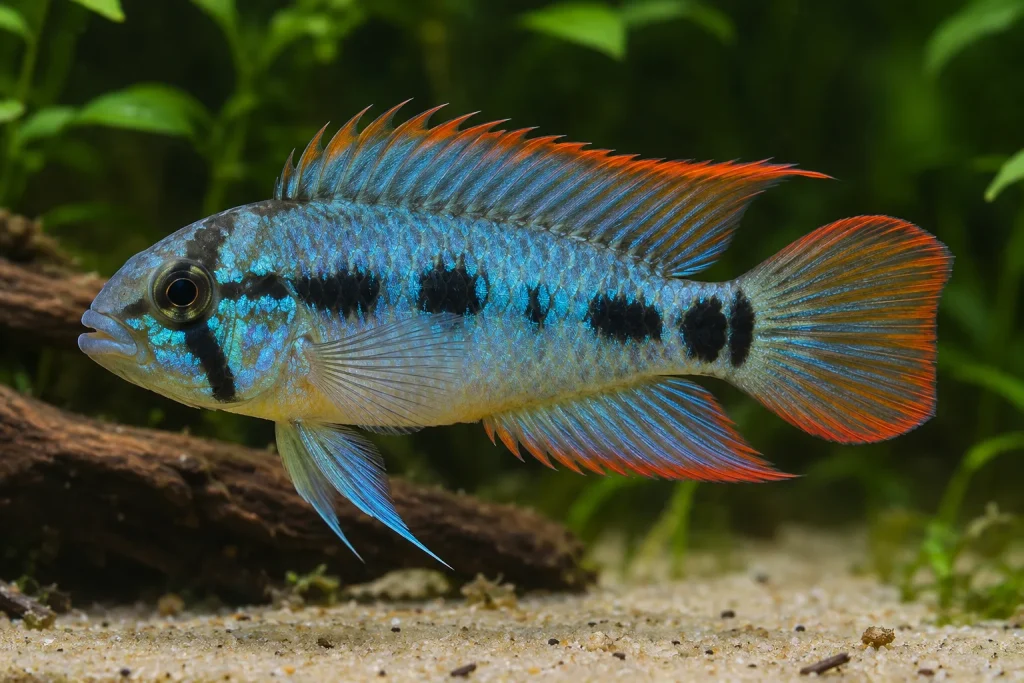
Up to 6.5 cm
Typical adult length 4–6.5 cm.


A colourful Peruvian nijsseni-group dwarf cichlid correctly named Apistogramma panduro. It forms strong pairs, prefers soft acidic water, and can become highly territorial while breeding.
Adult males are blue to turquoise with dark flank markings and orange or red edging in the fins. Females are yellow with a large black flank patch, dark caudal-base marking, and bold brood pattern. Body and colour vary with condition.
Use Apistogramma panduro as the accepted name. The words pandurini and Blue Panda are trade names, not separate species. Distinguish it from A. nijsseni and related forms by female blotch pattern, male colour, caudal markings, and provenance.
Males are larger and blue, with more extended fins and warm-coloured fin margins. Females are smaller, yellow, and show prominent black flank and caudal markings, especially in breeding condition.
Maintain one compatible pair in a 60 cm or longer aquarium with fine sand, heavy leaf litter, wood, roots, plants, and several caves. Strong sight breaks and an emergency divider are recommended because pair aggression can escalate.
A pair-oriented, territorial dwarf cichlid that can be calm when settled but becomes highly defensive around a cave and brood.
Best kept as one established pair. It is less suited to a casual harem arrangement than many polygynous Apistogramma.
Both partners may defend the pair area, while the brooding female controls the immediate cave and fry zone. An incompatible pair can injure one another in a confined tank.
A species-focused aquarium is safest for breeding. Calm upper-water dithers may be used in a larger display. Avoid other dwarf cichlids, intrusive bottom dwellers, aggressive fish, and ornamental shrimp.
Soft acidic water is preferred, particularly for breeding and egg development. Captive-bred fish may tolerate slightly higher mineral content, but hard alkaline conditions are unsuitable for long-term specialised care.
Some links may earn us a commission on qualifying purchases, at no extra cost to you. Check suitability, price and availability with the seller. How affiliate links work
 Manual aquarium siphon and gravel cleaner
A manual siphon for routine aquarium water changes and accessible waste removal. The seller lists a hose approximately 1.6 m long.
Control the flow and keep the intake clear of fish and delicate planting. Clean the areas appropriate for your substrate and layout rather than disturbing the entire planted bed.
A small-invertebrate predator that should receive varied live, frozen, and high-quality prepared foods.
Feed small portions once or twice daily. Newly imported fish may need live or frozen foods before accepting pellets. Avoid a long-term single-food diet.
A cave-spawning species with maternal direct care and strong pair territoriality. The female lays adhesive eggs inside a shelter and guards eggs, larvae, and fry. Soft acidic water and privacy improve success.
You can write a note about what worked for you, or send a photograph. We check everything before it appears here.
Apistogramma cacatuoides

Apistogramma elizabethae
Apistogramma hoignei
Apistogramma macmasteri