
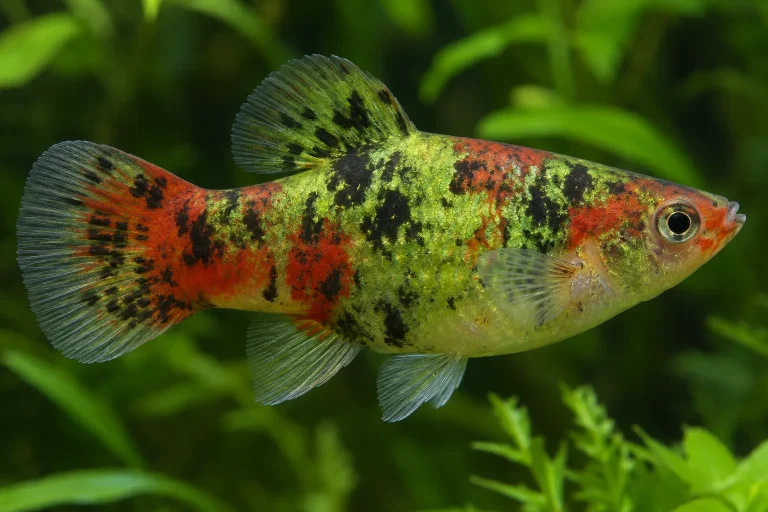
Green Calico Platy
Xiphophorus maculatus var. "Green Calico"
- Care level
- Intermediate
- Adult size
- 5 cm
- Minimum tank
- 54 litres
- Temperature
- 20–26 °C
Species profile
Xiphophorus maculatus var. "Bumblebee"
Common names: Bumblebee Platy, Moon, Moon Fish, Platy
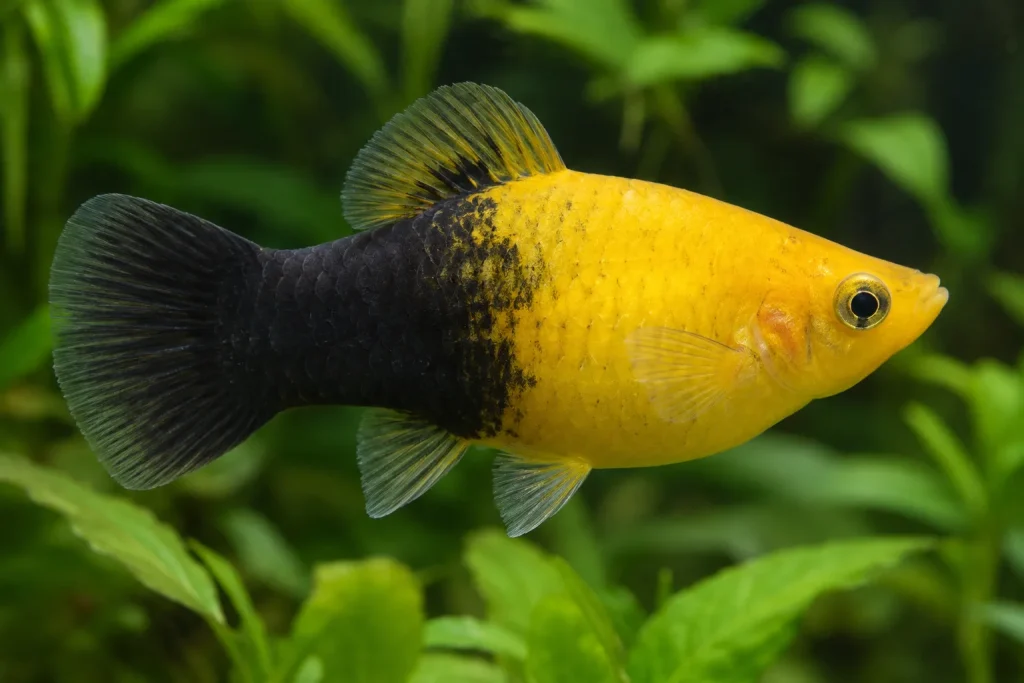
Up to 5 cm




A platy with a yellow front and a dark rear, like a bumblebee. Keep a group of at least 3 in 54 litres or more.
A platy with a yellow front and a dark rear, like a bumblebee. It is hardy and very easy, and it suits a community with hard water.
Check the scientific name when buying, as common names vary between sellers and countries.
Males have a gonopodium, which is a modified anal fin used for mating. Females are larger and rounder.
Provide dense plants or floating cover for fry and for females that want a rest from males, and keep the water hard and alkaline.
Active, hardy and always on the move, with males displaying to females.
Keep a group, with two or three females for every male.
Not territorial, although some males chase each other.
Suits a peaceful community that likes hard water. Avoid fin nippers. Adults may eat shrimplets. It is likely to eat shrimp.
Fairly tolerant of different water, if it is clean and stable.
An omnivore that readily takes flake and small granules, and grazes algae.
Feed small amounts, and remove anything left after a few minutes.
Gives birth to live young, with no special setup needed. Adults may eat fry, so provide dense plants or move a heavily pregnant female to a separate, planted tank.
You can write a note about what worked for you, or send a photograph. We check everything before it appears here.
Xiphophorus maculatus var. "Green Calico"
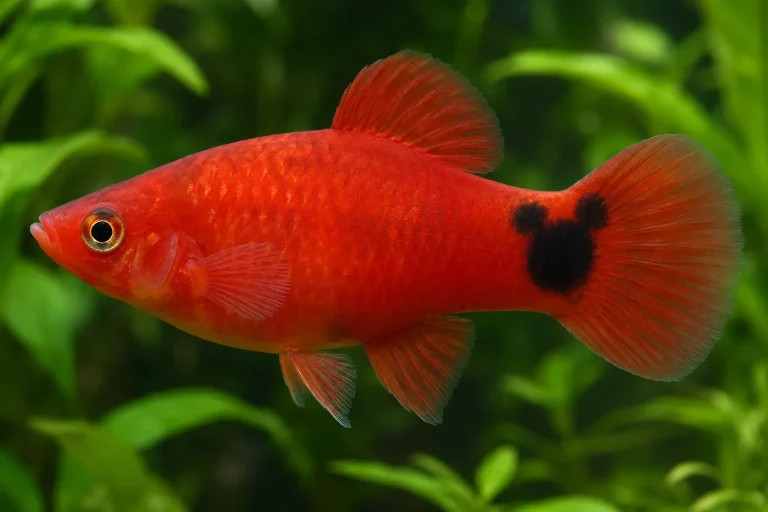
Xiphophorus maculatus var. "Micky Mouse Red"
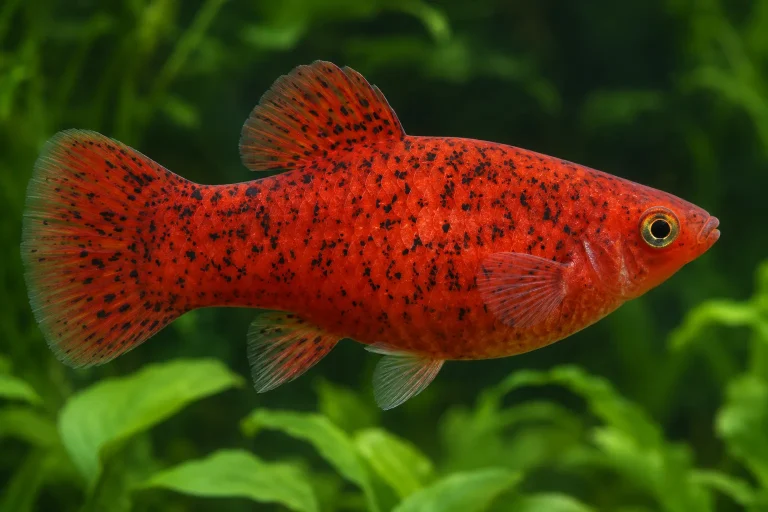
Xiphophorus maculatus var. "Red Pepper"
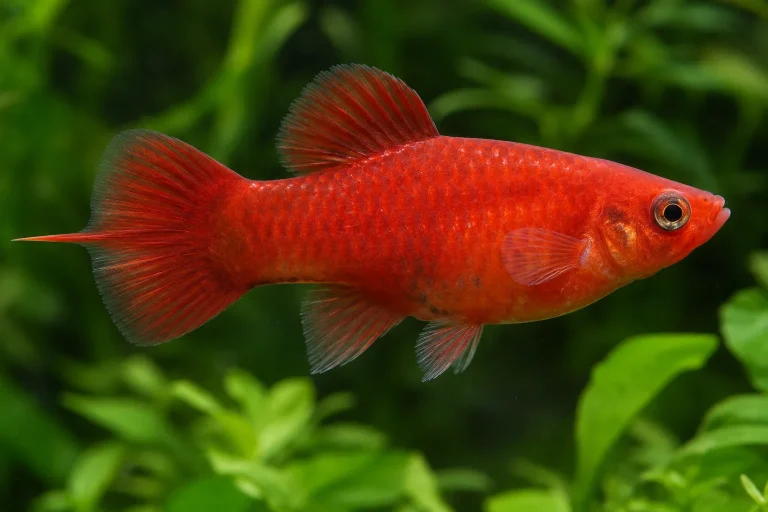
Xiphophorus maculatus var. "Red Pintail"