
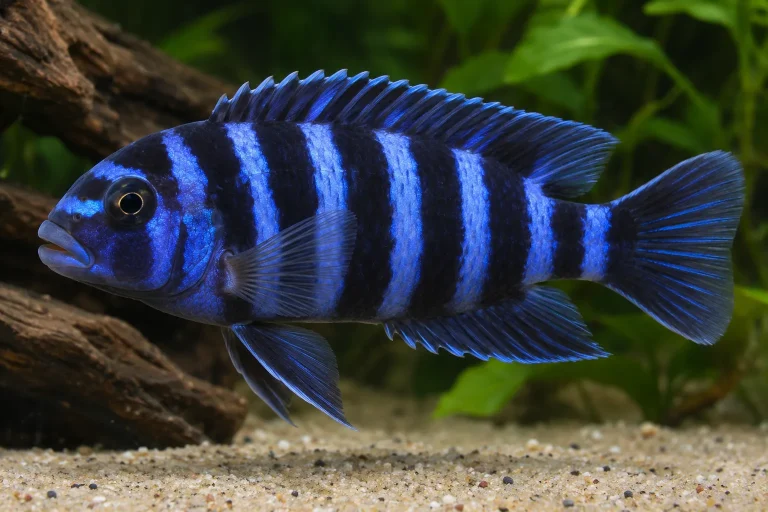
Demasoni Cichlid
Chindongo demasoni
- Care level
- Intermediate
- Adult size
- 7.5 cm
- Minimum tank
- 243 litres
- Temperature
- 24–28 °C
Species profile
Altolamprologus calvus
Common names: Calvus Cichlid
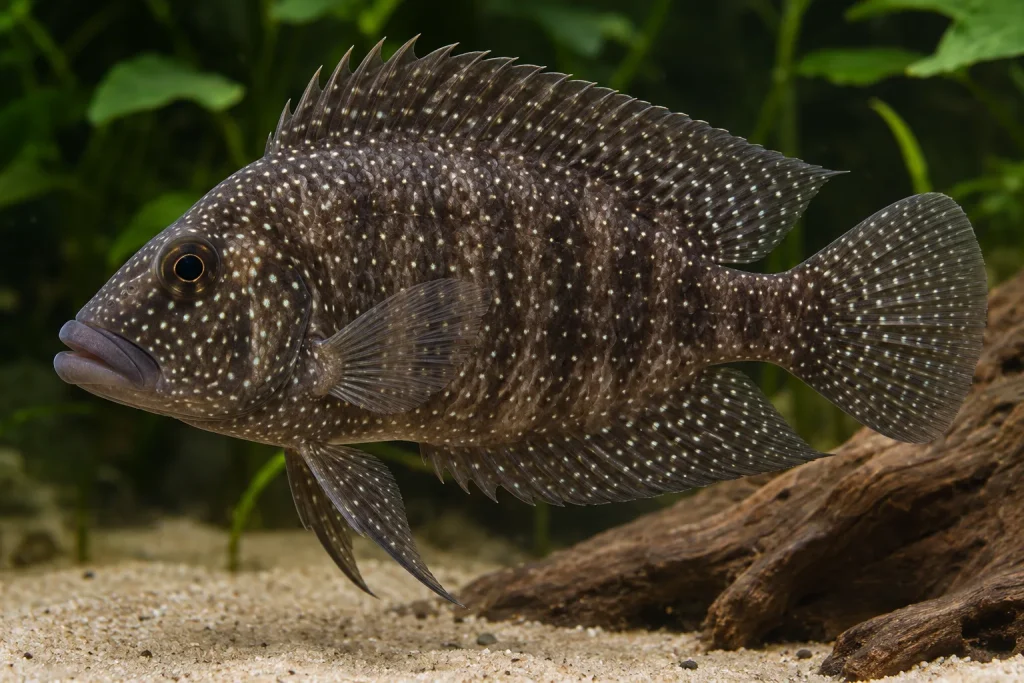
Up to 13.8 cm

A flat, deep-bodied Lake Tanganyika predator, covered in pale spots, whose narrow shape lets it reach into rock cracks for eggs and fry. Keep a group of at least 1 in 193 litres or more.
A flat, deep-bodied Lake Tanganyika predator, covered in pale spots, whose narrow shape lets it reach into rock cracks for eggs and fry. It suits a mature tank, and it is safe only with fish too large to eat.
Check the scientific name when buying, as common names vary between sellers and countries.
Males are usually larger and brighter, often with longer fins. Females are often plainer.
Build plenty of rockwork with caves and broken sight lines, because this fish needs territories, and use a sandy bottom. Strong filtration matters, as these cichlids produce a lot of waste.
Bold, busy and full of character, with complex behaviour around territory and breeding.
Usually kept as one male with several females, so that no single female takes all the attention.
Males defend territories strongly, and rival males may fight.
Best with other African cichlids of a similar size and temperament that need the same hard, alkaline water. It is not suited to a soft-water community. It is likely to eat shrimp.
Fairly tolerant of different water, if it is clean and stable. Keep the temperature steady.
Check what your species eats in the wild, because grazers can get bloat on rich, meaty foods. A good cichlid pellet suits most.
Feed small amounts, and remove anything left after a few minutes.
Spawns inside a cave, and one parent guards the eggs and young. Provide a suitable cave for each pair.
You can write a note about what worked for you, or send a photograph. We check everything before it appears here.
Chindongo demasoni
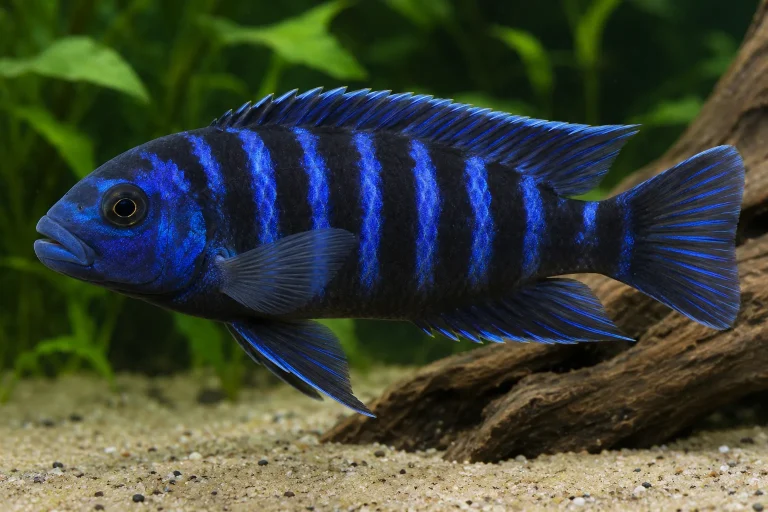
Pseudotropheus johannii
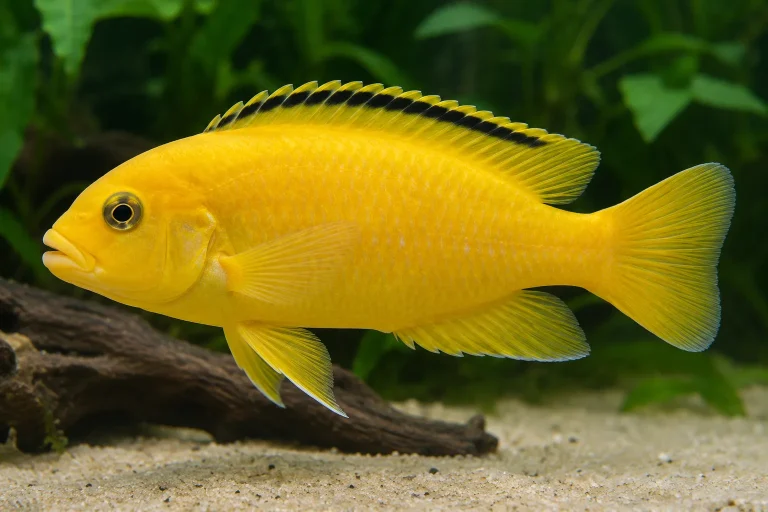
Labidochromis caeruleus
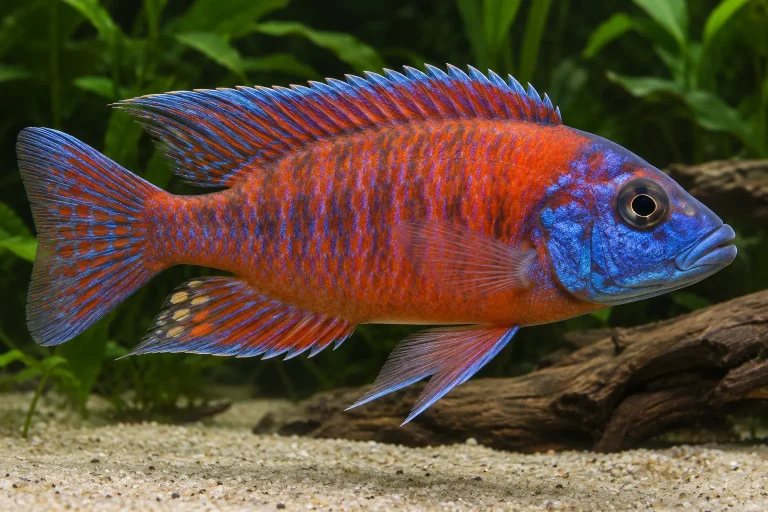
Aulonocara jacobfreibergi Eureka