
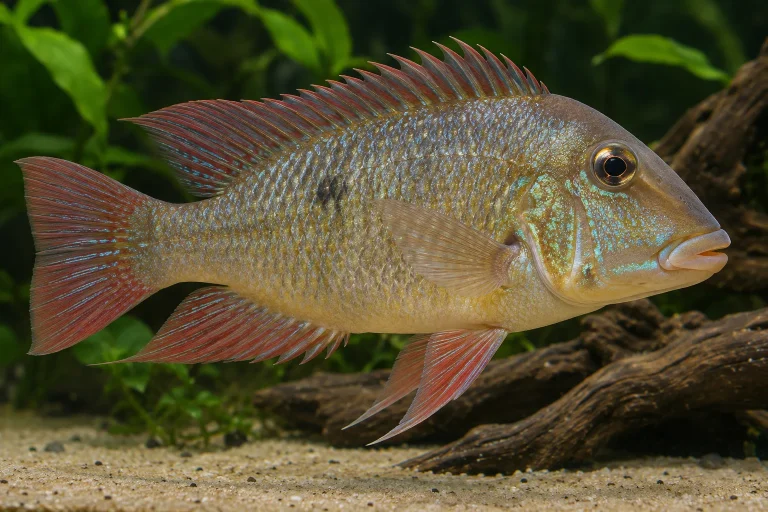
Demon Eartheater
Satanoperca jurupari
- Care level
- Advanced
- Adult size
- 18–25 cm
- Minimum tank
- 500 litres
- Temperature
- 24–29 °C
Species profile
Dicrossus maculatus
Common names: Chessboard Cichlid, Spotted Checkerboard Cichlid
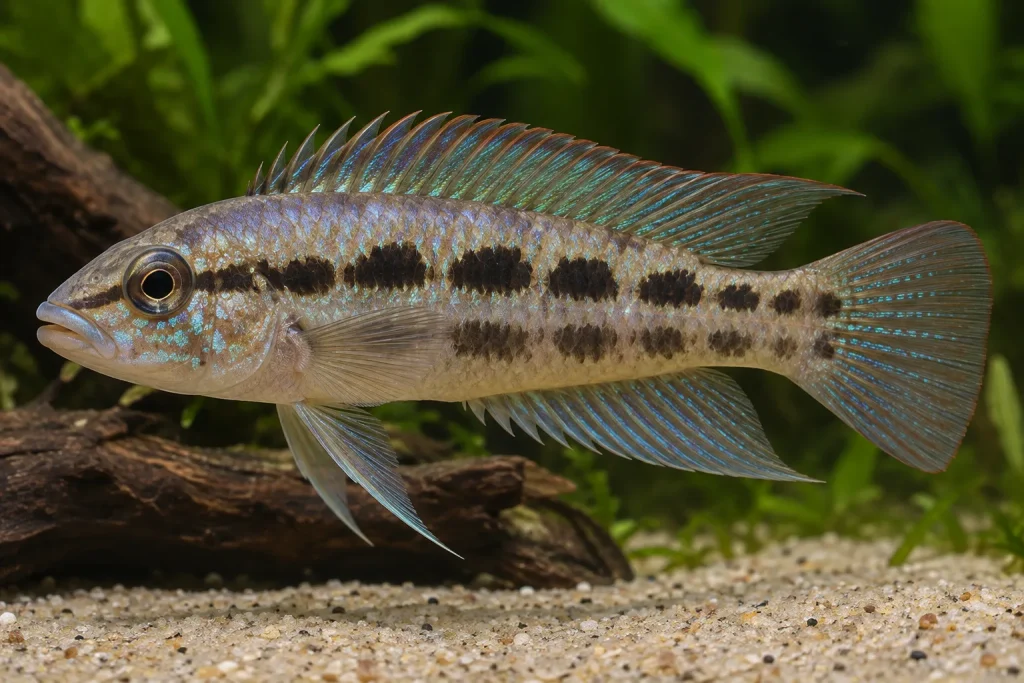
Up to 10 cm
Typical adult length 5–10 cm.


A rare soft-water dwarf cichlid with dark checkerboard markings and maternal brood care.
A slender beige to silver fish with two rows of dark rectangular flank blotches and blue-green iridescence. Adult males develop extended fins.
It lacks the strongly filamented adult male tail typical of D. filamentosus and has a different blotch and fin pattern. Locality information is valuable.
Males are larger and more colourful with longer fins. Females are smaller and become yellow with red or dark fin markings during brood care.
Provide fine sand, leaf litter, branches, subdued light, plants, and several broad leaves or smooth spawning surfaces. A small harem needs separated territories.
A shy, observant dwarf cichlid that becomes territorial around spawning sites.
Keep one male with multiple females only where the layout provides independent areas. A pair is safer in a smaller aquarium.
Brooding females defend eggs and fry vigorously.
Choose tiny peaceful upper-water fishes. Avoid aggressive cichlids, bottom competitors, and shrimp.
Warm soft acidic water is preferred. Breeding is usually unsuccessful in mineral-rich alkaline conditions.
Some links may earn us a commission on qualifying purchases, at no extra cost to you. Check suitability, price and availability with the seller. How affiliate links work
 Manual aquarium siphon and gravel cleaner
A manual siphon for routine aquarium water changes and accessible waste removal. The seller lists a hose approximately 1.6 m long.
Control the flow and keep the intake clear of fish and delicate planting. Clean the areas appropriate for your substrate and layout rather than disturbing the entire planted bed.
A micropredator requiring small live, frozen, and carefully selected prepared foods.
Feed small prey items more than once daily and remove leftovers promptly.
A maternal substrate spawner. Eggs are deposited on leaves or smooth surfaces and guarded by the female.
You can write a note about what worked for you, or send a photograph. We check everything before it appears here.
Satanoperca jurupari
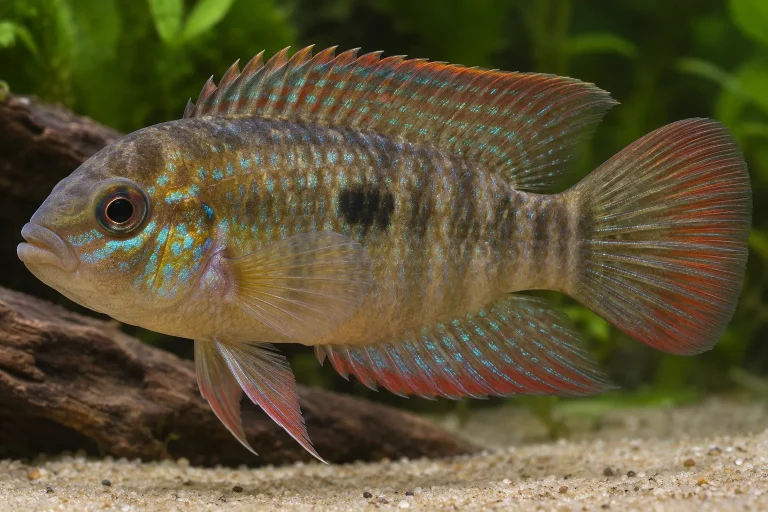
Laetacara curviceps
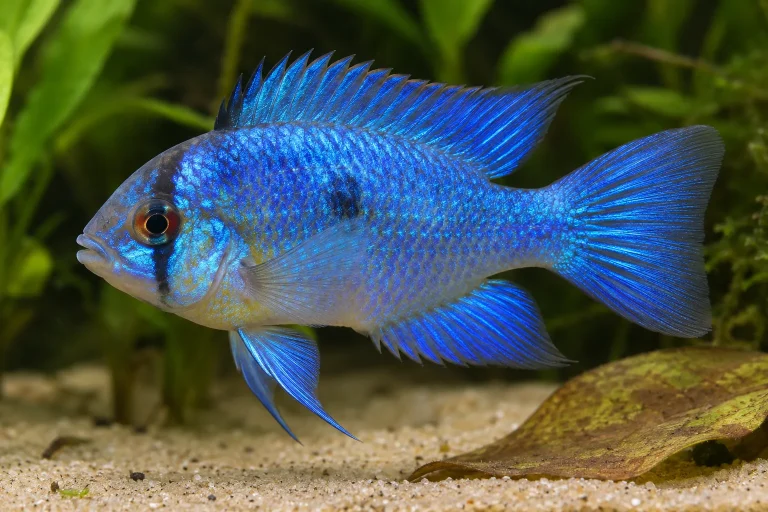
Mikrogeophagus ramirezi var. "Electric Blue"
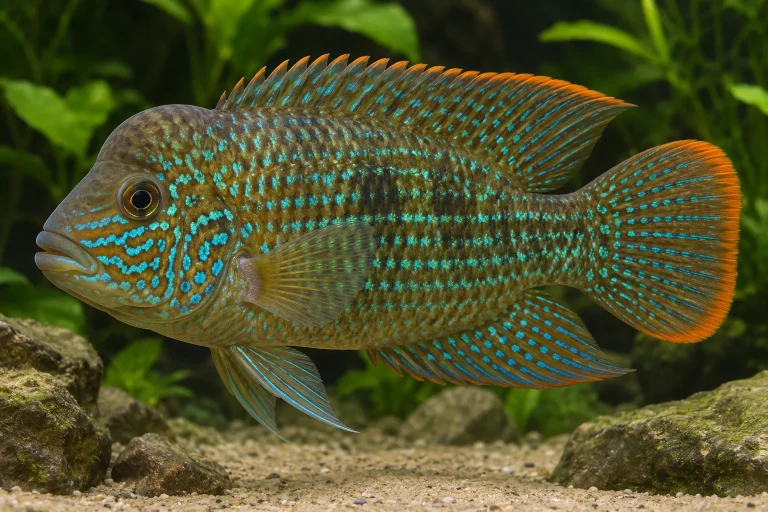
Andinoacara rivulatus