
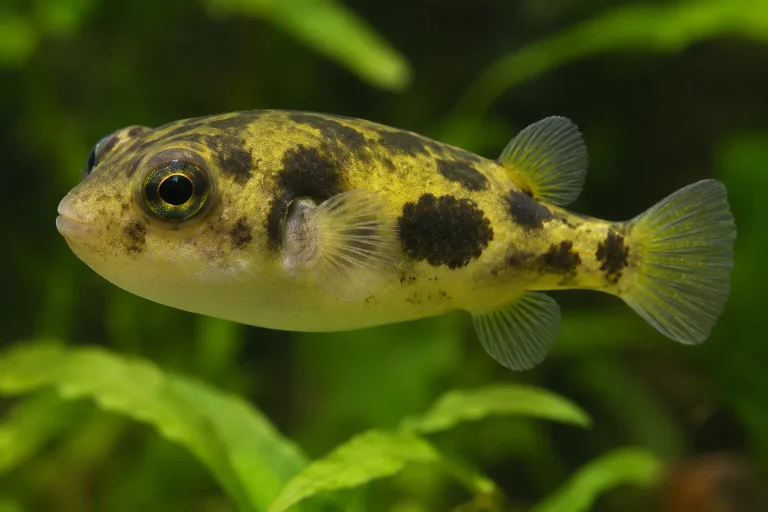
Dwarf Puffer
Carinotetraodon travancoricus
- Care level
- Intermediate
- Adult size
- 2.5 cm
- Minimum tank
- 20 litres
- Temperature
- 22–28 °C
Species profile
Carinotetraodon imitator
Common names: Dwarf Malabar Puffer
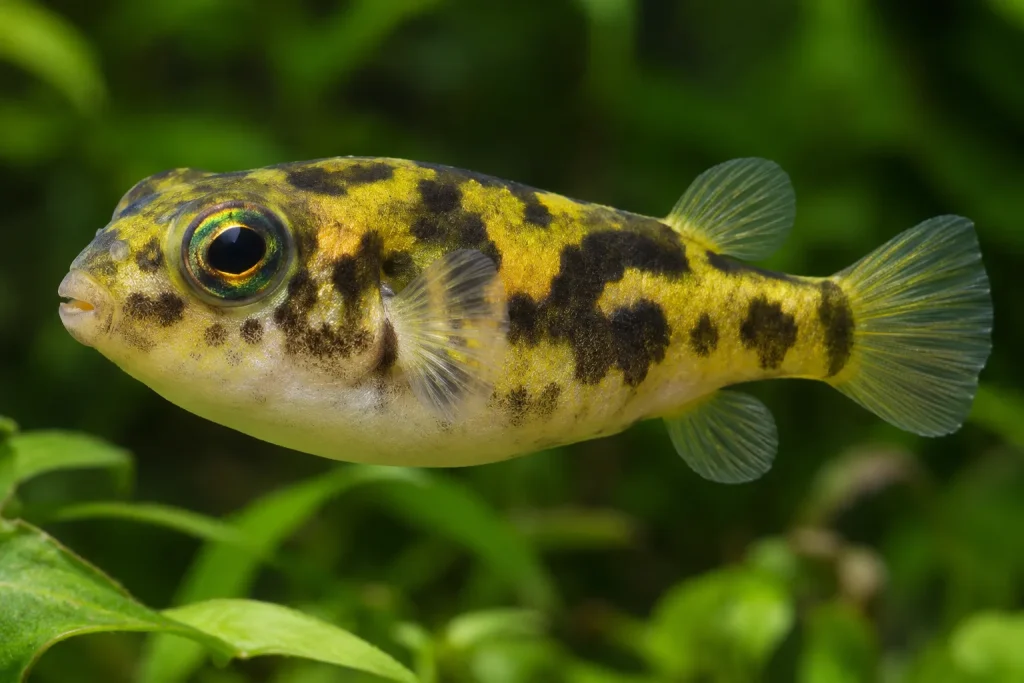
Up to 2.5 cm

A tiny Indian puffer almost identical to the Dwarf Puffer, and often sold mixed with it. Care is the same: a planted tank, live or frozen food and no shrimp.
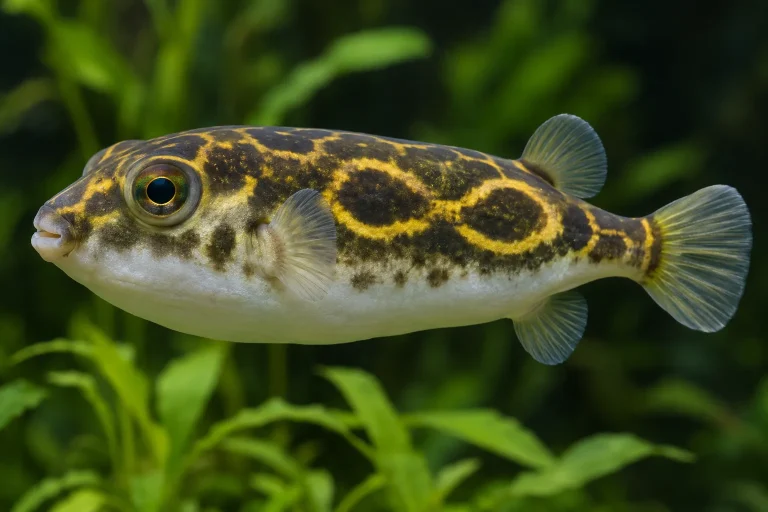
A tiny, rounded puffer with dark blotches on a yellow to green back and a pale belly, very like the Dwarf Puffer.
Very hard to tell from Carinotetraodon travancoricus by eye. Fish sold as Dwarf Puffers may be either species.
Not well documented for this species. Care sources treat it like the Dwarf Puffer, where males show a dark line along the underside.
Set up as for the Dwarf Puffer, with dense planting, roots, floating plants and gentle flow.
Expected to behave like the Dwarf Puffer: curious, busy and sometimes fierce with its own kind.
Treat as for the Dwarf Puffer: alone, or one male with several females in a well-planted tank.
Males are likely to defend territories, as in the Dwarf Puffer.
Best in a species tank. It can nip fins, and it will eat shrimp and snails.
These ranges are for the Dwarf Puffer, as no separate figures were found for this species.
A carnivore that takes small live and frozen foods and small snails.
Check the beak regularly. If it overgrows, the fish can no longer eat and the teeth may need to be trimmed by someone experienced.
No separate breeding reports were found. The closely related Dwarf Puffer scatters eggs among fine plants.
You can write a note about what worked for you, or send a photograph. We check everything before it appears here.
Carinotetraodon travancoricus
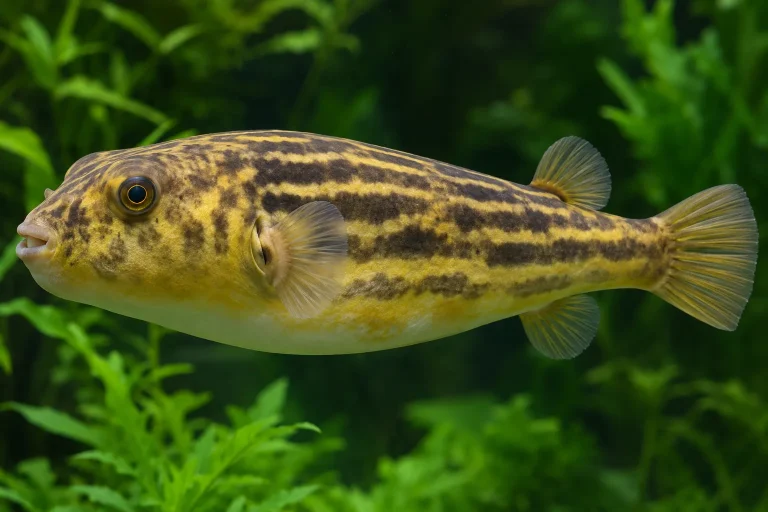
Tetraodon lineatus
Dichotomyctere ocellatus
Chonerhinos naritus