
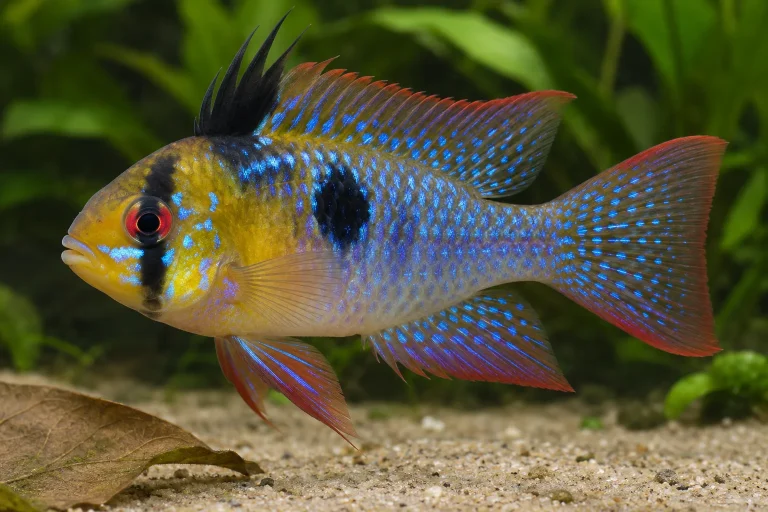
German Blue Ram Cichlid
Mikrogeophagus ramirezi var. "German Blue"
- Care level
- Intermediate
- Adult size
- 4–6 cm
- Minimum tank
- 60 litres
- Temperature
- 27–31 °C
Species profile
Pterophyllum scalare
Common names: Freshwater Angelfish, Angelfish, Scalare
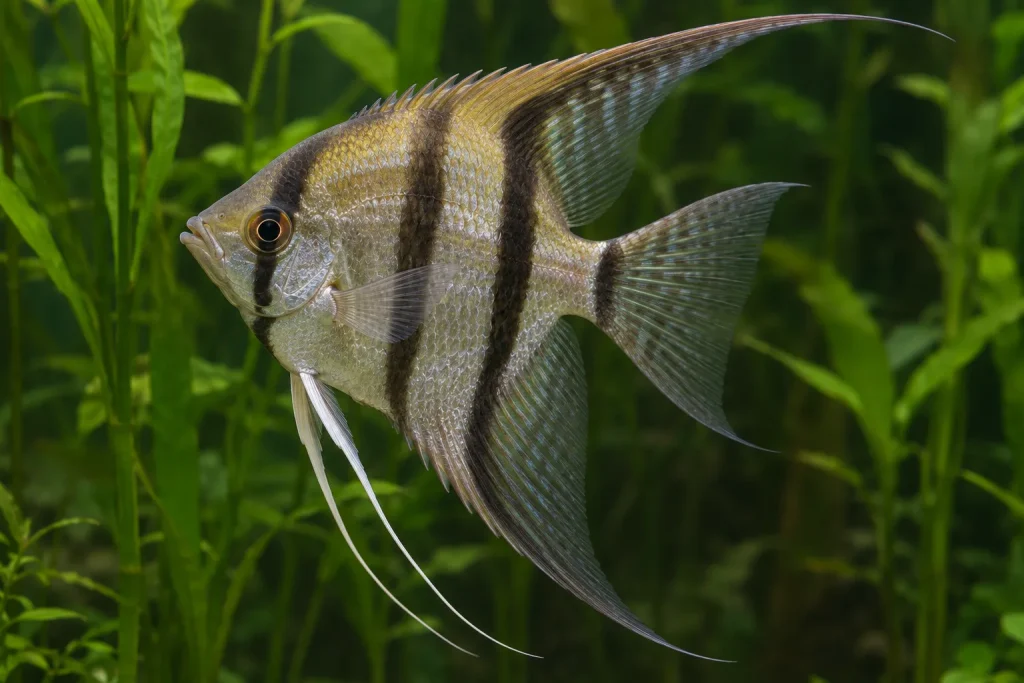
Up to 15 cm
Typical adult length 12–15 cm.






A tall, elegant South American cichlid sold in many colour forms. It needs a tall, spacious aquarium, and adults will eat small fish such as neon tetras.
A tall, disc-shaped body with very long dorsal and anal fins and thread-like pelvic fins. Natural fish are silver with dark vertical bars, and domestic colour forms are common.
This is the common aquarium angelfish. Altum and Leopold's Angelfish are separate species with different needs, so check the species when buying.
Quite difficult to sex. Males have smaller, pointed genital papillae, usually visible only when spawning. Behaviour is a better indicator, with males being more territorial.
Height matters as much as volume, because adults are tall. Provide planted areas, upright wood, and gentle flow, leaving swimming space in the centre.
Calm in a suitable tank, but forms a pecking order in groups. Pairs become territorial and can drive others away when breeding.
Best kept in small groups, and a pair will separate from the group when ready to spawn. A very large tank gives other fish room to escape.
Males are more aggressive and territorial, especially around spawning sites.
Good with larger tetras, rainbowfish, corydoras, and peaceful medium-sized fish. Avoid small fish that fit in its mouth, and fin nippers that target its long fins.
Soft to moderately hard, slightly acidic to neutral water suits this species, and domestic fish adapt more readily than wild ones.
An omnivore with a strong preference for meaty foods, feeding mostly in midwater.
Avoid live feeder fish, which bring a disease risk and are not needed for healthy growth.
Spawns on vertical surfaces such as slate, broad-leaved plants, or aquarium glass. Both parents guard the eggs and then the fry. Young or disturbed pairs may eat their first clutches, which is often not a lasting problem.
You can write a note about what worked for you, or send a photograph. We check everything before it appears here.
Mikrogeophagus ramirezi var. "German Blue"
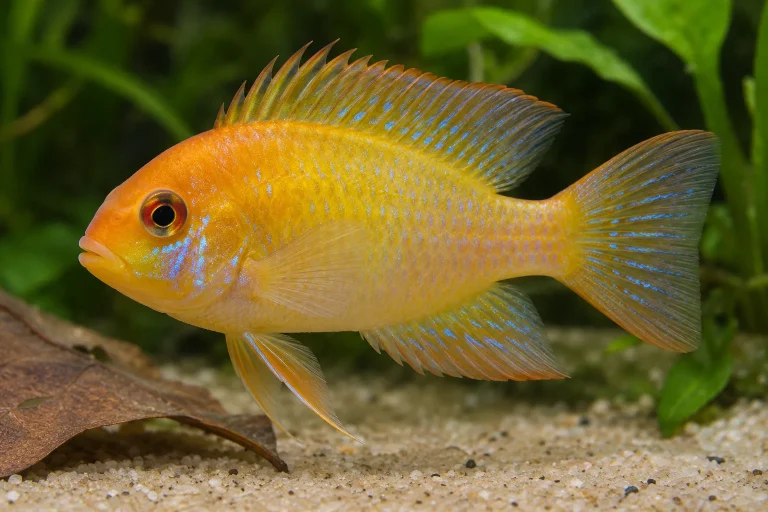
Mikrogeophagus ramirezi var. "Gold"
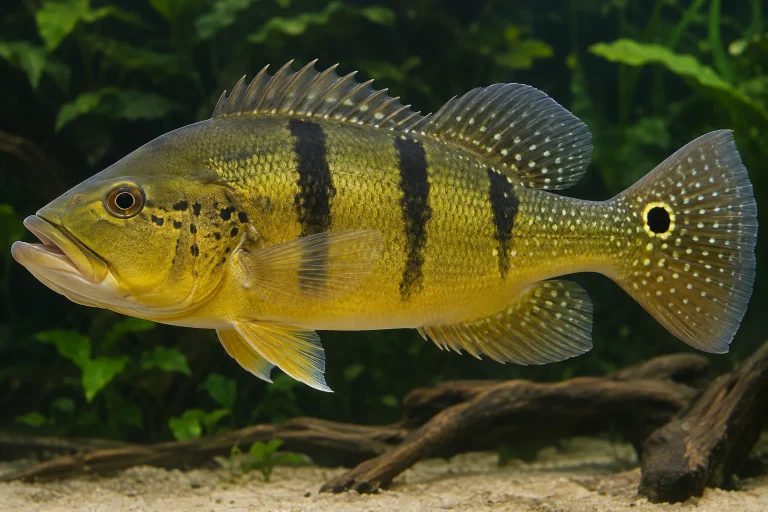
Cichla kelberi
Cleithracara maronii