

Meghalaya Danio
Danio meghalayensis
- Care level
- Specialist
- Adult size
- 4–5.1 cm
- Minimum tank
- 72 litres
- Temperature
- 18–26 °C
Species profile
Devario malabaricus
Common names: Malabar Danio
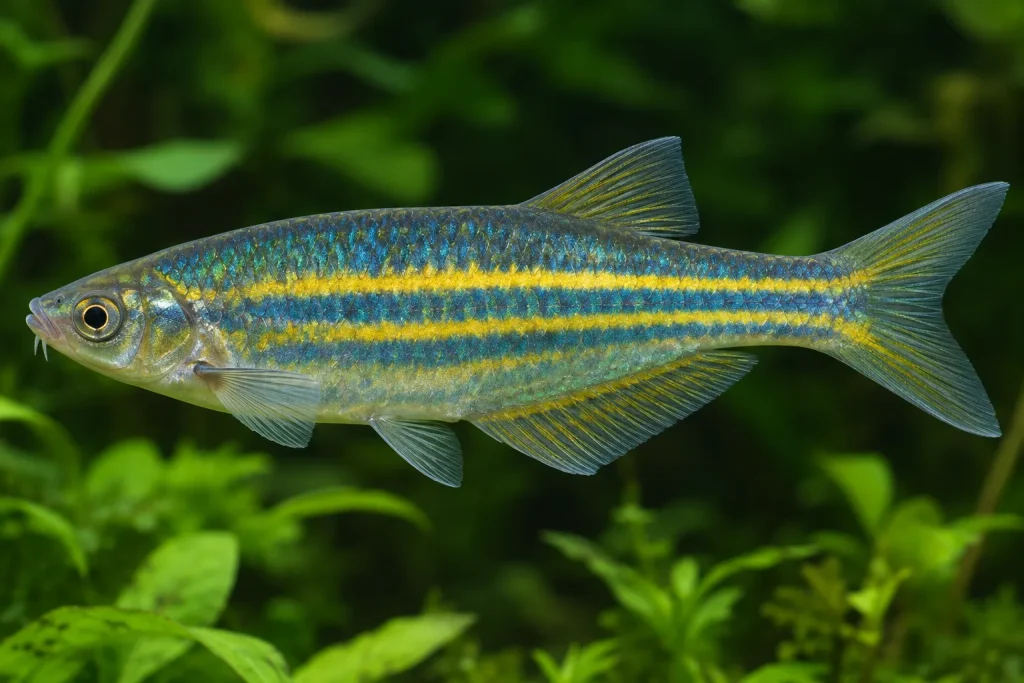
Up to 12 cm
Typical adult length 8–12 cm.



Malabar Danio is a large schooling danio requiring a group, a secure lid, clean oxygen-rich water, and at least 240 litres.
A large blue-green Devario with yellow-gold horizontal bands and a powerful, streamlined body.
A large species requiring substantial swimming space. It can be confused with Giant Danio and closely related South Asian Devario.
Adult females are generally fuller-bodied and slightly larger. Mature males are usually slimmer and show stronger colour, especially during courtship.
Keep a group of at least 6 in an aquarium at least 120 cm long. Provide open swimming space, secure cover, efficient filtration, and strong but broken-up water movement.
Use plants, wood, and rounded stone around the margins while preserving a clear central swimming area.
Floor area and uninterrupted swimming length matter more than decorative volume alone. Leave broad open lanes and keep hardscape away from the main route used by the school.
Malabar Danio is a social, active schooling fish that should be maintained with its own kind. Most chasing is part of normal group interaction, but cramped quarters or a group that is too small can concentrate aggression.
Maintain at least 6, preferably 8 or more. A larger group produces more natural schooling and spreads chasing. Not truly territorial, although males may spar or defend short-lived display positions within the group. Their speed and body mass can make an otherwise peaceful school feel disruptive in a cramped community aquarium.
Choose robust, similarly sized community fish that tolerate the same current, temperature, and open-water activity. Avoid tiny fish, ornamental shrimp, slow long-finned species, and timid tankmates that may be continually displaced or outcompeted.
A broad but stable range is suitable. Prioritise oxygenation, low organic waste, and gradual acclimation.
Some links may earn us a commission on qualifying purchases, at no extra cost to you. Check suitability, price and availability with the seller. How affiliate links work
 Manual aquarium siphon and gravel cleaner
A manual siphon for routine aquarium water changes and accessible waste removal. The seller lists a hose approximately 1.6 m long.
Control the flow and keep the intake clear of fish and delicate planting. Clean the areas appropriate for your substrate and layout rather than disturbing the entire planted bed.
Use quality flakes or pellets sized for the fish, supported by larger Daphnia, Artemia, mosquito larvae, and other suitable live or frozen foods. Offer modest portions that the school can finish promptly, and distribute food across the surface or current so subordinate fish have access. A varied diet supports colour, condition, and breeding readiness better than relying on one dry food.
Feed small portions once or twice daily. Active danios feed quickly, so check that slower tankmates receive food.
An egg-scattering spawner with no parental care. Condition adults well, then use fine-leaved plants, spawning mops, mesh, or marbles to protect eggs from the adults. Remove the breeders after spawning and raise the fry on infusoria or very fine prepared food before moving to microworms and Artemia nauplii. For uncommon species, keep detailed notes on temperature, timing, adult condition, and fry growth because dependable species-specific aquarium reports may be limited.
You can write a note about what worked for you, or send a photograph. We check everything before it appears here.
Danio meghalayensis
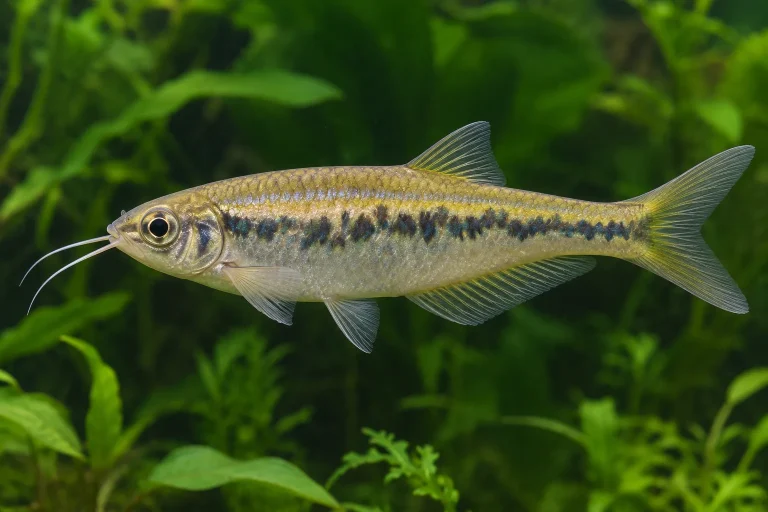
Danio dangila
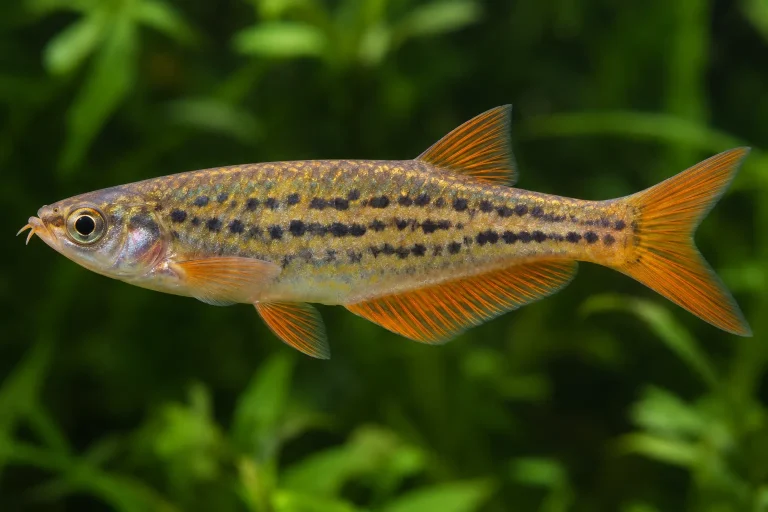
Danio kyathit
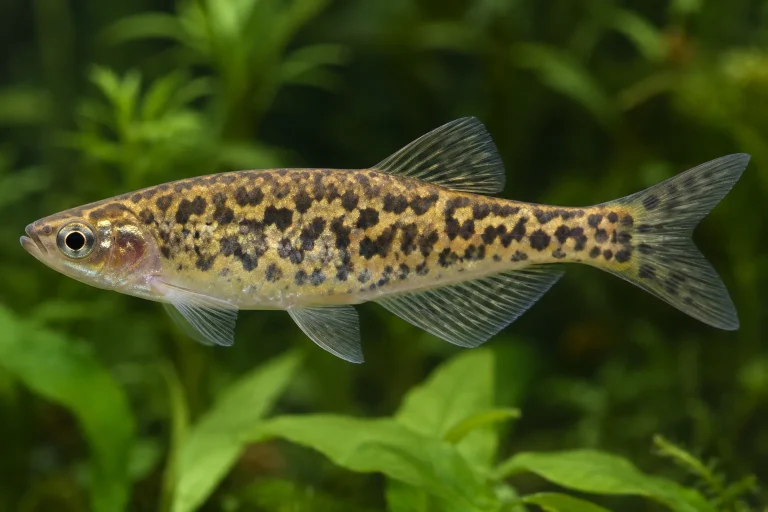
Danio aesculapii