
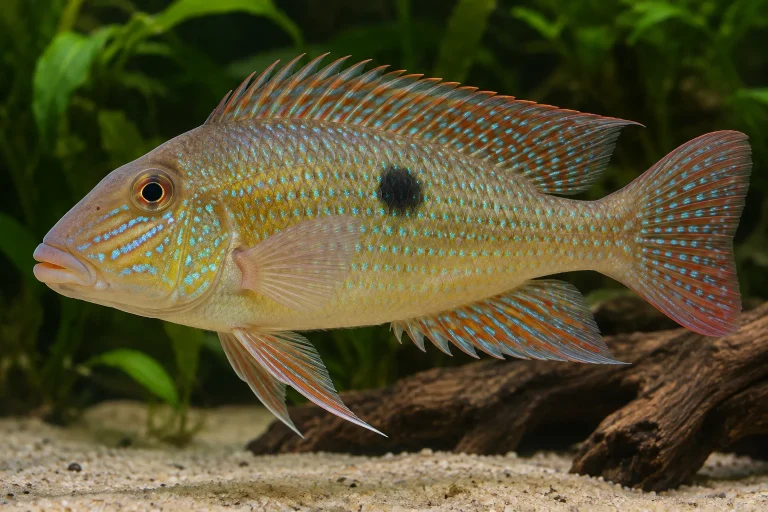
Mirabilis Eartheater
Geophagus mirabilis
- Care level
- Advanced
- Adult size
- 14–20 cm
- Minimum tank
- 350 litres
- Temperature
- 24–29 °C
Species profile
Geophagus megasema
Common names: Megasema Eartheater
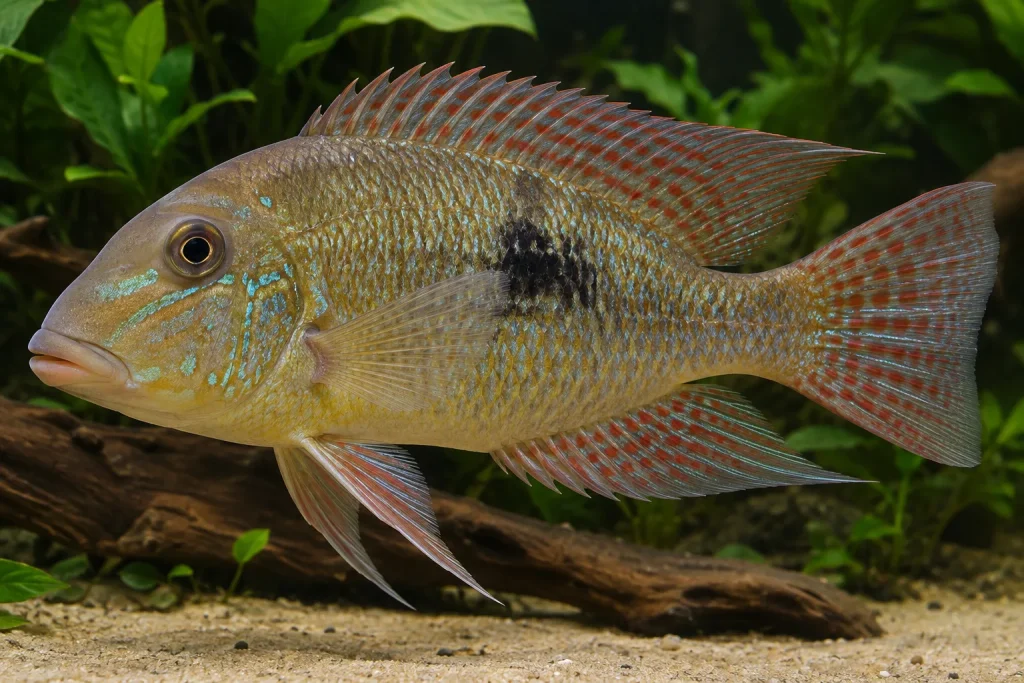
Up to 22 cm
Typical adult length 15–22 cm.



A Bolivian Amazon eartheater with a large flank blotch, requiring fine sand, group structure, and a spacious aquarium.
A silver-gold eartheater with blue-green iridescence, reddish fin patterning, and a conspicuous dark lateral blotch.
The large flank blotch gives the species its name. Similar Geophagus should be separated using locality and adult pattern.
Males may become larger with longer fins and stronger colour; females become fuller before spawning.
Provide a broad fine-sand floor, strong filtration, wood, open swimming room, and a group of at least five.
Generally peaceful, active, and social, with temporary breeding territories.
Keep in a group to distribute dominance.
Pairs defend a cleaned spawning site and nearby area.
Use peaceful robust South American tank mates. Small fish and shrimp may be eaten.
Warm soft to moderate water is suitable when clean and well oxygenated.
Some links may earn us a commission on qualifying purchases, at no extra cost to you. Check suitability, price and availability with the seller. How affiliate links work
 Manual aquarium siphon and gravel cleaner
A manual siphon for routine aquarium water changes and accessible waste removal. The seller lists a hose approximately 1.6 m long.
Control the flow and keep the intake clear of fish and delicate planting. Clean the areas appropriate for your substrate and layout rather than disturbing the entire planted bed.
An omnivorous benthic sifter taking invertebrates, detritus, and plant matter.
Distribute sinking foods across the sand in several daily portions.
A biparental substrate-spawning cichlid with both parents guarding eggs, larvae, and fry.
You can write a note about what worked for you, or send a photograph. We check everything before it appears here.
Geophagus mirabilis
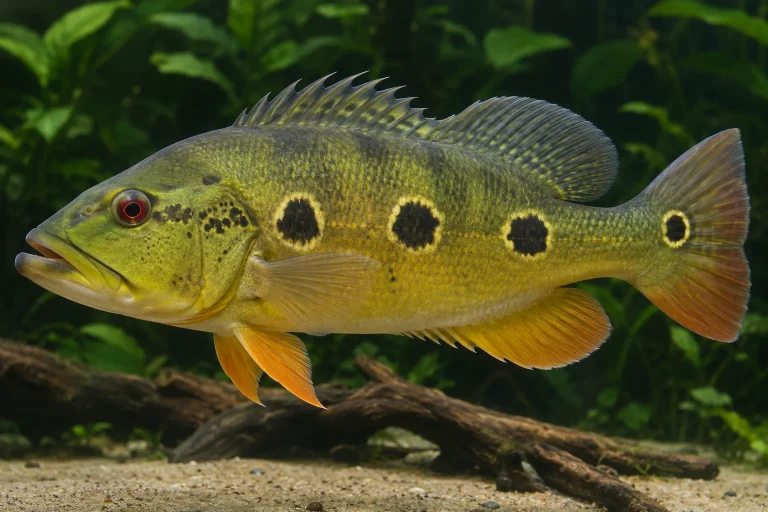
Cichla orinocensis
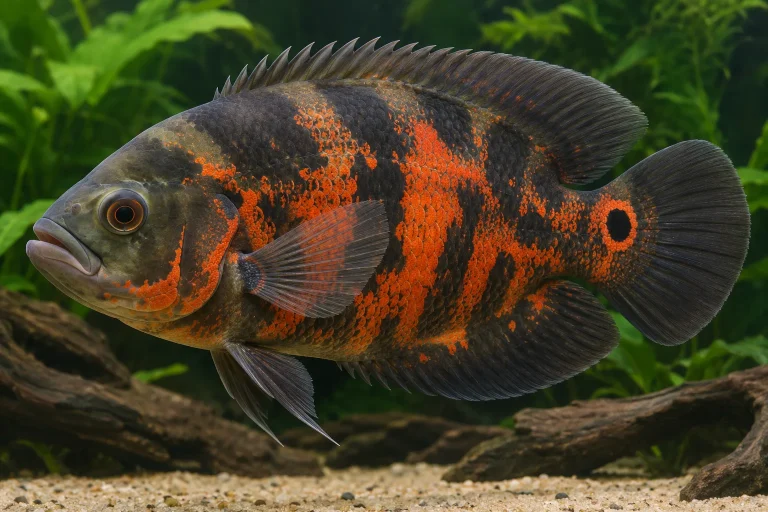
Astronotus ocellatus
Amphilophus citrinellus × Vieja melanurus