
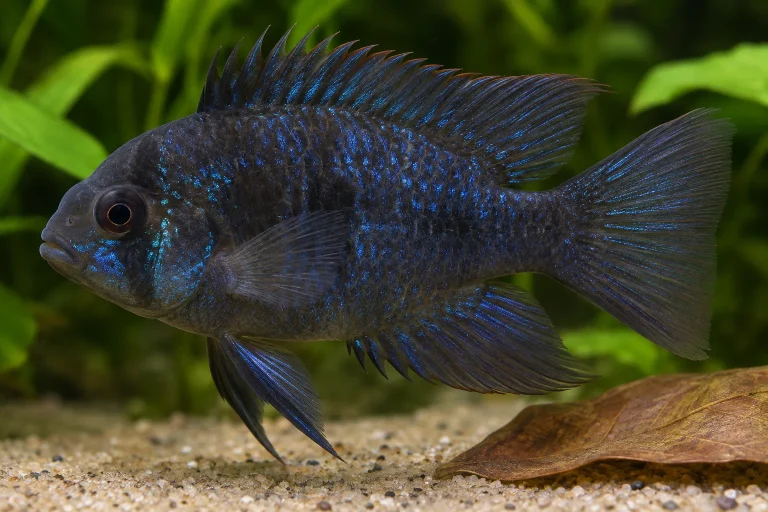
Ram Cichlid – Dark Knight
Mikrogeophagus ramirezi var. "Dark Knight"
- Care level
- Intermediate
- Adult size
- 4–6 cm
- Minimum tank
- 60 litres
- Temperature
- 27–31 °C
Species profile
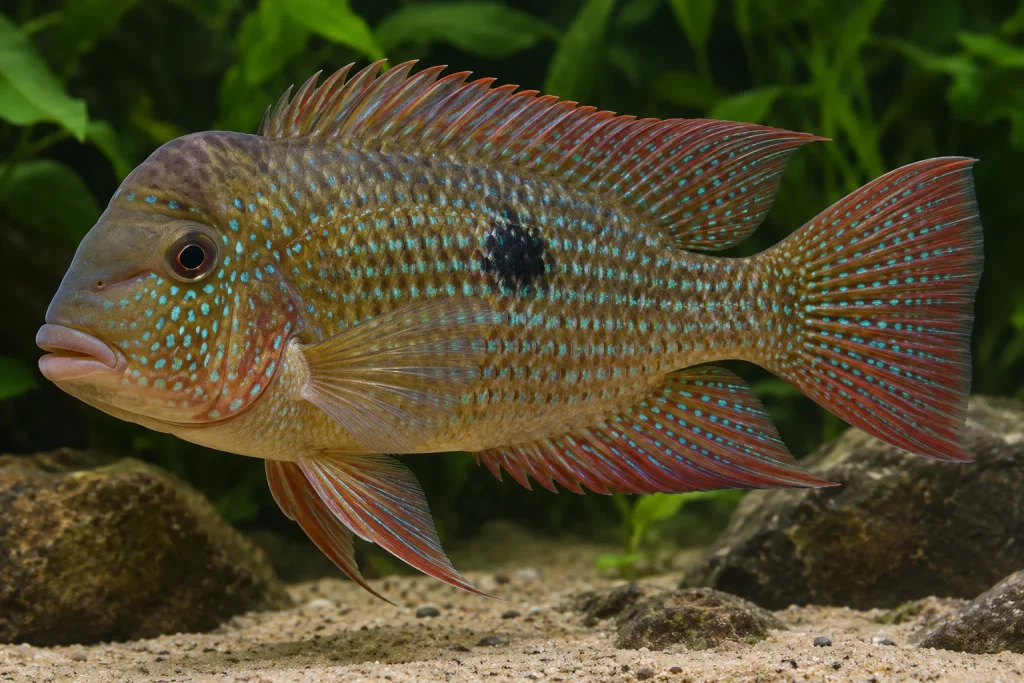
Geophagus brasiliensis
Common names: Pearl Cichlid, Brazilian Eartheater
Up to 30 cm
Typical adult length 20–30 cm.



A large, hardy coastal South American cichlid with pearly blue spotting and stronger aggression than most Amazonian Geophagus.
A robust olive to brown cichlid with dense blue-green pearl spotting, red fin accents, and a dark flank blotch. Mature males may develop a forehead hump.
Despite its long-standing name, it differs behaviourally and ecologically from many Amazonian Geophagus. Provenance matters because the complex may contain regional diversity.
Males are larger, more intensely spotted, longer-finned, and may develop a nuchal hump. Females are smaller and rounder when gravid.
Use a large tank with fine sand, strong filtration, open territory, large rocks and wood, and securely protected plants. A pair needs escape routes.
Assertive, territorial, and active, with strong substrate digging and pair defence.
Keep singly or as a proven pair in a large aquarium. Group maintenance requires exceptional space.
Breeding pairs defend a broad substrate territory and can injure tank mates.
Only with robust similarly sized fish in a large tank. Avoid small fish, shrimp, timid cichlids, and delicate plants.
It tolerates cooler and more mineralised water than many Amazonian eartheaters. Seasonal temperature variation is acceptable.
Some links may earn us a commission on qualifying purchases, at no extra cost to you. Check suitability, price and availability with the seller. How affiliate links work
 Manual aquarium siphon and gravel cleaner
A manual siphon for routine aquarium water changes and accessible waste removal. The seller lists a hose approximately 1.6 m long.
Control the flow and keep the intake clear of fish and delicate planting. Clean the areas appropriate for your substrate and layout rather than disturbing the entire planted bed.
An omnivorous substrate feeder taking invertebrates, plant matter, detritus, and prepared foods.
Use balanced pellets and varied whole foods. Avoid rich protein-only feeding.
A biparental substrate spawner. Eggs are laid on rock, wood, or a cleaned pit and both parents defend the brood.
You can write a note about what worked for you, or send a photograph. We check everything before it appears here.
Mikrogeophagus ramirezi var. "Dark Knight"
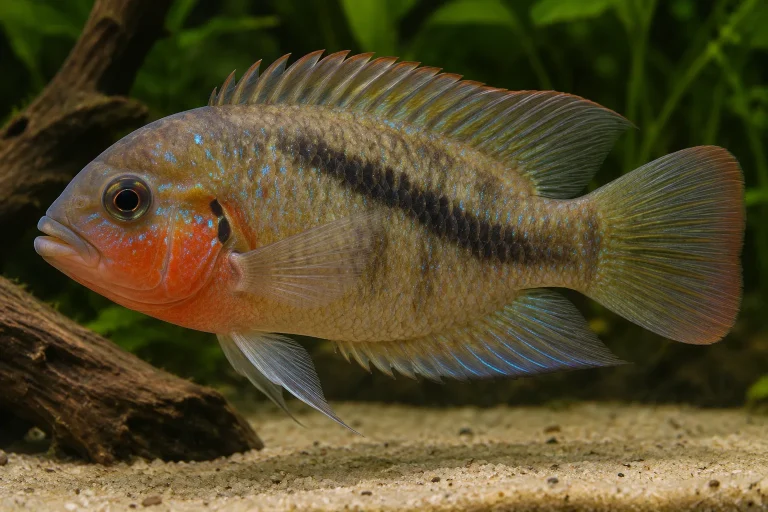
Krobia xinguensis
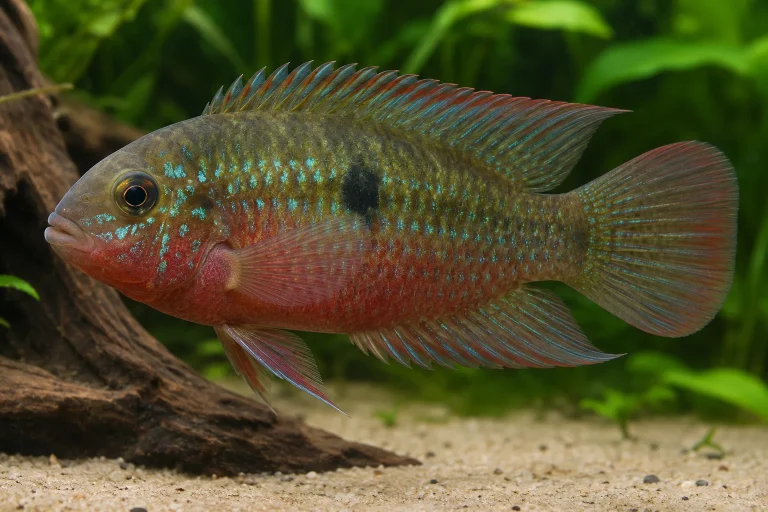
Laetacara dorsigera
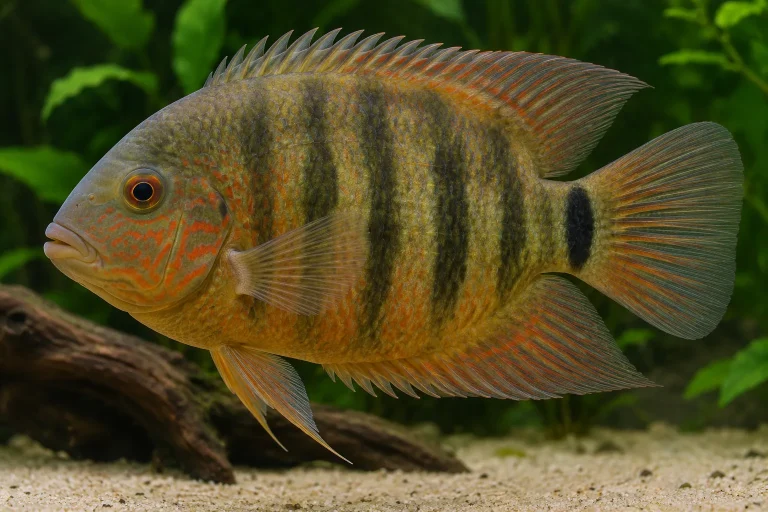
Heros severus