
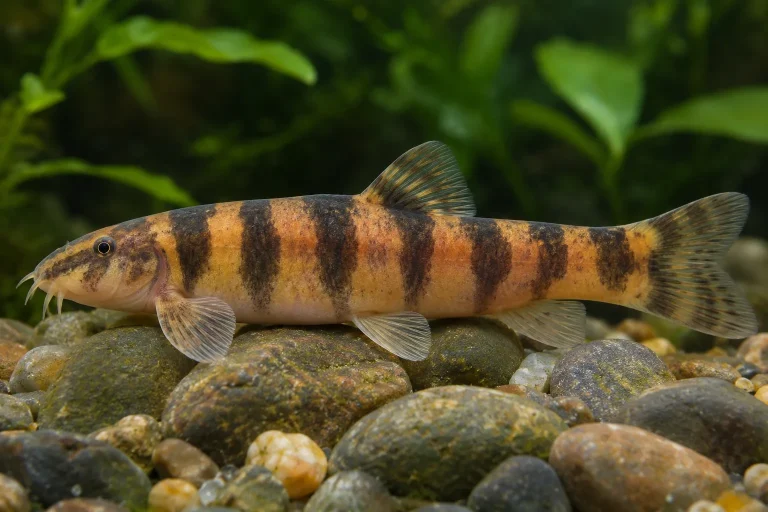
Sumo Loach
Schistura balteata
- Care level
- Specialist
- Adult size
- 7–10 cm
- Minimum tank
- 100 litres
- Temperature
- 20–26 °C
Species profile
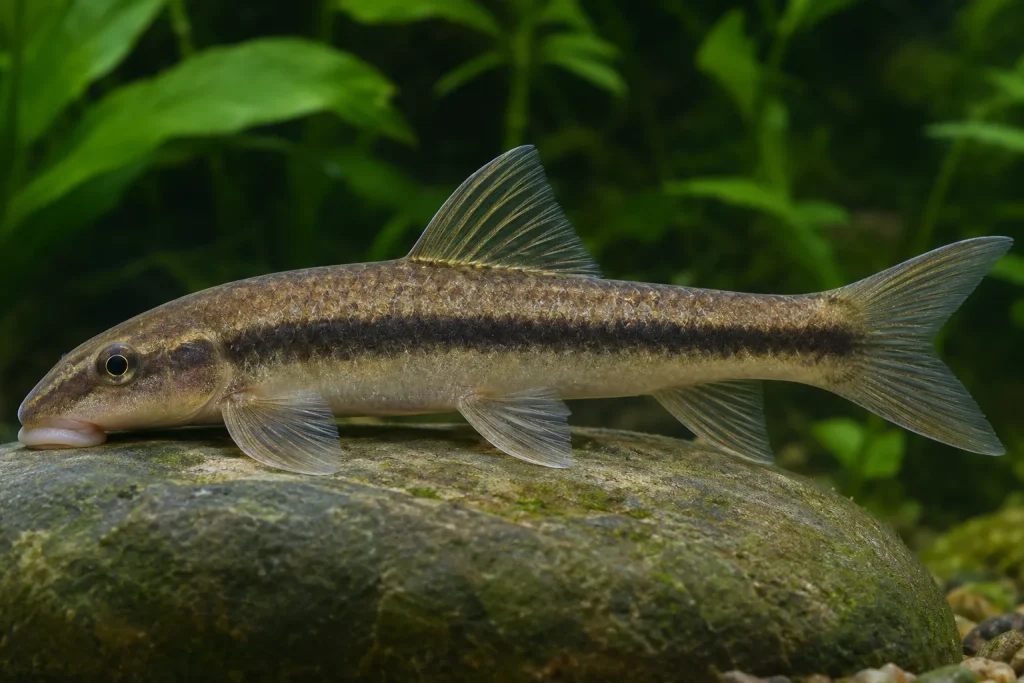
Gyrinocheilus aymonieri
Common names: Sucking Loach
Up to 28 cm
Typical adult length 19.6–28 cm.






Sucking Loach is a bottom-dwelling loach requiring a 180 cm or longer aquarium, suitable substrate, stable water, and species-appropriate social housing.
An elongated algae grazer with a ventral sucking mouth, a dark lateral stripe, and a brown, grey, or golden trade colour form.
Juveniles graze algae readily, while adults may become territorial and less interested in algae.
Sexes are difficult to distinguish reliably outside breeding condition. Mature females may become fuller through the abdomen, while males of some species develop stronger colour, fin shape, or breeding tubercles.
Use a mature aquarium at least 180 cm long with strong filtration, open swimming space, rock and wood grazing surfaces, and separate retreats. Plan for the adult size rather than the small juvenile offered in shops.
Sucking Loach is an active clinging grazer when young but often becomes increasingly territorial as it grows. Adults may chase other bottom fish and attach to slow broad-bodied tankmates.
Keep singly unless an exceptionally large, carefully structured aquarium allows each adult a separate territory.
Strongly territorial as an adult, especially toward similar-shaped algae grazers and other fish using the lower levels.
Use fast, robust tankmates in a large aquarium and monitor closely. Avoid slow flat-sided fish, fancy goldfish, discus, angelfish, and other territorial algae grazers.
Maintain stable, clean water within the stated range. Oxygenation, low organic waste, and gradual acclimation are more important than forcing an exact pH or hardness value.
Some links may earn us a commission on qualifying purchases, at no extra cost to you. Check suitability, price and availability with the seller. How affiliate links work
 Manual aquarium siphon and gravel cleaner
A manual siphon for routine aquarium water changes and accessible waste removal. The seller lists a hose approximately 1.6 m long.
Control the flow and keep the intake clear of fish and delicate planting. Clean the areas appropriate for your substrate and layout rather than disturbing the entire planted bed.
Feed as an omnivorous grazer rather than an aquarium cleaner. Supply algae wafers, vegetable-rich sinking foods, natural biofilm, and modest protein foods as the fish matures.
A hungry adult may rasp mucus from slow tankmates. Regular feeding does not remove the need for careful compatibility.
Home-aquarium breeding is rarely reported. The species is an egg scatterer without parental care, and commercial production may use controlled spawning methods. A very large breeding system and separate fry-rearing facilities would be required.
You can write a note about what worked for you, or send a photograph. We check everything before it appears here.
Schistura balteata

Gastromyzon sp.
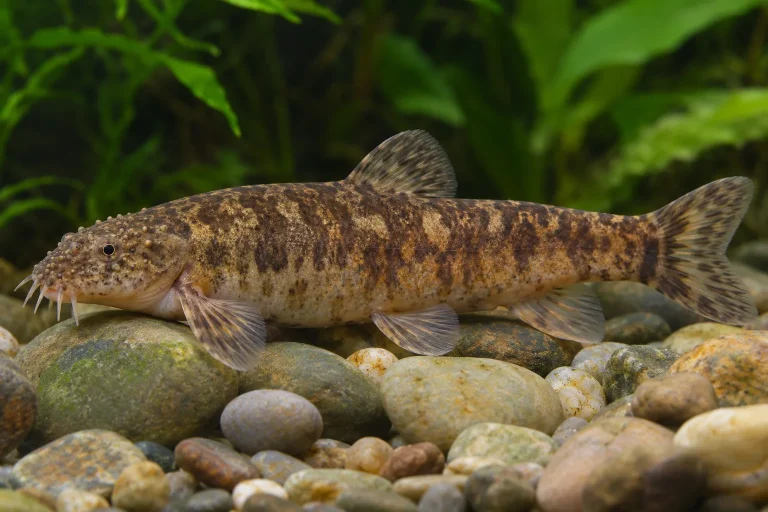
Traccatichthys tuberculum
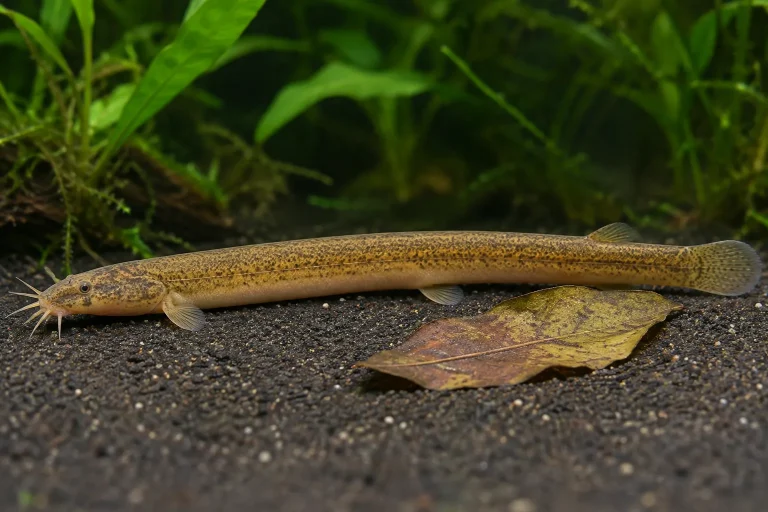
Misgurnus anguillicaudatus