

Umbrella Apistogramma
Apistogramma borellii
- Care level
- Intermediate
- Adult size
- 3.9 cm
- Minimum tank
- 40 litres
- Temperature
- 20–26 °C
Species profile
Apistogramma trifasciata
Common names: Three Striped Apistogramma
Up to 3.8 cm


A dwarf cichlid with three dark lines on its side, from the Guaporé and Paraguay basins, and males have long, pointed fins. Keep alone or in a small group in 40 litres or more.
A dwarf cichlid with three dark lines on its side, from the Guaporé and Paraguay basins, and males have long, pointed fins. It prefers cooler water than most Apistogramma.
Check the scientific name when buying, as common names vary between sellers and countries.
Males are larger and more colourful, with longer fins. Females turn bright yellow when guarding young in many species.
Use leaf litter, wood and small caves in a mature, planted tank, with gentle filtration. Each female needs a cave of her own.
A small, busy cichlid that stays near the bottom and shows real personality, especially when guarding young.
Often kept as a pair, or as one male with two or more females in a larger tank.
Territorial near the bottom, particularly females with young.
Best with small, peaceful fish that stay higher in the water, such as small tetras and pencilfish. Avoid other bottom-dwelling cichlids in smaller tanks. It may eat baby shrimp. Choose its tankmates with care.
Fairly tolerant of different water, if it is clean and stable.
Prefers small live and frozen foods, and many also accept small pellets.
Feed small amounts, and remove anything left after a few minutes.
Spawns inside a cave, and one parent guards the eggs and young. Provide a suitable cave for each pair.
You can write a note about what worked for you, or send a photograph. We check everything before it appears here.
Apistogramma borellii
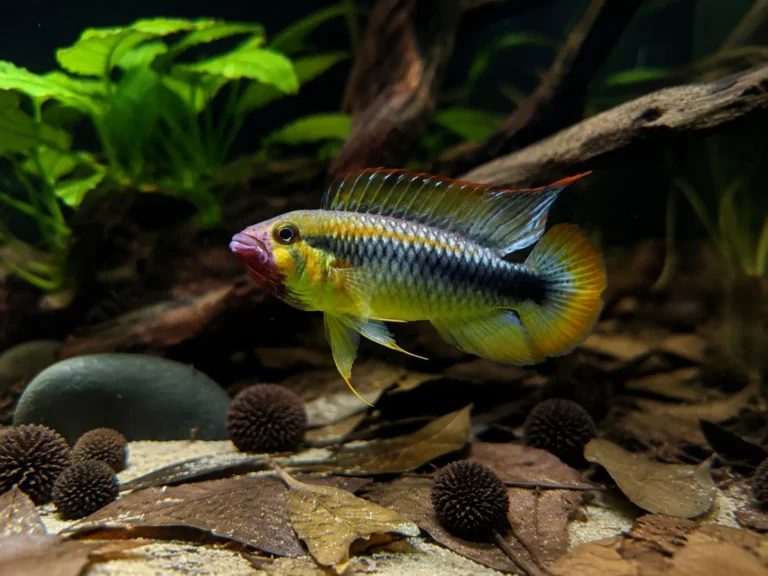
Apistogramma sp. "Abacaxis"
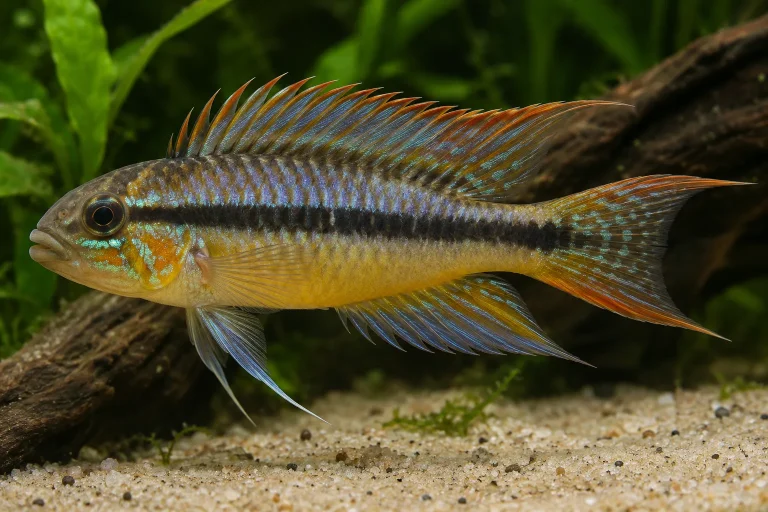
Apistogramma agassizii
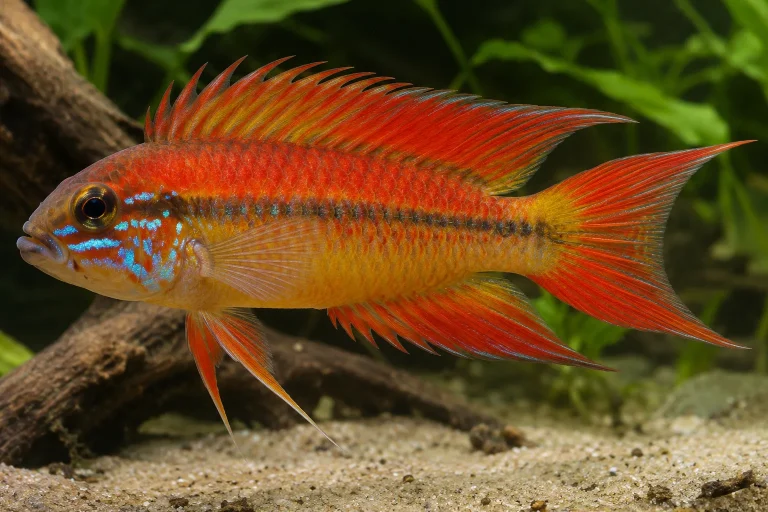
Apistogramma agassizii var. "Fire Red"