
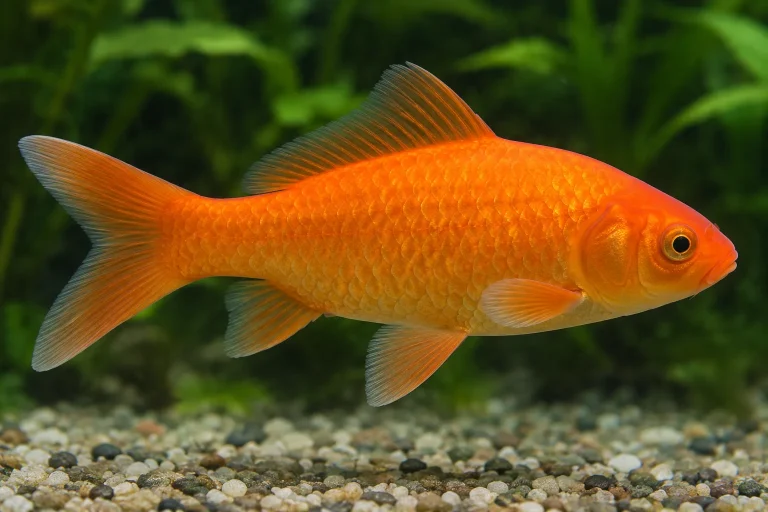
Common Goldfish
Carassius auratus
- Care level
- Beginner
- Adult size
- 12–22 cm
- Minimum tank
- 150 litres
- Temperature
- 10–24 °C
Species profile
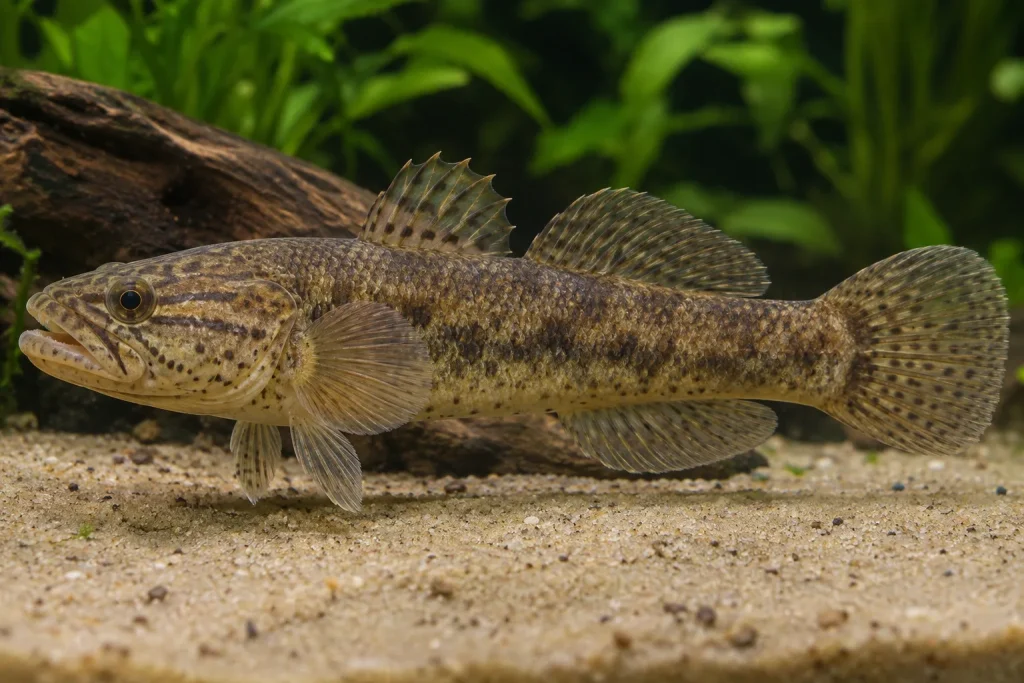
Giuris charpini
Common names: Charpini Snakehead Gudgeon
Up to 15 cm
Typical adult length 10–15 cm.



Charpini Snakehead Gudgeon is a a sturdy, elongate sleeper gudgeon with a broad head, large mouth, earthy flank colours, fine spotting, and contrasting fin markings that become clearer in settled adults.
Charpini Snakehead Gudgeon is an elongate, sturdy sleeper gudgeon with a broad, slightly flattened head and a large mouth. Its body is usually earthy brown, olive, or grey with fine mottling and scattered spots that help it blend into rock, wood, and leaf litter. Settled adults may show clearer facial lines and stronger contrast in the dorsal, anal, and tail fins.
A recently described Giuris species from New Caledonia and Vanuatu. Preserve collection locality and supplier records because members of Giuris can be difficult to separate by casual visual inspection.
Reliable external sexing information is limited. Mature males may grow larger and show stronger body and fin colour, while females may become fuller through the abdomen. These differences are subtle, so locality information and comparison among several mature fish are more useful than colour alone.
Use a mature, tightly covered aquarium with a broad footprint and plenty of lower-level space. Build several separated retreats from smooth rock, wood, and shaded overhangs, while leaving open areas for feeding. Strong biological filtration, good oxygenation, and stable water are important. Because this species is linked with connected fresh, brackish, and coastal habitats, match the conditions in which the fish was collected or raised rather than adding salt automatically.
This is a cover-oriented ambush predator that may remain still for long periods before making a sudden feeding dash. It normally occupies the bottom and lower water levels and may claim a preferred cave, shaded corner, or piece of wood. Territorial behaviour is most likely when several bottom-dwelling predators compete for limited shelter.
Treat as solitary unless a proven compatible pair or group can be established in a much larger aquarium with several separate territories.
Likely to defend shelters and feeding areas, especially as it matures. Break lines of sight with wood and rock.
Choose robust tankmates that are too large to swallow and that can tolerate the same water conditions. Small schooling fish, fry, ornamental shrimp, and timid bottom dwellers are at considerable risk. Other territorial gudgeons should be combined only in a very large aquarium with clear visual barriers and many separate shelters.
Maintain warm, clean, well-oxygenated water with stable mineral content. Natural records span freshwater, brackish, and marine environments, but this does not justify sudden salinity changes in captivity.
Some links may earn us a commission on qualifying purchases, at no extra cost to you. Check suitability, price and availability with the seller. How affiliate links work
 Manual aquarium siphon and gravel cleaner
A manual siphon for routine aquarium water changes and accessible waste removal. The seller lists a hose approximately 1.6 m long.
Control the flow and keep the intake clear of fish and delicate planting. Clean the areas appropriate for your substrate and layout rather than disturbing the entire planted bed.
Offer a varied carnivorous diet based on quality sinking pellets, frozen insect larvae, worms, and small crustaceans. Newly imported fish may respond first to moving foods, but they should gradually be trained onto prepared food. Feed measured portions and remove uneaten food promptly because rich foods can quickly reduce water quality.
Newly imported fish may need live or frozen foods before accepting pellets. Avoid routine use of feeder fish because of disease risk and poor nutritional control.
Captive breeding is poorly documented. Closely related amphidromous gudgeons produce small eggs and very small larvae that may drift into brackish or marine water before returning to freshwater as juveniles. Any breeding attempt should be treated as a specialist project using separate adult and larval systems, fine first foods, and carefully controlled changes in salinity.
You can write a note about what worked for you, or send a photograph. We check everything before it appears here.
Carassius auratus
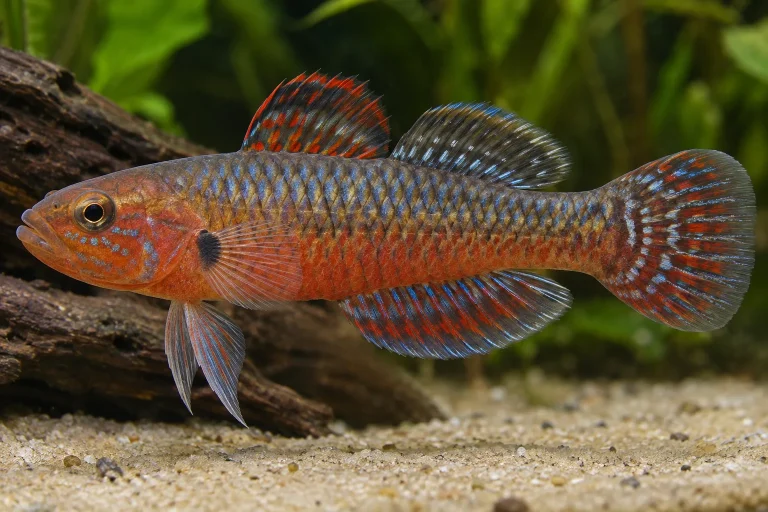
Hypseleotris compressa
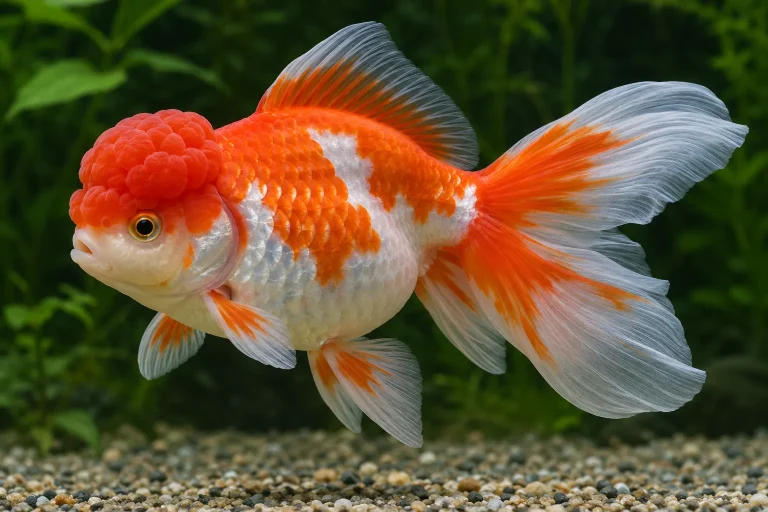
Carassius auratus
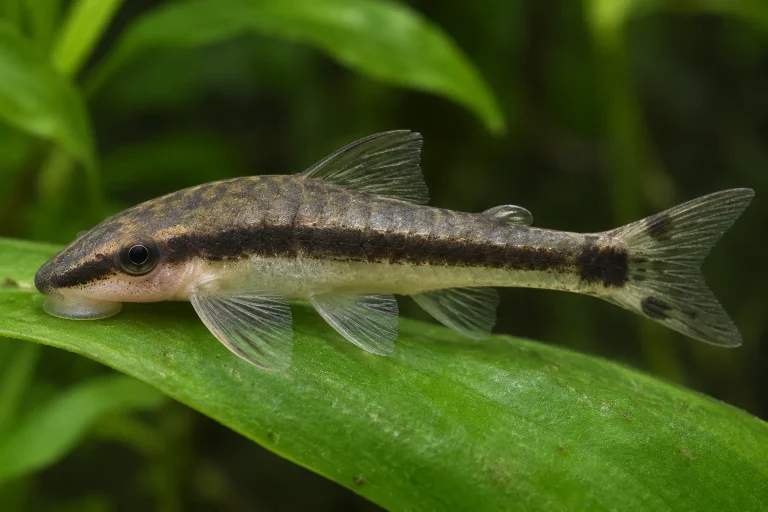
Otocinclus macrospilus