
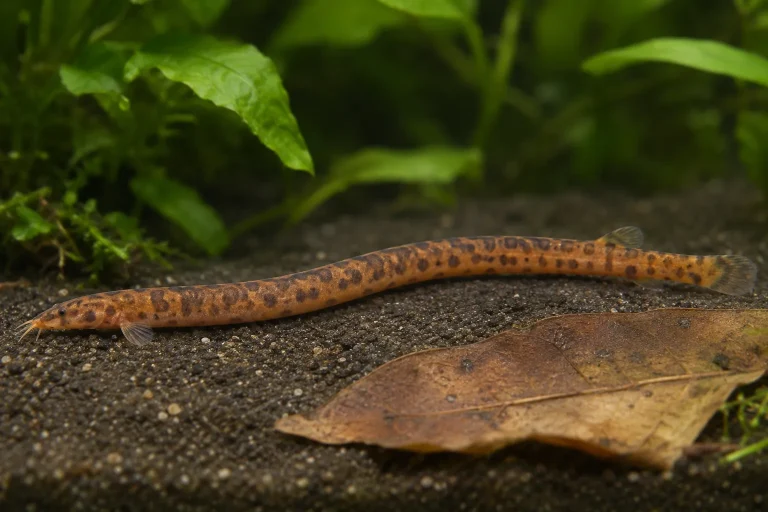
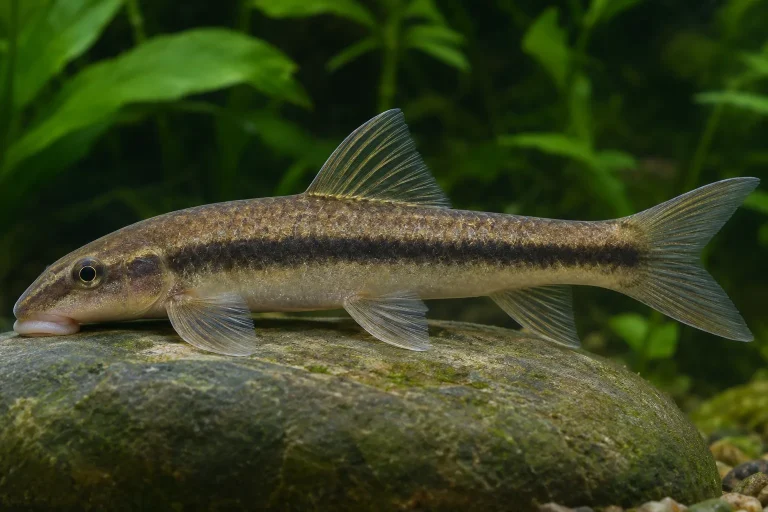
Spotted Coolie Loach
Pangio muraeniformis
- Care level
- Intermediate
- Adult size
- 7–10 cm
- Minimum tank
- 100 litres
- Temperature
- 24–28 °C
Species profile
Yasuhikotakia splendida
Common names: Splendid Loach
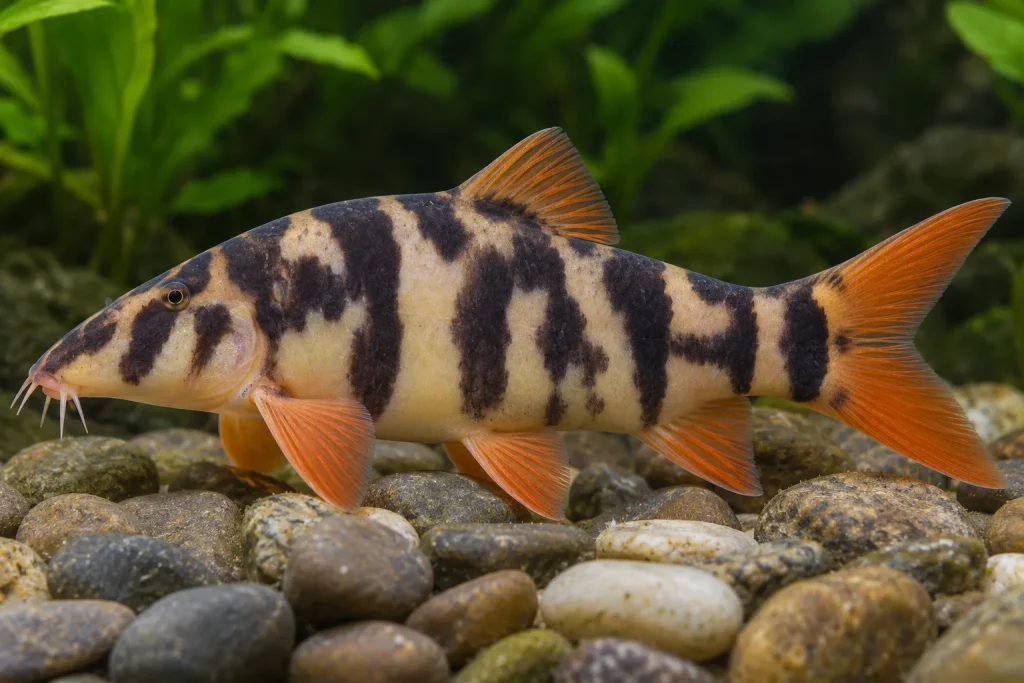
Up to 15 cm
Typical adult length 10.5–15 cm.


Splendid Loach is a bottom-dwelling loach requiring a 120 cm or longer aquarium, suitable substrate, stable water, and species-appropriate social housing.
A strong-bodied loach with a pale base colour, bold dark bars and blotches, and warm colour in the fins.
Rare in the trade and likely to be assertive with similar bottom-oriented fish.
External sexing is unreliable in juveniles. Mature females are usually deeper-bodied and fuller through the abdomen, while males may remain slimmer.
Keep a social group in an aquarium at least 120 cm long with a broad floor area, smooth sand or fine rounded gravel, strong filtration, wood, caves, and several shaded retreats. Maintain open routes between shelters and use a secure lid.
Splendid Loach is an active, intelligent social loach. Group members establish a hierarchy through chasing, clicking, side-by-side contests, and brief displays. A group that is too small can focus pressure on one fish.
Keep at least 5, preferably 6 or more. Do not keep a single specimen as a substitute for providing enough space.
Not permanently territorial, but dominant fish may control favourite caves or feeding positions. Provide more shelters than fish.
Use robust, similarly active tankmates that cannot be swallowed and do not have long delicate fins. Avoid ornamental snails, dwarf shrimp, very timid fish, and cramped groups of other bottom dwellers.
Maintain stable, clean water within the stated range. Oxygenation, low organic waste, and gradual acclimation are more important than forcing an exact pH or hardness value.
Some links may earn us a commission on qualifying purchases, at no extra cost to you. Check suitability, price and availability with the seller. How affiliate links work
 Manual aquarium siphon and gravel cleaner
A manual siphon for routine aquarium water changes and accessible waste removal. The seller lists a hose approximately 1.6 m long.
Control the flow and keep the intake clear of fish and delicate planting. Clean the areas appropriate for your substrate and layout rather than disturbing the entire planted bed.
Feed a varied sinking omnivore diet with quality pellets, frozen or live invertebrates, and occasional vegetable foods. Spread food across the aquarium so every member of the group can feed without crowding.
These loaches are enthusiastic feeders and can become overweight. Feed measured portions and check that shy individuals receive food.
Routine home-aquarium breeding of Splendid Loach is uncommon. Botiid loaches are seasonal egg scatterers with no parental care, and commercial production of some species relies on carefully managed conditioning and induced spawning. Adults may eat eggs, so any natural spawn must be separated or protected.
You can write a note about what worked for you, or send a photograph. We check everything before it appears here.
Pangio muraeniformis
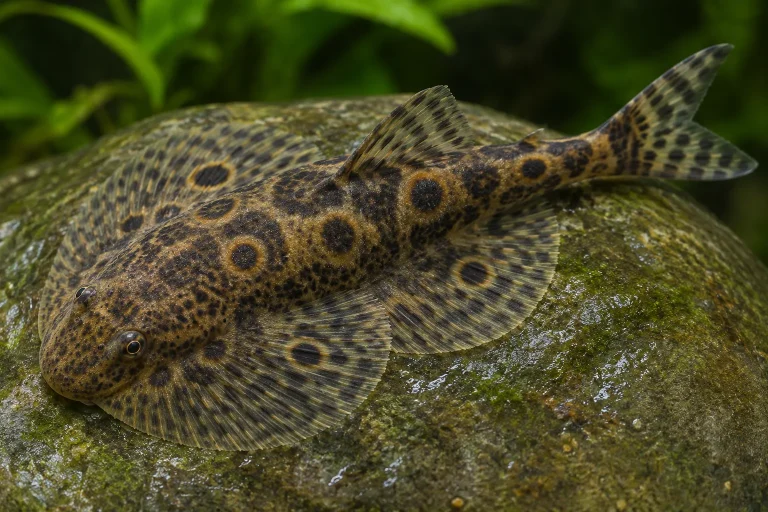
Homaloptera ocellata
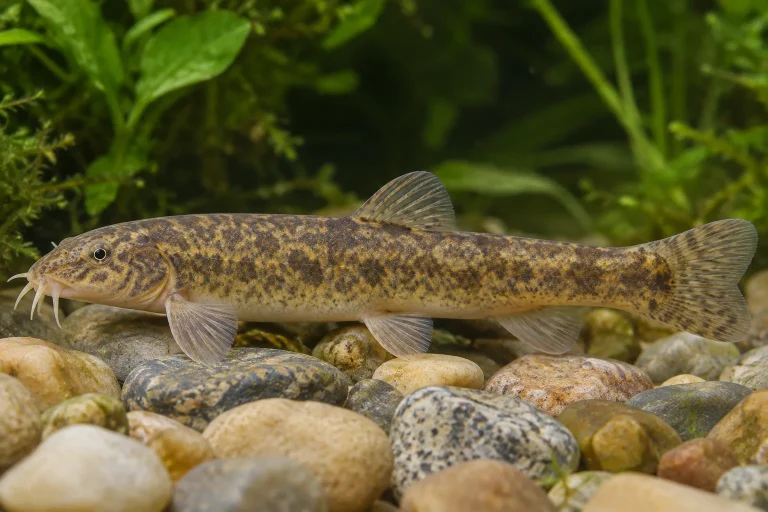
Barbatula barbatula
Gyrinocheilus aymonieri