
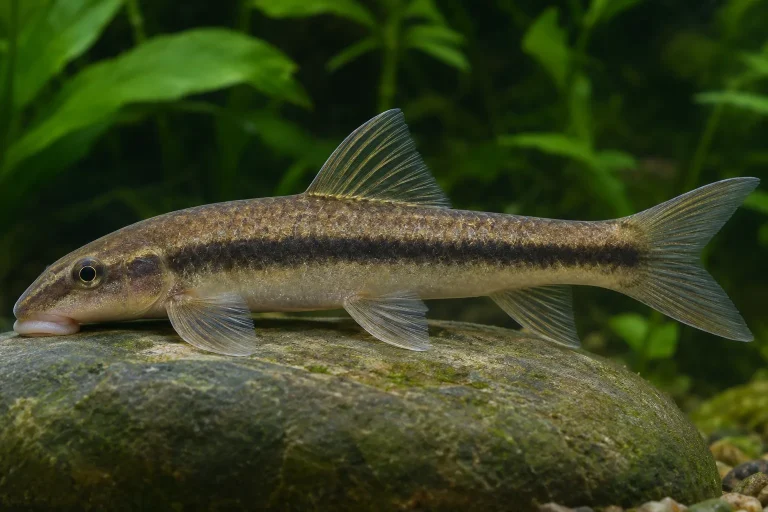
Sucking Loach
Gyrinocheilus aymonieri
- Care level
- Advanced
- Adult size
- 19.6–28 cm
- Minimum tank
- 400 litres
- Temperature
- 22–28 °C
Species profile
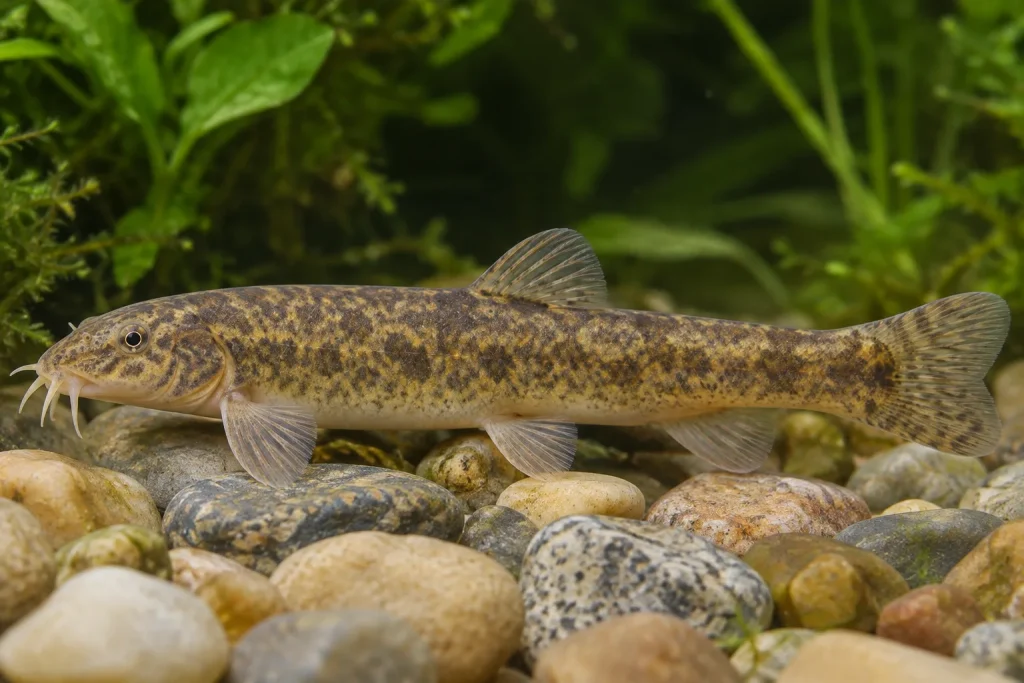
Barbatula barbatula
Common names: Stone Loach
Up to 15 cm
Typical adult length 10.5–15 cm.

Stone Loach is a bottom-dwelling loach requiring a 120 cm or longer aquarium, suitable substrate, stable water, and species-appropriate social housing.
A slender mottled brown loach with a rounded head, three pairs of barbels, and camouflage suited to gravel and stone.
A cool-water species; warm tropical aquariums shorten the safe oxygen margin.
Sexes are difficult to distinguish reliably outside breeding condition. Mature females may become fuller through the abdomen, while males of some species develop stronger colour, fin shape, or breeding tubercles.
Set up a mature aquarium at least 120 cm long with clean, well-oxygenated water, smooth gravel and sand, rounded rock piles, crevices, and a secure lid. Arrange several separate shelters and keep detritus from collecting beneath hardscape.
Stone Loach is a bottom-dwelling stream loach that searches among stones and crevices for small prey. It may rest in cover, then move quickly into current or across the substrate when feeding.
Keep 3 to 5 where the species is peaceful and space permits. For more territorial forms, a single fish or carefully observed group in a larger footprint is safer.
Adults may defend caves, rock gaps, or feeding areas from similar-shaped fish. Provide broken sight lines and multiple retreats.
Choose peaceful or moderately active stream fish that share the same temperature and oxygen needs. Avoid tiny shrimp, slow bottom fish, and combining several territorial loaches in a small footprint.
Prioritise high dissolved oxygen, cool-to-moderate temperature, strong surface movement, and very low organic waste. Heat reduces the oxygen safety margin.
Some links may earn us a commission on qualifying purchases, at no extra cost to you. Check suitability, price and availability with the seller. How affiliate links work
 Manual aquarium siphon and gravel cleaner
A manual siphon for routine aquarium water changes and accessible waste removal. The seller lists a hose approximately 1.6 m long.
Control the flow and keep the intake clear of fish and delicate planting. Clean the areas appropriate for your substrate and layout rather than disturbing the entire planted bed.
Offer small sinking foods rich in aquatic invertebrate protein. Combine a dependable prepared staple with frozen or live insect larvae, Artemia, Daphnia, or similar foods.
Feed small portions at more than one point because territorial fish may guard food in a confined area.
Captive breeding is poorly documented. The fish is expected to scatter or deposit small eggs among gravel, stones, or vegetation without parental care. Seasonal cooling or warming, increased flow, and live-food conditioning may be important, but claims should be treated cautiously unless documented for this species.
You can write a note about what worked for you, or send a photograph. We check everything before it appears here.
Gyrinocheilus aymonieri
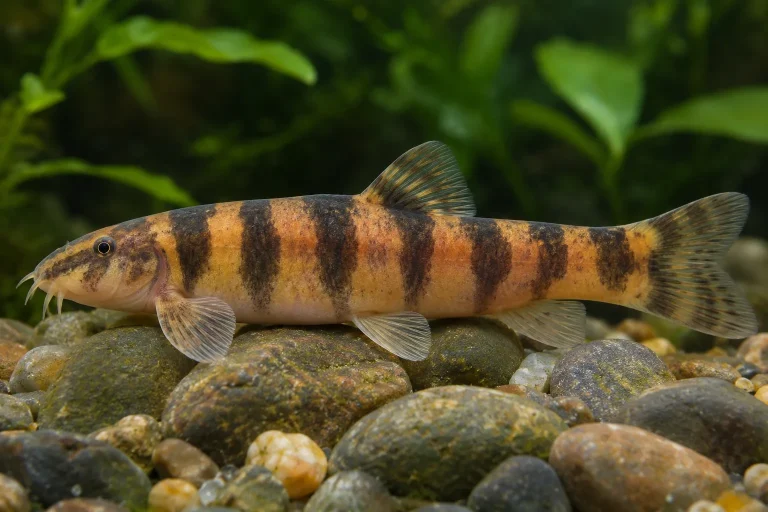
Schistura balteata

Gastromyzon sp.
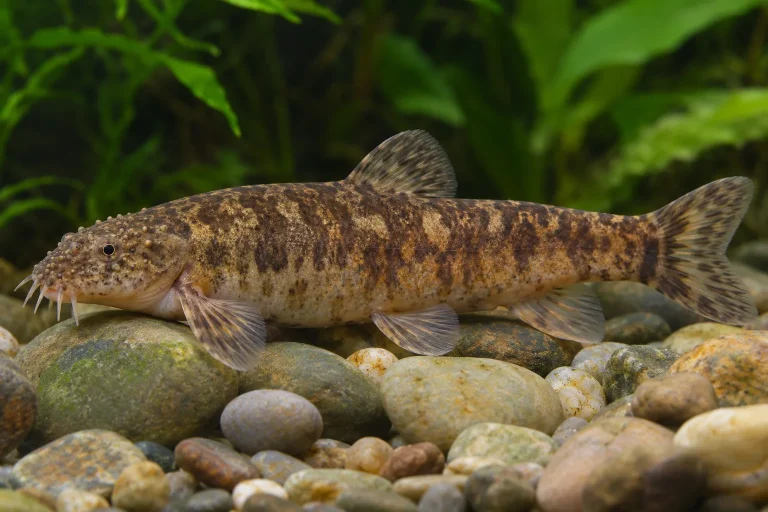
Traccatichthys tuberculum