
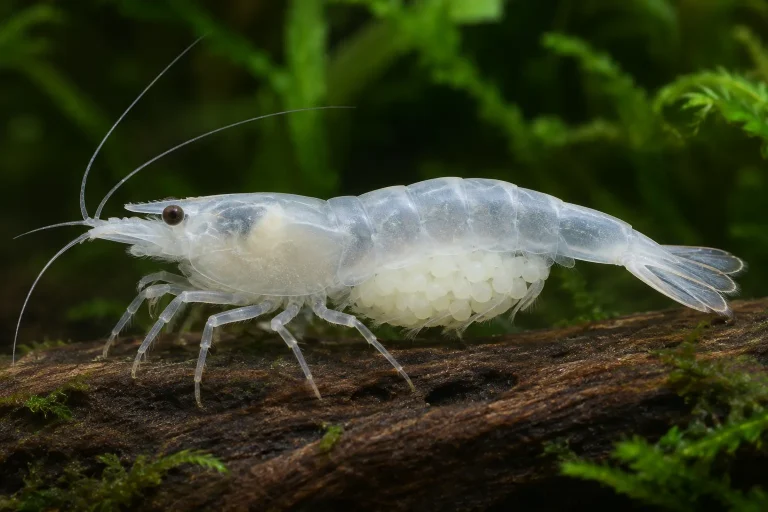
Snowball Shrimp
Neocaridina zhangjiajiensis
- Care level
- Beginner
- Adult size
- 2.5–3 cm
- Minimum tank
- 20 litres
- Temperature
- 18–26 °C
Species profile
Neocaridina palmata
Common names: Snow Storm Shrimp, Snowstorm Shrimp, Snowstorm Neocaridina
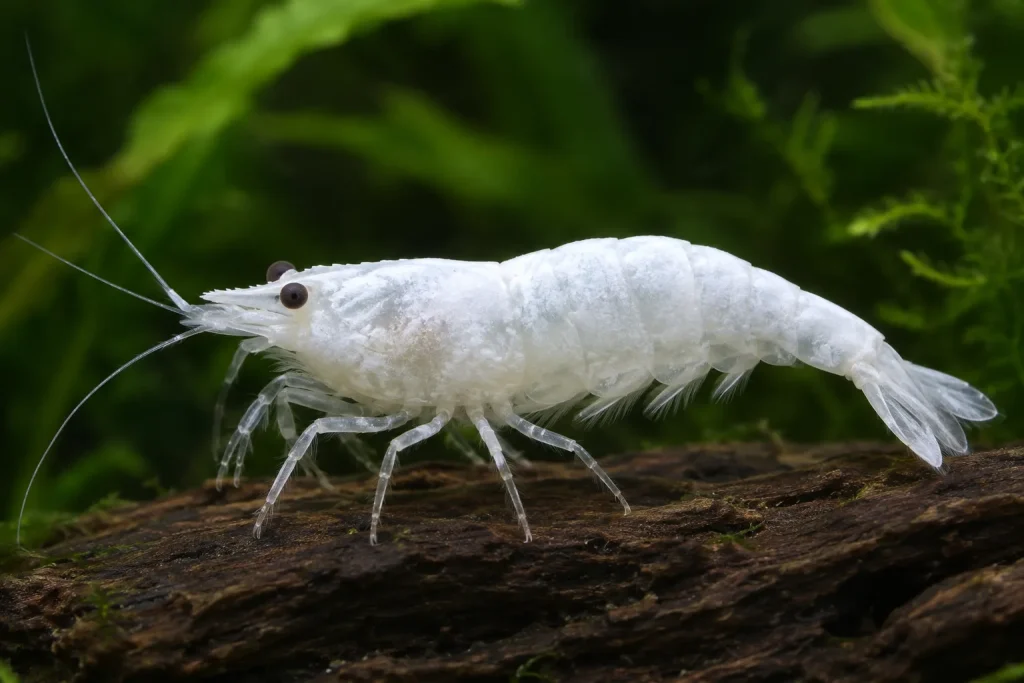
Up to 3.5 cm
Typical adult length 2.5–3.5 cm.


A selectively bred white Neocaridina line sold under the Snow Storm or Snowstorm trade name.
Opaque to platinum-white coverage over a pale or translucent body, often with a strong light dorsal area.
Snow Storm is a trade breeding-line name rather than a formal taxonomic variety. It is commonly sold as Neocaridina palmata, but some sellers use other Neocaridina names; verify breeder lineage before mixing or making scientific claims.
Females are generally larger and have a broader abdomen used to carry eggs.
Use a mature, stable aquarium with biofilm, plant cover, protected filter intakes, and gentle flow. These shrimp are hardy, but new tanks, copper in water or medication, and sudden changes are the usual causes of loss.
Peaceful and continuously active as a surface grazer.
Not a schooling species, but normally kept as a colony.
Not normally territorial.
Small fish may consume shrimplets.
Some links may earn us a commission on qualifying purchases, at no extra cost to you. Check suitability, price and availability with the seller. How affiliate links work
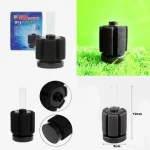 Xinyou XY-2835 small sponge filter
A small air-driven filtration option for a lightly stocked dwarf-shrimp setup. The seller lists a sponge approximately 5.5 cm across and 7 cm high.
An air pump and airline are required separately. Choose the complete filter and pump combination for your actual tank and stocking; this small sponge is not presented as the sole filter for a large aquarium.
Keep in soft, mildly acidic water with low KH. Stable remineralization and mature biofilm are essential for reliable moulting and juvenile survival.
An opportunistic grazer and detritivore consuming biofilm, algae, decomposing plant material, leaf litter, microorganisms, and other organic material.
Avoid leaving excess food in the aquarium.
Some links may earn us a commission on qualifying purchases, at no extra cost to you. Check suitability, price and availability with the seller. How affiliate links work
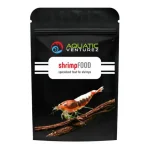 Aquatic Venturez dwarf-shrimp food – 10 g
A specialist prepared-food option for the dwarf-shrimp diet described above. This listing is a 10 g pack.
Use small portions alongside the mature grazing surfaces and other foods in the care guide. Remove leftovers and adjust the amount to the number of shrimp feeding. This is not a food recommendation for filter-feeding shrimp.
Females carry eggs beneath the abdomen until hatching. Development is direct, and hatchlings emerge as miniature shrimp.
You can write a note about what worked for you, or send a photograph. We check everything before it appears here.
Neocaridina zhangjiajiensis

Neocaridina davidi
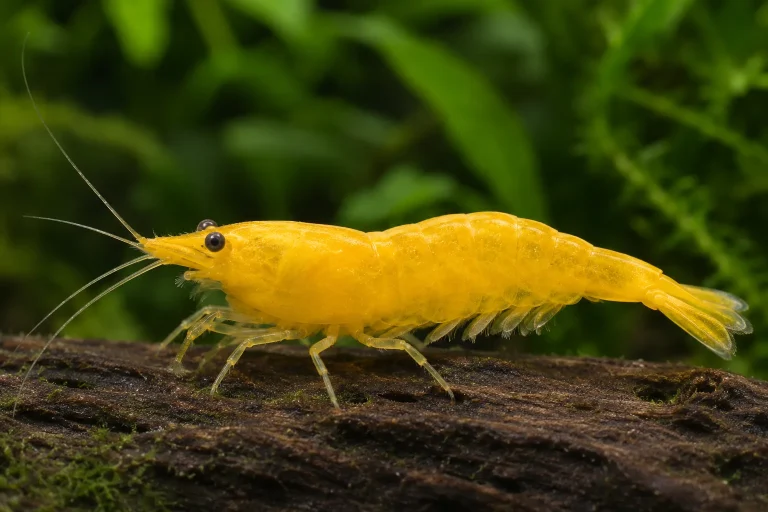
Neocaridina davidi
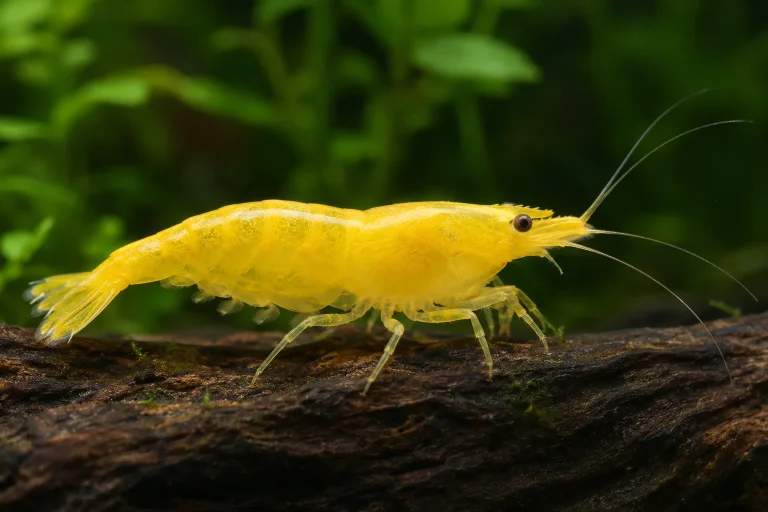
Neocaridina davidi