
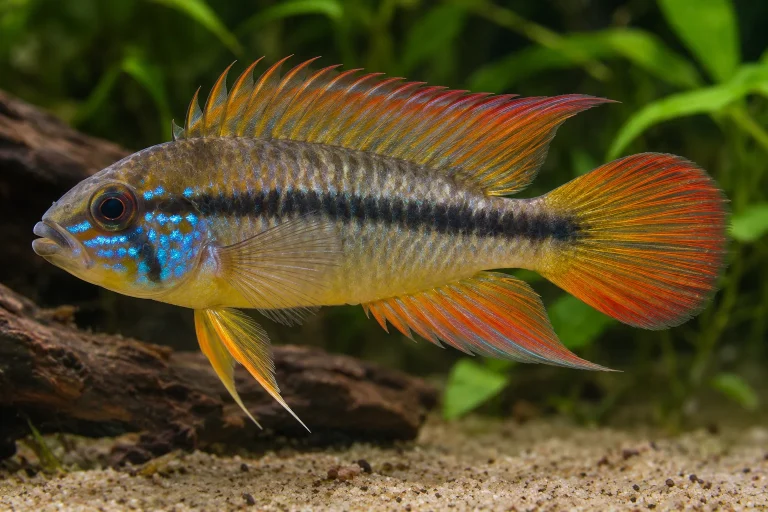
Blue Cheek Dwarf Cichlid
Apistogramma eunotus
- Care level
- Intermediate
- Adult size
- 4.5–7 cm
- Minimum tank
- 60 litres
- Temperature
- 23–30 °C
Species profile
Apistogramma barlowi
Common names: Barlow's Apistogramma, Larvophile Dwarf Cichlid, Mouthbrooder Apistogramma
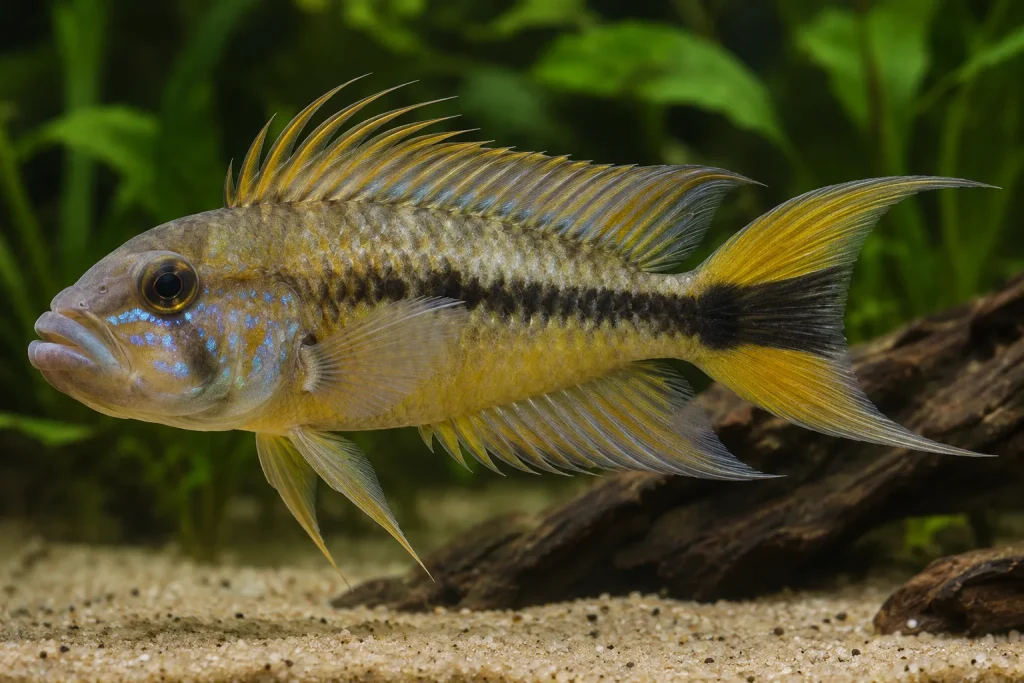
Up to 8 cm
Typical adult length 5–8 cm.


A rare Peruvian dwarf cichlid with an unusually large head and facultative mouthbrooding behaviour. It is a specialist fish for cool, clear, acidic stream-style aquaria.
A robust Apistogramma with an unusually large head, broad mouth, heavy jaws, and thick lips in adult males. Males develop extended anterior dorsal membranes and a lyre-like caudal fin divided into contrasting colour zones. Females are smaller with a more truncate tail and distinct brood markings.
The combination of enlarged male head and jaws, thick lips, divided caudal colour, extended first dorsal membranes, female breast band, and absence of a caudal-peduncle spot separates it from similar species. Do not confuse it with Apistogramma megastoma.
Males are much larger, with heavier jaws, thicker lips, longer fins, and a divided lyre-shaped caudal pattern. Females are smaller, have a shorter truncate caudal fin, and show strong dark breast and flank markings during brood care.
Use a 75 cm or longer mature aquarium for a pair, with fine sand, leaf litter, wood, several caves, and strong sight breaks. Provide gentle to moderate directional flow without turning the entire tank into high current. A species-focused setup is preferred.
A territorial, pair-oriented dwarf cichlid with unusual brood-care behaviour. Adults may alternate between shelter guarding and carrying larvae or fry.
Best maintained as one compatible pair. Mismatched adults can be aggressive, and a spare aquarium or divider should be available.
Both parents may participate in territory and brood defence. Aggression can shift rapidly during courtship, cave spawning, and mouthbrooding phases.
A species-only aquarium is safest. In a larger display, use only calm upper-water fish that tolerate similar water. Avoid other dwarf cichlids, intrusive bottom dwellers, aggressive fish, and ornamental shrimp.
Some links may earn us a commission on qualifying purchases, at no extra cost to you. Check suitability, price and availability with the seller. How affiliate links work
 Xilong XL-803D canister filter – up to 100 L
An external-filter option for the moderate-flow setup described above. The seller lists a 400 L/h pump and an aquarium capacity of up to 100 litres.
Check the volume of your actual aquarium and the needs of its complete stocking. Use the flow control or spray bar to avoid a concentrated current. A larger tank or a species requiring strong river flow needs a different filter selection.
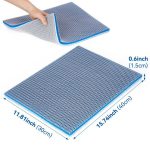 Cut-to-fit aquarium filter media pad
A cut-to-fit pad for compatible filter compartments. The listing describes a sheet approximately 16 by 12 inches; check the offered variant and the space inside your filter.
The seller description varies between five and eight layers, so confirm the actual sheet before ordering. Keep the filter manufacturer’s media arrangement and avoid obstructing the flow.
 Xinyou ceramic filter rings – 300 g
A biological-media option for a filter with a suitable media basket. This listing is a 300 g pack of ceramic rings.
Check the ring size and available basket space. Installing new media does not make a new aquarium instantly cycled, and these rings do not replace routine water-quality checks.
The type area includes clear acidic forest streams. Soft water near pH 5 to 6 is a sensible target, while moderate flow and high oxygen should be provided without excessive turbulence.
Some links may earn us a commission on qualifying purchases, at no extra cost to you. Check suitability, price and availability with the seller. How affiliate links work
 Manual aquarium siphon and gravel cleaner
A manual siphon for routine aquarium water changes and accessible waste removal. The seller lists a hose approximately 1.6 m long.
Control the flow and keep the intake clear of fish and delicate planting. Clean the areas appropriate for your substrate and layout rather than disturbing the entire planted bed.
A small-invertebrate predator that should receive varied live, frozen, and high-quality prepared foods.
Feed small portions once or twice daily. Newly imported fish may need live or frozen foods before accepting pellets. Avoid a long-term single-food diet.
A shelter-spawning species with facultative mouthbrooding. Eggs are laid in a cave or shelter. After hatching, the female, male, or both parents may carry larvae or fry in the mouth while also defending the territory. Behaviour varies among pairs and conditions.
You can write a note about what worked for you, or send a photograph. We check everything before it appears here.
Apistogramma eunotus
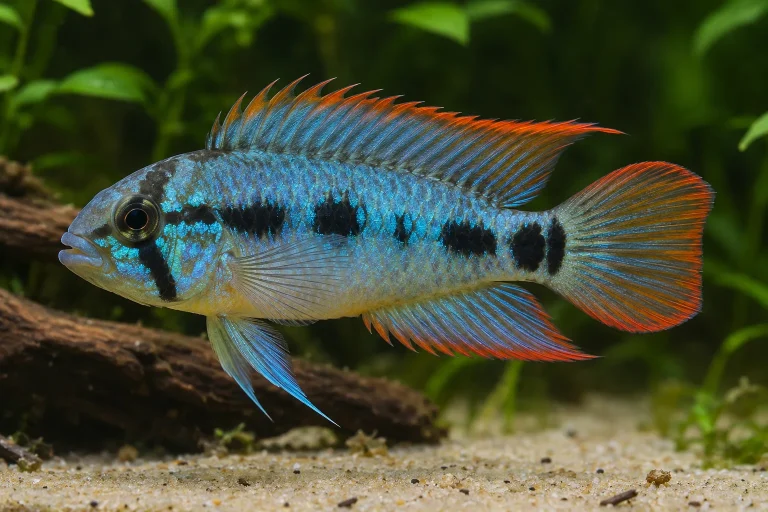
Apistogramma panduro
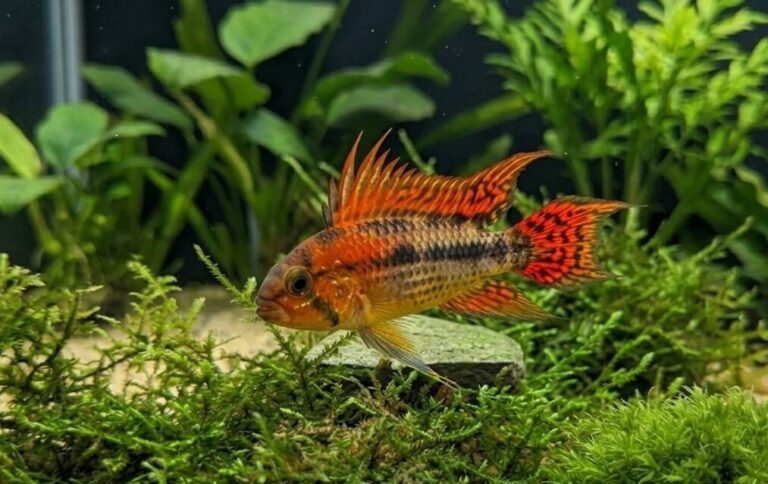
Apistogramma cacatuoides

Apistogramma elizabethae