
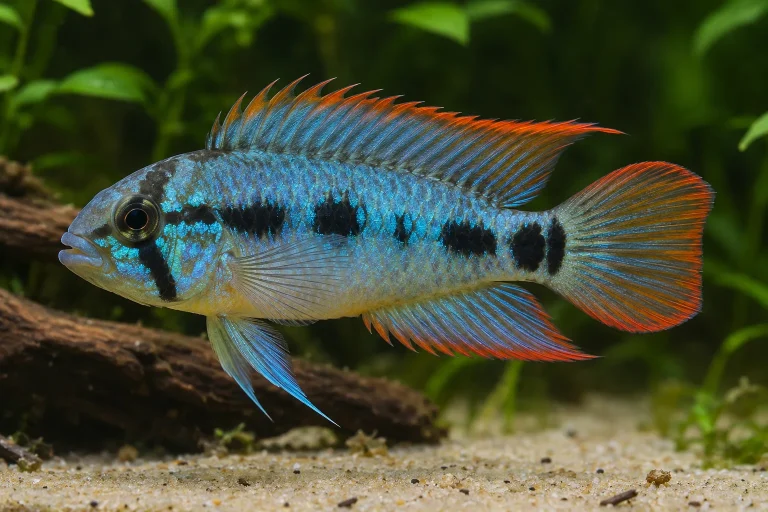
Blue Panda Apistogramma
Apistogramma panduro
- Care level
- Advanced
- Adult size
- 4–6.5 cm
- Minimum tank
- 60 litres
- Temperature
- 23–28 °C
Species profile
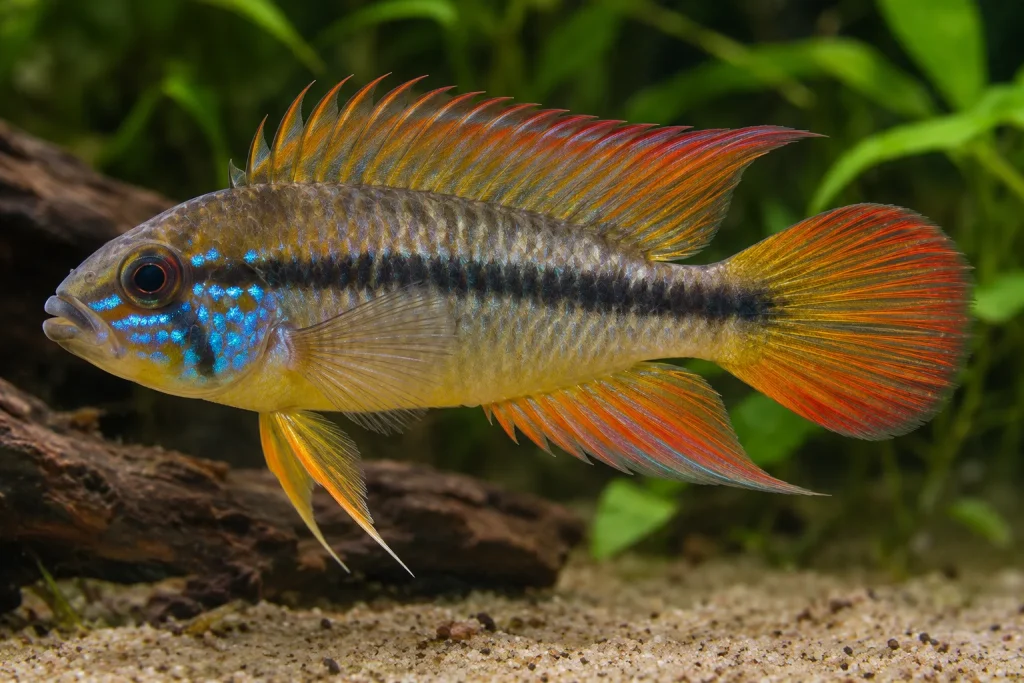
Apistogramma eunotus
Common names: Blue Cheek Dwarf Cichlid, Blue-Cheek Apistogramma, Eunotus Apistogramma
Up to 7 cm
Typical adult length 4.5–7 cm.



An adaptable western Amazon Apistogramma found across blackwater, clearwater, and whitewater systems. Males show blue facial iridescence, while females become yellow and highly territorial during brood care.
A moderately robust Apistogramma with metallic blue cheek and opercular markings, a dark lateral band, and variable orange, yellow, red, or blue fin colour in males. Females are smaller and turn yellow with black brood markings.
The blue cheek area is useful but not unique. Confirm the lateral pattern, caudal spot, fin shape, body proportions, and provenance because the eunotus complex includes similar forms and historically confused populations.
Males are larger and more colourful, with longer fins and blue facial iridescence. Females are smaller with shorter fins and develop bright yellow breeding colour with dark markings.
A compatible pair can use a 60 cm aquarium. A trio needs more floor area, multiple caves, and visual barriers. Fine sand, leaf litter, wood, and plants create suitable lower-level territories.
A generally manageable territorial dwarf cichlid that becomes much more assertive during spawning and fry care.
Keep as a pair or one male with several females where the layout provides independent caves and escape routes.
Males patrol a larger area, while a brooding female aggressively defends the cave and fry. Bottom-dwelling tank mates are most likely to be attacked.
Small peaceful tetras, pencilfish, and hatchetfish can work in a sufficiently large aquarium. Avoid aggressive cichlids, other Apistogramma in confined tanks, crowded bottom dwellers, and ornamental shrimp.
The species occurs in several Amazonian water types and is comparatively adaptable. Wild or locality-specific fish should still be maintained close to their source conditions. Soft to moderately hard water is generally suitable.
Some links may earn us a commission on qualifying purchases, at no extra cost to you. Check suitability, price and availability with the seller. How affiliate links work
 Manual aquarium siphon and gravel cleaner
A manual siphon for routine aquarium water changes and accessible waste removal. The seller lists a hose approximately 1.6 m long.
Control the flow and keep the intake clear of fish and delicate planting. Clean the areas appropriate for your substrate and layout rather than disturbing the entire planted bed.
A small-invertebrate predator that should receive varied live, frozen, and high-quality prepared foods.
Feed small portions once or twice daily. Newly imported fish may need live or frozen foods before accepting pellets. Avoid a long-term single-food diet.
A cave spawner with maternal brood care. The female attaches eggs to a cave ceiling, tends eggs and larvae, and leads the free-swimming fry. Captive breeding is possible across a moderate parameter range, though soft slightly acidic water is preferred.
You can write a note about what worked for you, or send a photograph. We check everything before it appears here.
Apistogramma panduro
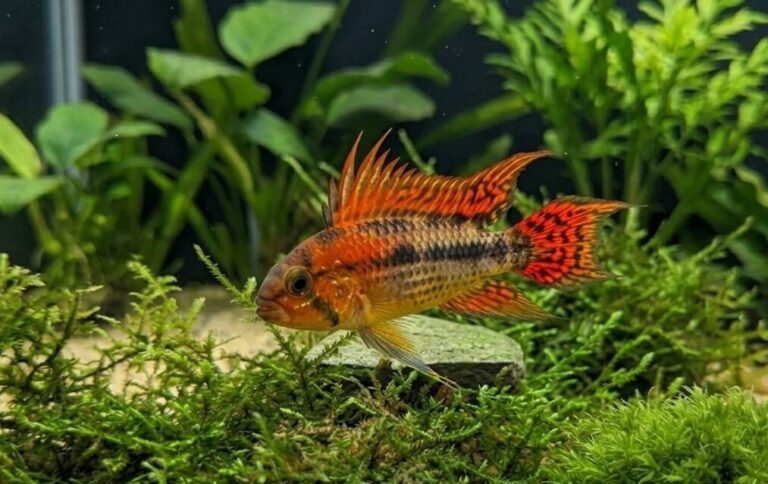
Apistogramma cacatuoides

Apistogramma elizabethae
Apistogramma hoignei