
Care Guide
Discus Care Guide
Discus need warm water around 28 to 30 °C, very clean and stable conditions, a group of at least five, and a large, tall tank. They are calm, sociable cichlids, but their high temperature and sensitivity to waste make them a better second or third fish than a first one.
Understanding Discus Care Requirements
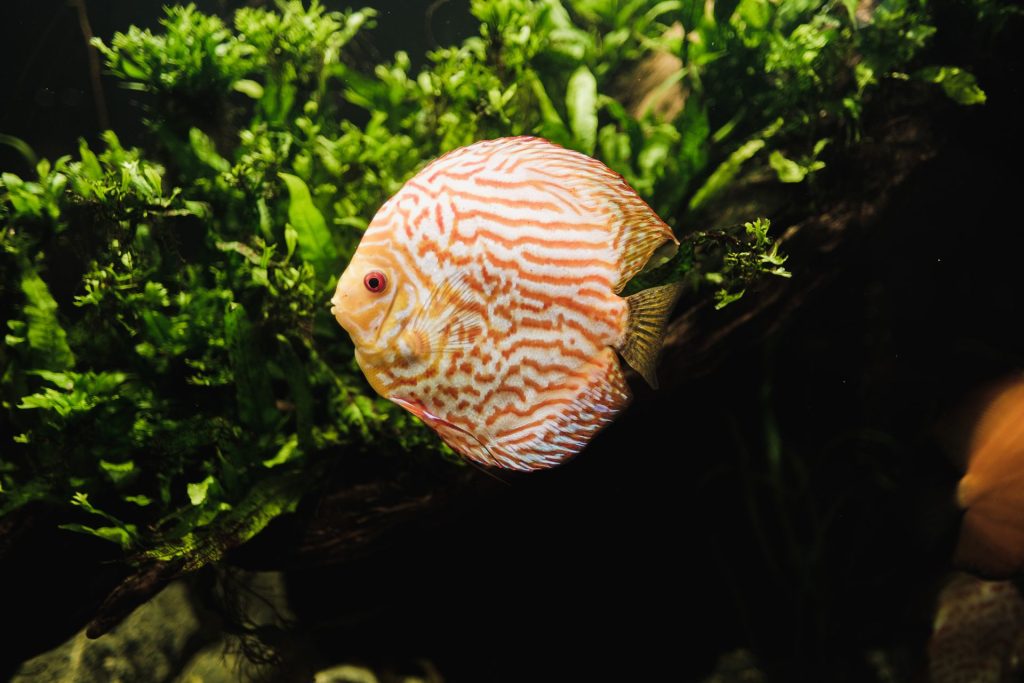
Discus (Symphysodon) are cichlids from the Amazon basin, where they live in warm, soft, slow-moving water among fallen branches and roots. Adults reach about 15 to 20 cm across, and most fish sold today are tank-bred colour strains that tolerate a wider range of water than wild fish.
Their care is not complicated, but it is unforgiving. They need high temperatures, very low waste levels, and calm surroundings, and they show stress quickly through dark colour, hiding and refusing food.
Tank Size and Aquarium Setup
Plan around adult size. A group of five or six adults needs roughly 250 to 300 litres, and a tank at least 45 to 50 cm tall suits their deep bodies. Juveniles are often sold at 5 to 8 cm and grow fast, so buy the tank for the adults they will become.
Keep the layout open in front for swimming, with tall plants or wood at the back for cover. Avoid strong currents. Many keepers use a bare or thin sand bottom so waste is easy to remove; planted tanks work too, provided the plants tolerate 28 °C or more.
Temperature and Water Quality
Keep the temperature between 28 and 30 °C. Tank-bred discus usually do well at a pH of about 6.0 to 7.5 and soft to moderately hard water; stable conditions matter more than chasing a low number. Wild discus need softer, more acidic water.
Warm water holds less oxygen and speeds up the breakdown of waste, so good surface movement and frequent water changes are part of normal care. Many keepers change 30 to 50% weekly or more, matching the new water’s temperature closely. Keep ammonia and nitrite at zero and nitrate low.
Feeding Discus
Feed a varied, high-quality diet: discus granules or pellets as the staple, with frozen bloodworm, brine shrimp, mysis and quality frozen mixes. Juveniles need three to five small meals a day to grow well; adults do fine with two or three.
Portion control matters because warm water fouls fast. Remove anything left after a few minutes. Traditional beef-heart mixes are rich and can pollute the water quickly, so use them sparingly if at all.
Group Size, Behavior, and Stress
Discus are social and feel safer in a group. Keep at least five so aggression spreads out; a single pair or a group of three often leaves one fish bullied. A pecking order is normal, but a fish that stays dark, hides in a corner or stops eating needs attention.
Breeding pairs become territorial and may guard part of the tank. Sudden noise, heavy traffic past the tank and frequent rearranging all add stress.
Choosing Discus Tank Mates
Any tank mate must be comfortable at discus temperatures. Common choices are cardinal and rummy-nose tetras, sterbai Corydoras, bristlenose plecos and some Apistogramma species. Choose calm fish that will not outcompete discus at feeding time.
Avoid fin nippers, boisterous or fast-feeding fish, and fish that prefer cooler water. Neon tetras and most Corydoras are at the top of their range at discus temperatures. Quarantine every new fish, because tank mates can bring in diseases that hit discus hard.
Health, Quarantine, and Maintenance
Quarantine new discus for four to six weeks in a separate tank before adding them to an established group. Common problems include gill flukes, intestinal flagellates and bacterial infections, and many begin when water quality slips.
Watch for dark colour, hiding, rapid breathing, white or stringy faeces, loss of appetite and pitting around the head. Test the water first, increase water changes if waste is high, and treat only once the cause is known.
Frequently Asked Questions
What Temperature Do Discus Need?
Keep discus between 28 and 30 °C. This is warmer than most community fish prefer, so choose tank mates that are comfortable at the same temperature.
How Many Discus Should Be Kept Together?
At least five, and six or more is better in a large tank. Smaller groups often leave one fish bullied, while a larger group spreads normal pecking-order behaviour.
Are Discus Suitable for Beginners?
They are not ideal as a first fish. Tank-bred discus are hardier than wild ones, but they still need high temperatures, very clean water and frequent large water changes. A keeper with some experience of stable tanks will find them much easier.
What Should Discus Be Fed?
A varied diet of discus granules or pellets, frozen bloodworm, brine shrimp, mysis and quality frozen mixes. Feed juveniles several small meals a day and adults two or three, and remove leftovers quickly.
Can Discus Live in Planted Tanks?
Yes, if the plants tolerate 28 °C or more. Anubias, Java fern, some Amazon swords, Vallisneria and many Cryptocoryne are common choices. Leave open space for swimming and keep the substrate easy to clean.
What Fish Can Live With Discus?
Calm, heat-tolerant fish such as cardinal and rummy-nose tetras, sterbai Corydoras, bristlenose plecos and some Apistogramma. Avoid fin nippers, fast competitive feeders and fish that prefer cooler water.
Why Is Clean Water Especially Important for Discus?
Warm water holds less oxygen and waste breaks down quickly, so ammonia and nitrate can affect discus faster than cooler-water fish. Discus also show stress readily, and clean water is the best protection against disease.
Tiger Discus
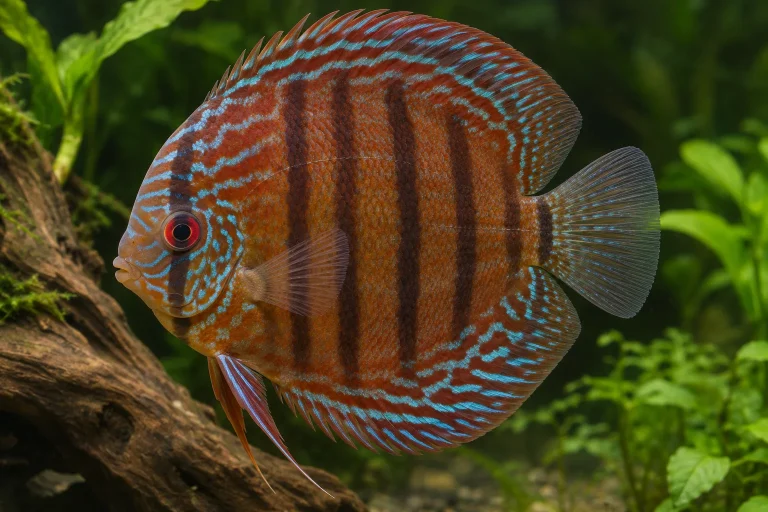
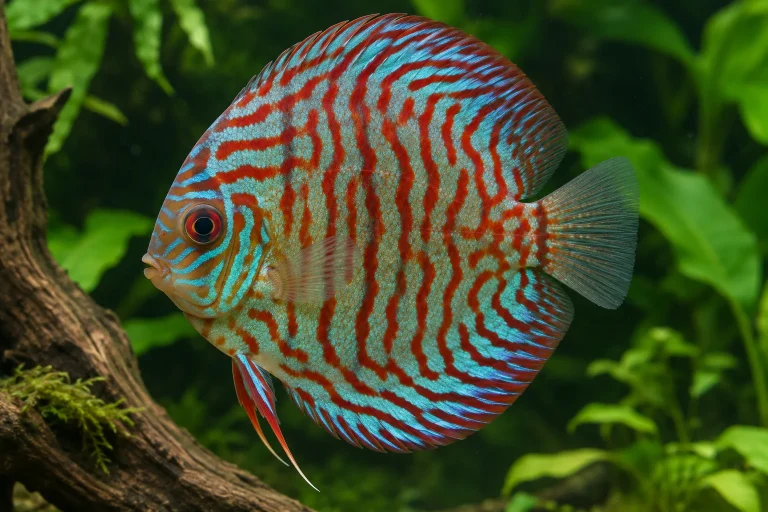
Symphysodon aequifasciatus var. "Tiger"
- Care level
- Advanced
- Adult size
- 15–18 cm
- Minimum tank
- 350 litres
- Temperature
- 27–31 °C
Red Sun Discus
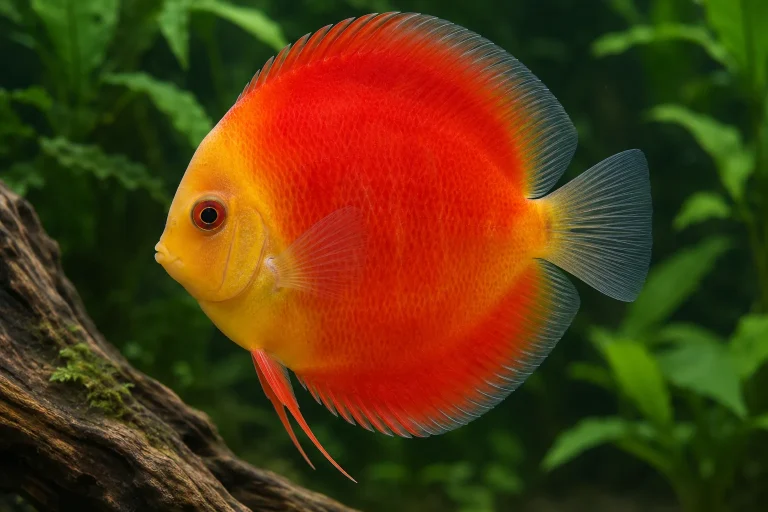
Symphysodon aequifasciatus var. "Red Sun"
- Care level
- Advanced
- Adult size
- 15–18 cm
- Minimum tank
- 350 litres
- Temperature
- 27–31 °C
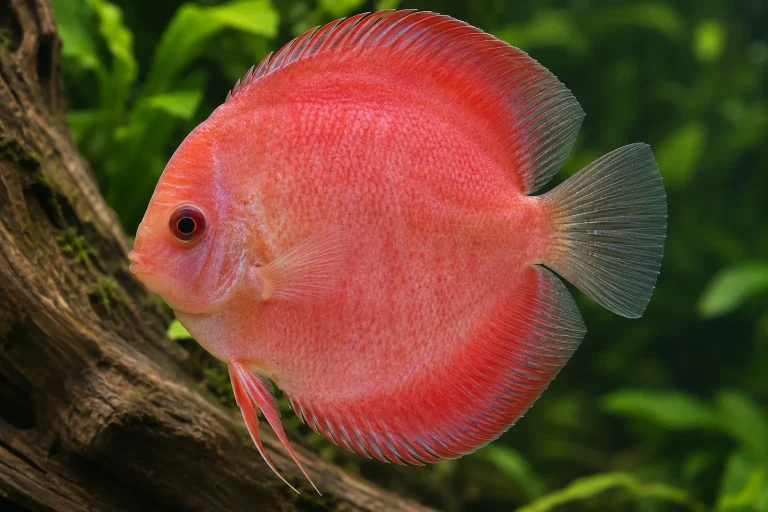
Rose Red Discus
Symphysodon aequifasciatus var. "Rose Red"
- Care level
- Advanced
- Adult size
- 15–18 cm
- Minimum tank
- 350 litres
- Temperature
- 27–31 °C