
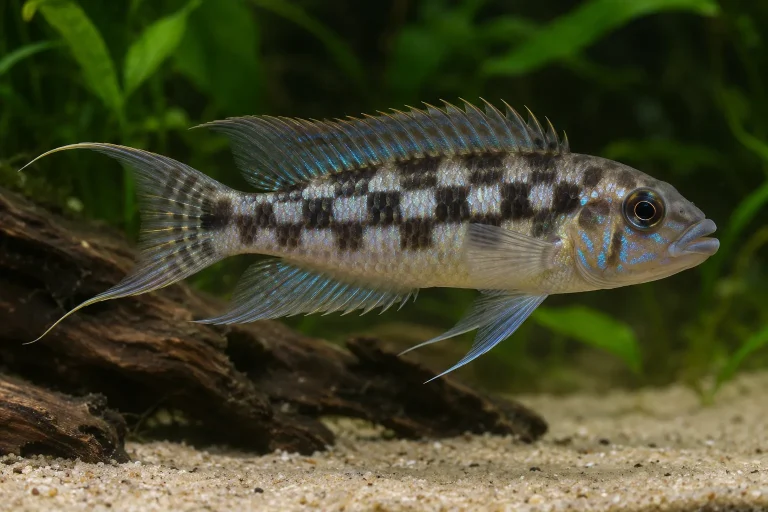
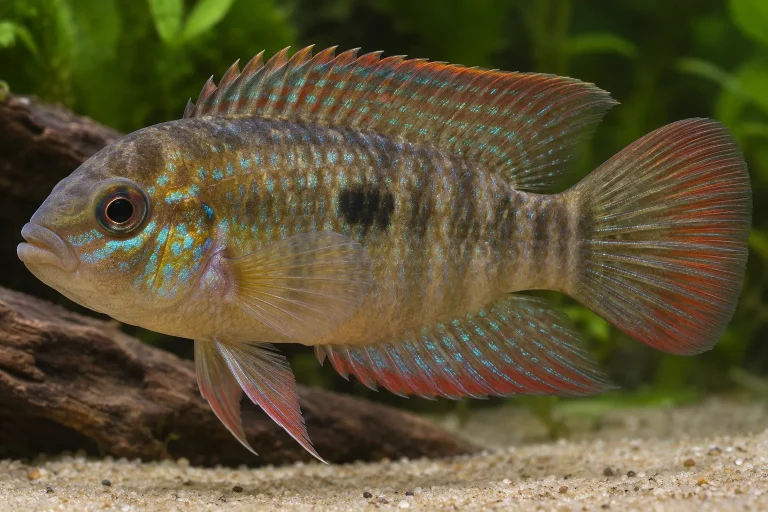
Checkerboard Cichlid
Dicrossus filamentosus
- Care level
- Advanced
- Adult size
- 5–9 cm
- Minimum tank
- 80 litres
- Temperature
- 26–30 °C
Species profile
Cichla ocellaris
Common names: Butterfly Peacock Bass, Peacock Bass
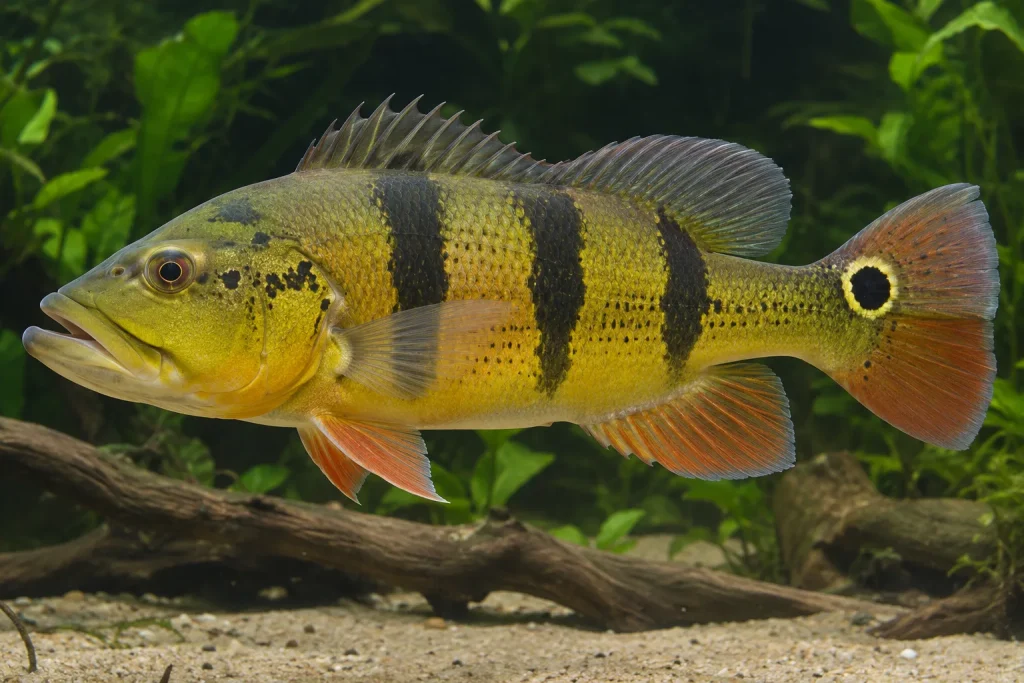
Up to 75 cm
Typical adult length 45–75 cm.




A very large predatory cichlid requiring a public-aquarium-scale system, powerful filtration, and carefully chosen tank mates.
A powerful elongate predator with three broad vertical bars, gold to olive colour, and a prominent eye-like spot on the caudal fin.
Peacock bass species are frequently confused. Adult bar pattern, opercular markings, lateral spotting, caudal ocellus, and known origin should be used together.
Adult males may become larger and develop a forehead hump during breeding, while females become fuller with eggs.
Only very large custom aquaria are suitable. Provide several metres of swimming length, powerful filtration, high oxygen, a secure heavy lid, and open water with large wood or rock structures.
An active visual predator that swallows smaller fish and can injure tank mates during feeding or territorial disputes.
Can be kept singly, as a compatible pair, or in a group only in exceptionally large systems. Unequal-sized juveniles may cannibalise one another.
Pairs defend broad spawning areas, and adults may become aggressive in confined quarters.
Only combine with similarly large, robust fish that cannot be swallowed and that tolerate the same warm water. Avoid small fish, shrimp, and slow fragile species.
Warm clean water with strong oxygenation and stable chemistry is required. Large adults produce heavy waste.
Some links may earn us a commission on qualifying purchases, at no extra cost to you. Check suitability, price and availability with the seller. How affiliate links work
 Manual aquarium siphon and gravel cleaner
A manual siphon for routine aquarium water changes and accessible waste removal. The seller lists a hose approximately 1.6 m long.
Control the flow and keep the intake clear of fish and delicate planting. Clean the areas appropriate for your substrate and layout rather than disturbing the entire planted bed.
A predatory piscivore that should be trained to balanced pellets and varied non-live whole foods.
Do not use feeder fish because of disease, nutritional imbalance, and injury risk. Avoid mammal and poultry meat.
A biparental substrate spawner. A pair clears a broad site, lays a large clutch, and guards eggs, larvae, and fry aggressively.
You can write a note about what worked for you, or send a photograph. We check everything before it appears here.
Dicrossus filamentosus
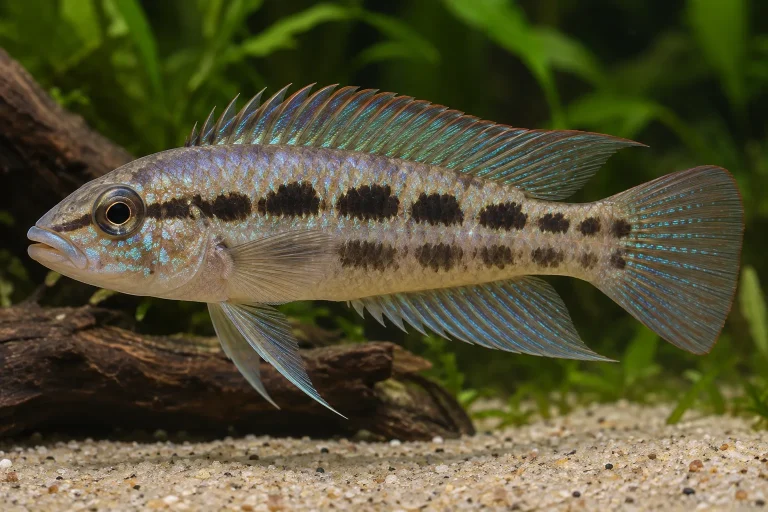
Dicrossus maculatus
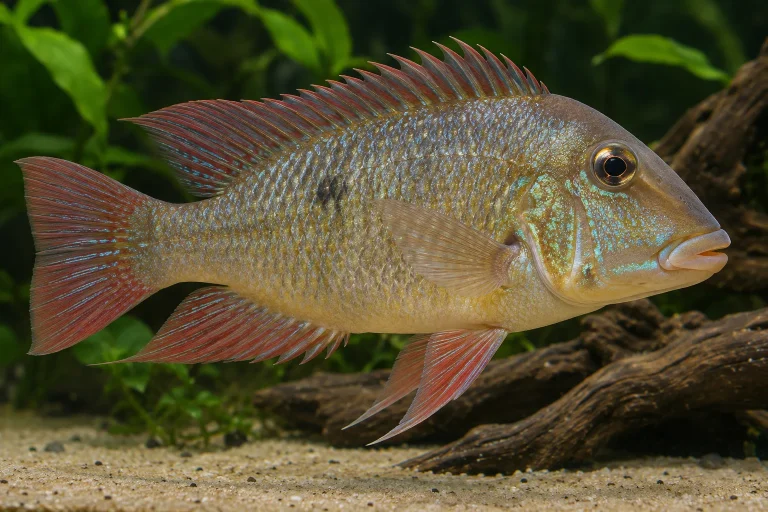
Satanoperca jurupari
Laetacara curviceps