
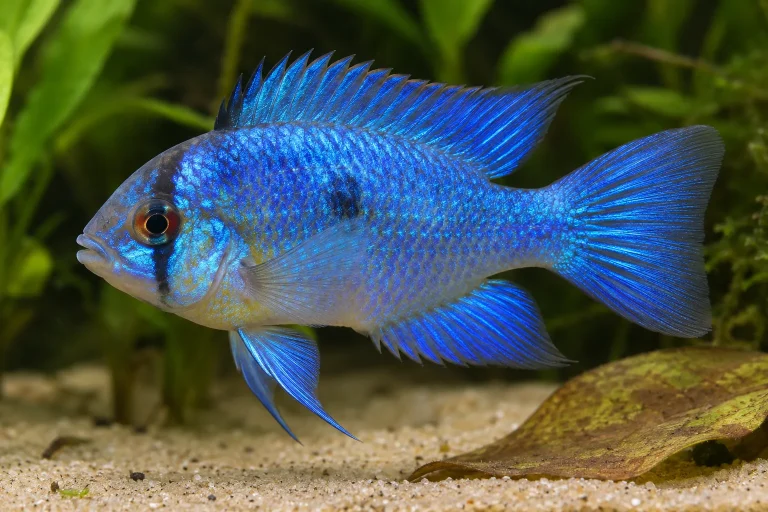
Electric Blue Ram Cichlid
Mikrogeophagus ramirezi var. "Electric Blue"
- Care level
- Intermediate
- Adult size
- 4–6 cm
- Minimum tank
- 60 litres
- Temperature
- 27–31 °C
Species profile
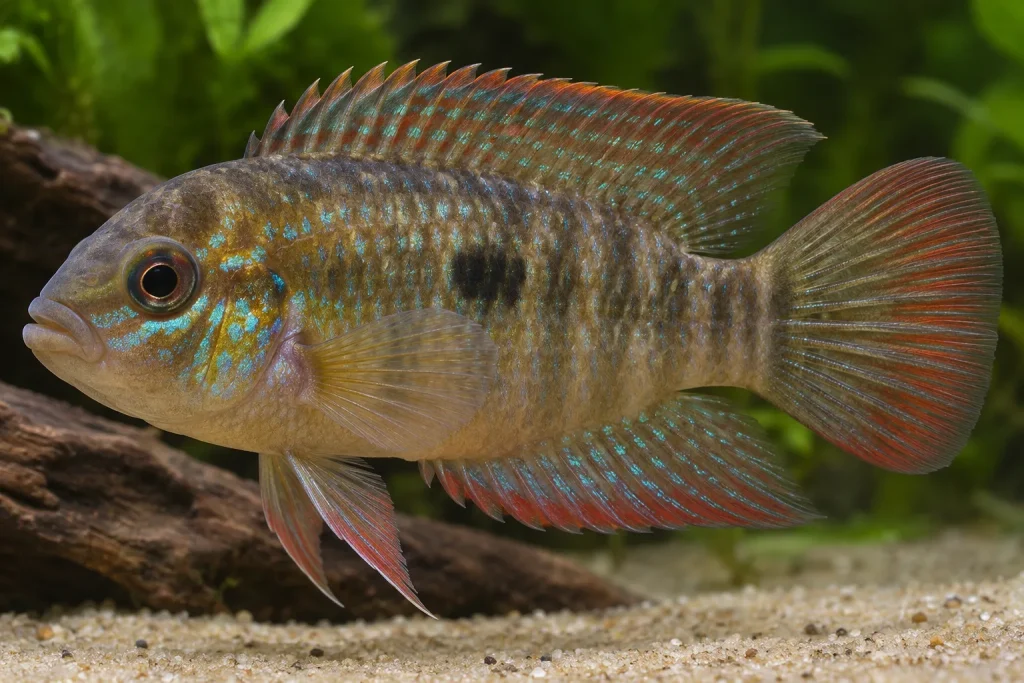
Laetacara curviceps
Common names: Dwarf Flag Cichlid, Curviceps Cichlid
Up to 8 cm
Typical adult length 5–8 cm.

A small, generally peaceful Amazonian cichlid suited to planted community aquaria with calm companions.
A compact tan cichlid with blue-green iridescence, a dark mid-body mark, subtle bars, and reddish fin accents.
It is often confused with other Laetacara. Head profile, flank mark, bar pattern, and collection data are useful.
Males may be slightly larger and longer-finned. Females become fuller and show stronger spawning colour.
Provide plants, wood, fine sand, leaf litter, flat spawning surfaces, and visual barriers. A compatible pair fits a well-maintained 75 cm aquarium.
Generally peaceful and reserved, becoming territorial only around a spawning site.
Usually kept as a bonded pair or small group in a larger planted tank.
Both parents defend eggs and fry within a modest territory.
Good with peaceful tetras, pencilfish, hatchetfish, and calm catfish. Shrimplets may be eaten.
Soft to moderately mineralised water is suitable, with slightly acidic conditions preferred for breeding.
Some links may earn us a commission on qualifying purchases, at no extra cost to you. Check suitability, price and availability with the seller. How affiliate links work
 Manual aquarium siphon and gravel cleaner
A manual siphon for routine aquarium water changes and accessible waste removal. The seller lists a hose approximately 1.6 m long.
Control the flow and keep the intake clear of fish and delicate planting. Clean the areas appropriate for your substrate and layout rather than disturbing the entire planted bed.
An omnivorous micropredator accepting small live, frozen, and prepared foods.
Feed small varied meals and ensure the pair is not outcompeted by fast fish.
A biparental open substrate spawner. Eggs are placed on stone, wood, or leaves and guarded by both parents.
You can write a note about what worked for you, or send a photograph. We check everything before it appears here.
Mikrogeophagus ramirezi var. "Electric Blue"
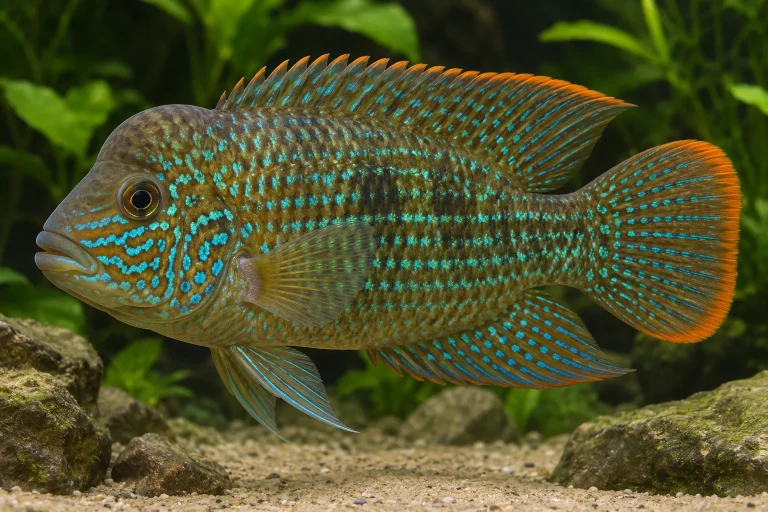
Andinoacara rivulatus
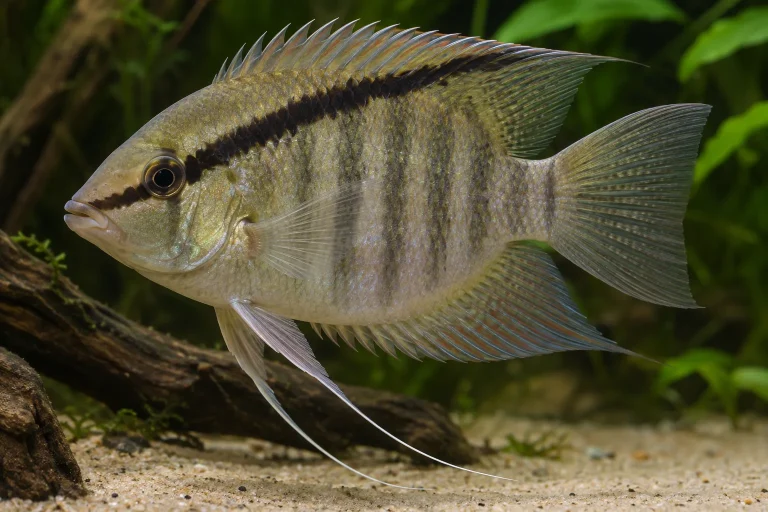
Mesonauta festivus
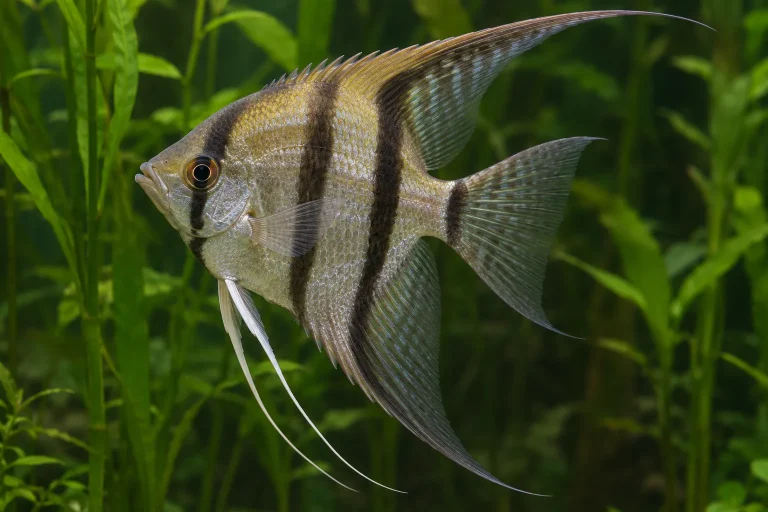
Pterophyllum scalare