
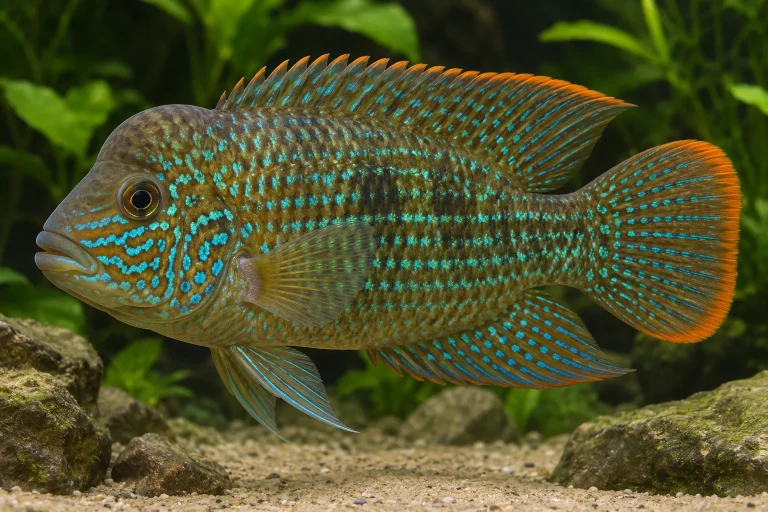
False Green Terror
Andinoacara rivulatus
- Care level
- Intermediate
- Adult size
- 20–30 cm
- Minimum tank
- 400 litres
- Temperature
- 22–28 °C
Species profile
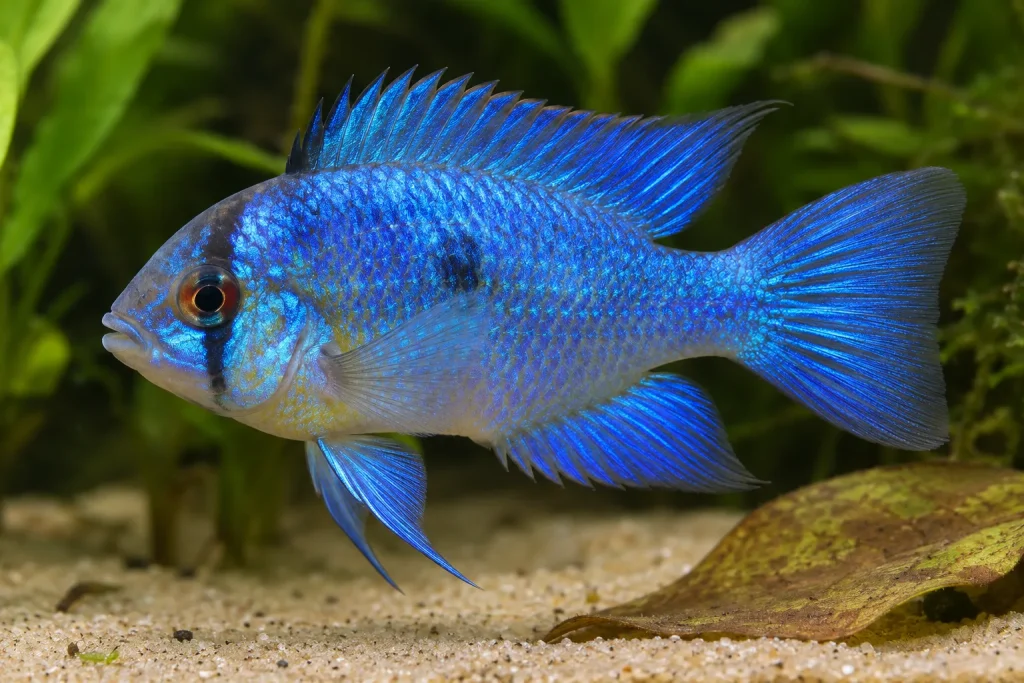
Mikrogeophagus ramirezi var. "Electric Blue"
Common names: Electric Blue Ram Cichlid, Electric Blue Ram
Up to 6 cm
Typical adult length 4–6 cm.


A brilliant blue captive ram strain that needs very warm, clean, stable water and a well-matched pair.
The body and fins carry intense metallic blue with reduced dark patterning; some fish retain a faint eye bar or flank spot.
Treat Electric Blue as a captive variety of M. ramirezi. Reduced dark markings make stress and health harder to read than in wild-type fish.
Males are usually larger with longer dorsal rays; mature females may show a fuller abdomen and a pinkish belly, though strain colour can obscure this.
Use a mature warm aquarium with fine sand, plants, wood, flat stones, gentle filtration, and quiet feeding areas.
A small lower-level cichlid that is usually peaceful outside breeding but sensitive to poor water quality and social stress.
Keep a compatible pair or a small group in a larger structured aquarium. Forced pairs may fight.
Both parents defend a small spawning territory and may attack bottom-dwelling fish near eggs or fry.
Use peaceful warm-water tank mates that do not dominate food. Shrimplets are prey, and cool-water community fish are unsuitable.
This strain needs consistently warm water and very low nitrogen waste. Soft to moderately mineralised water is suitable when stable.
Some links may earn us a commission on qualifying purchases, at no extra cost to you. Check suitability, price and availability with the seller. How affiliate links work
 Manual aquarium siphon and gravel cleaner
A manual siphon for routine aquarium water changes and accessible waste removal. The seller lists a hose approximately 1.6 m long.
Control the flow and keep the intake clear of fish and delicate planting. Clean the areas appropriate for your substrate and layout rather than disturbing the entire planted bed.
An omnivorous micropredator requiring varied small foods and excellent nutrition.
Feed several small meals daily. Avoid relying on flakes alone and do not keep at low temperature to slow metabolism.
A biparental open substrate spawner. Eggs are laid on a flat surface or in a shallow pit and guarded by both parents.
You can write a note about what worked for you, or send a photograph. We check everything before it appears here.
Andinoacara rivulatus
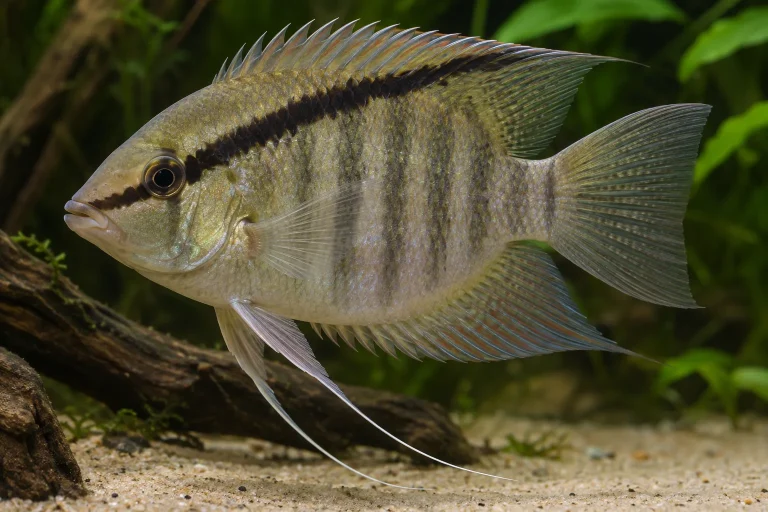
Mesonauta festivus
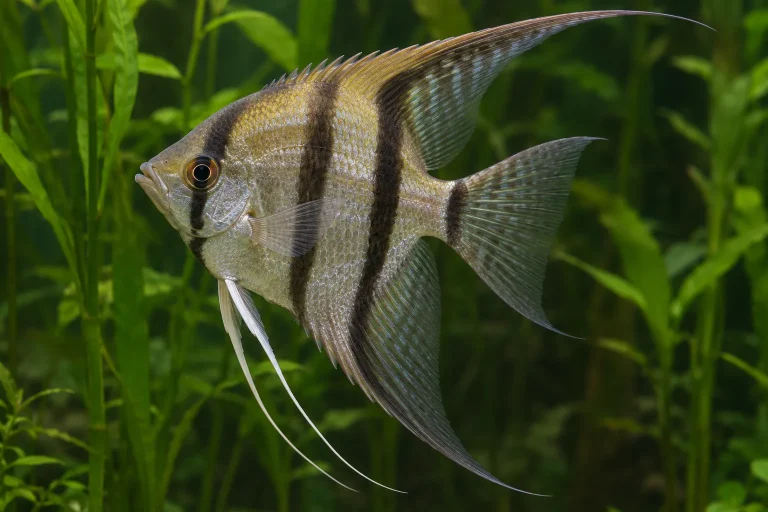
Pterophyllum scalare
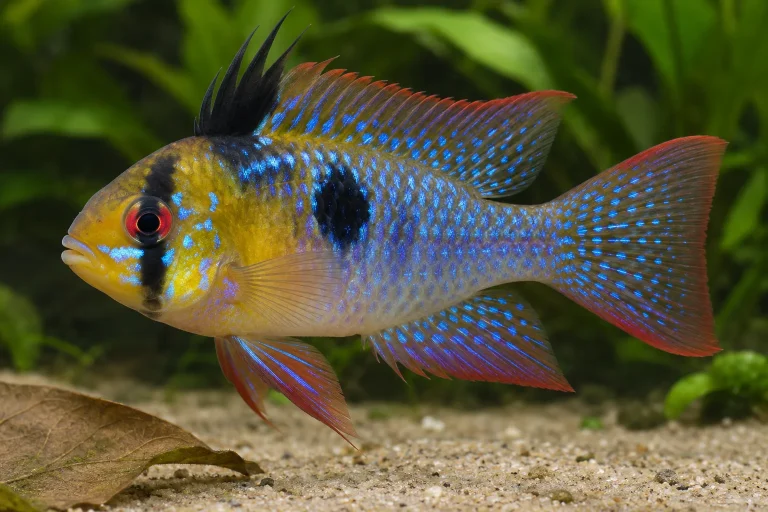
Mikrogeophagus ramirezi var. "German Blue"