
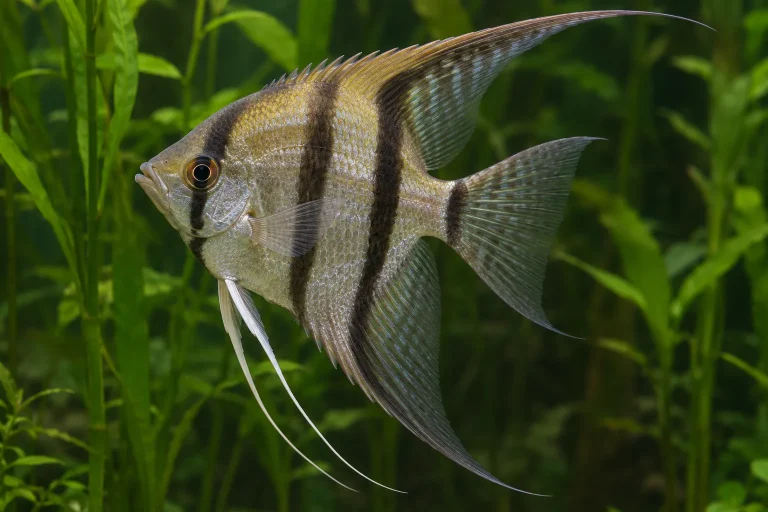
Freshwater Angelfish
Pterophyllum scalare
- Care level
- Intermediate
- Adult size
- 12–15 cm
- Minimum tank
- 200 litres
- Temperature
- 24–30 °C
Species profile
Mesonauta festivus
Common names: Flag Cichlid, Festive Cichlid
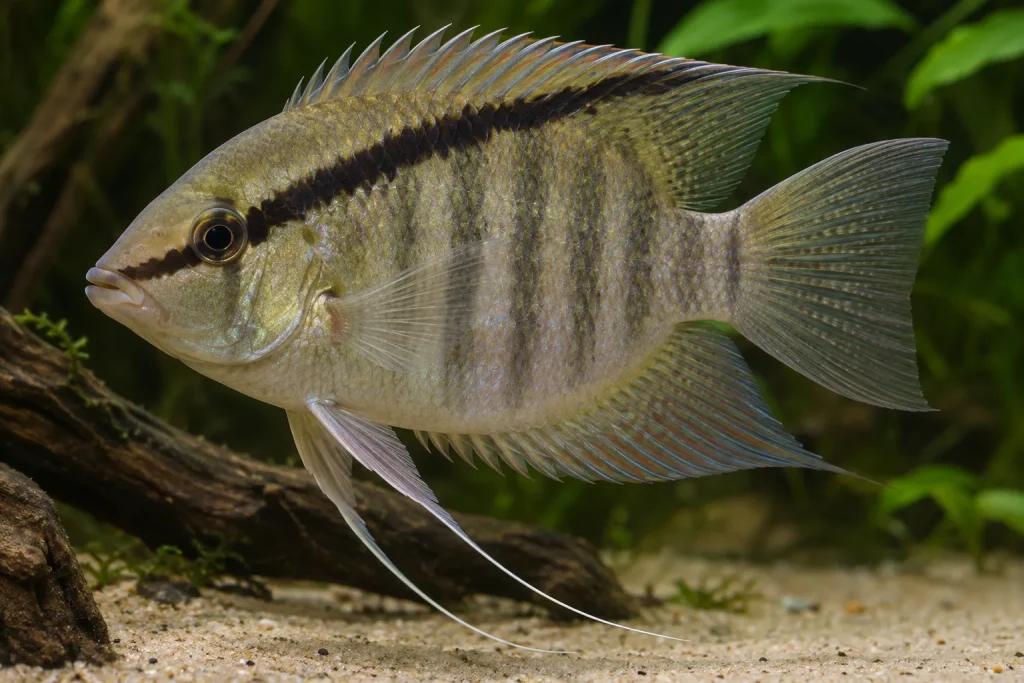
Up to 18 cm
Typical adult length 12–18 cm.





A tall, social Amazonian cichlid that swims among vegetation and branches and is best maintained in a calm group.
A laterally compressed silver to olive cichlid with a bold diagonal stripe from the mouth toward the dorsal fin and subtle vertical bars.
Several Mesonauta species are sold as festivus. The diagonal stripe, bar pattern, scale counts, and locality should be checked.
Sexes are similar. Mature males may be larger with longer fin tips, while females become fuller before spawning.
Keep a group in a tall planted aquarium with open swimming space, vertical branches, floating cover, broad leaves, and gentle filtration.
Generally peaceful and social, but breeding pairs defend vertical spawning sites.
Best in a group of five or more. Pairs form within the group and should have space to separate.
Pair aggression is focused around eggs and larvae rather than the entire tank in a spacious setup.
Suitable with peaceful medium-sized Amazonian fish. Very small fish and shrimp may be eaten, and fin-nippers should be avoided.
Warm soft to moderately mineralised water is suitable. Stable water and calm surroundings reduce skittish behaviour.
Some links may earn us a commission on qualifying purchases, at no extra cost to you. Check suitability, price and availability with the seller. How affiliate links work
 Manual aquarium siphon and gravel cleaner
A manual siphon for routine aquarium water changes and accessible waste removal. The seller lists a hose approximately 1.6 m long.
Control the flow and keep the intake clear of fish and delicate planting. Clean the areas appropriate for your substrate and layout rather than disturbing the entire planted bed.
An omnivore taking insects, crustaceans, fruits, seeds, plant material, and prepared foods.
Include plant material and floating or slowly sinking foods. Avoid a protein-only diet.
A biparental substrate spawner that commonly places eggs on a vertical leaf, branch, or other upright surface.
You can write a note about what worked for you, or send a photograph. We check everything before it appears here.
Pterophyllum scalare
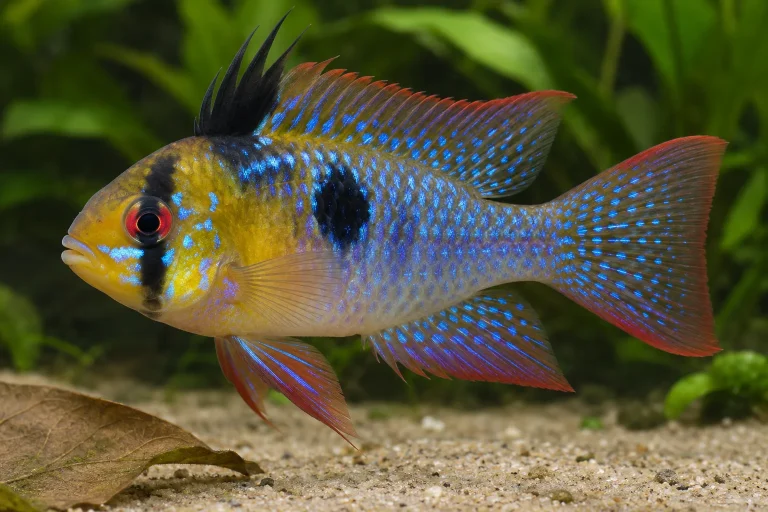
Mikrogeophagus ramirezi var. "German Blue"
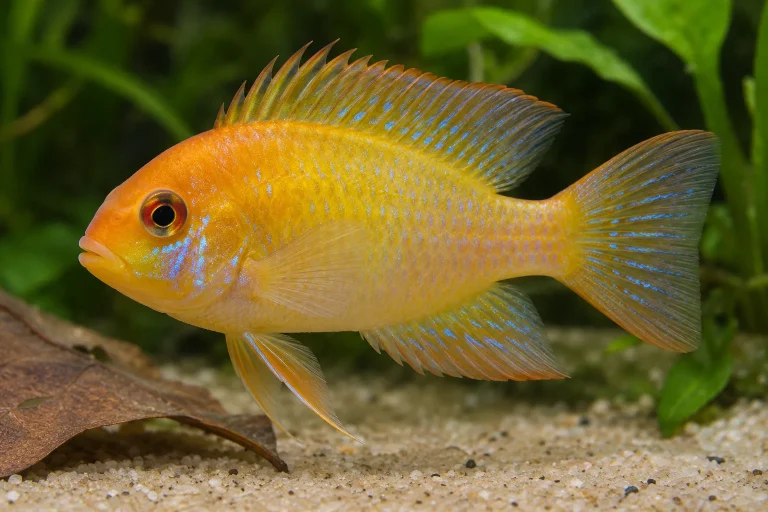
Mikrogeophagus ramirezi var. "Gold"
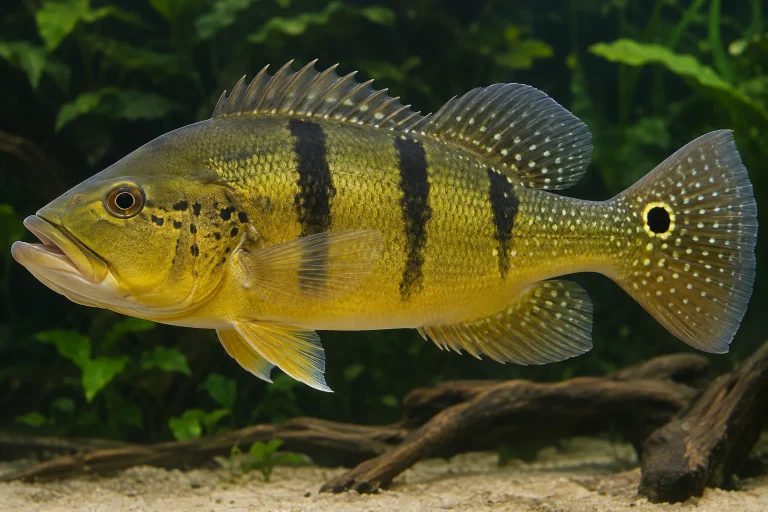
Cichla kelberi