
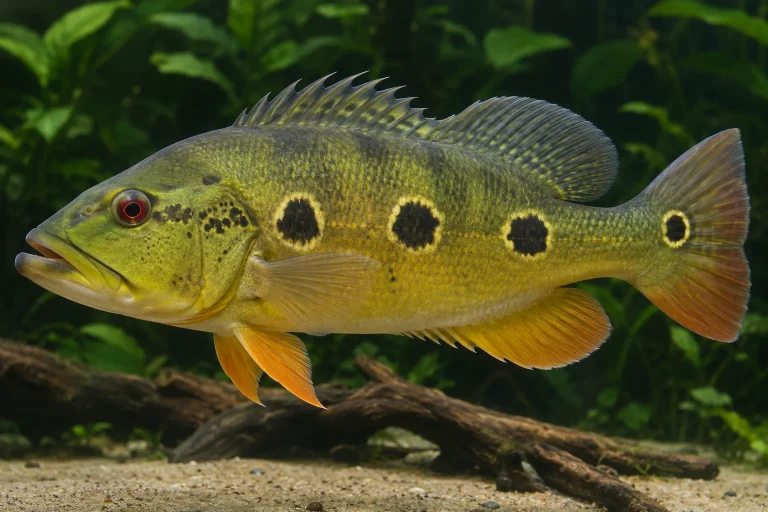
Orinoco Peacock Bass
Cichla orinocensis
- Care level
- Specialist
- Adult size
- 45–65 cm
- Minimum tank
- 1800 litres
- Temperature
- 24–30 °C
Species profile
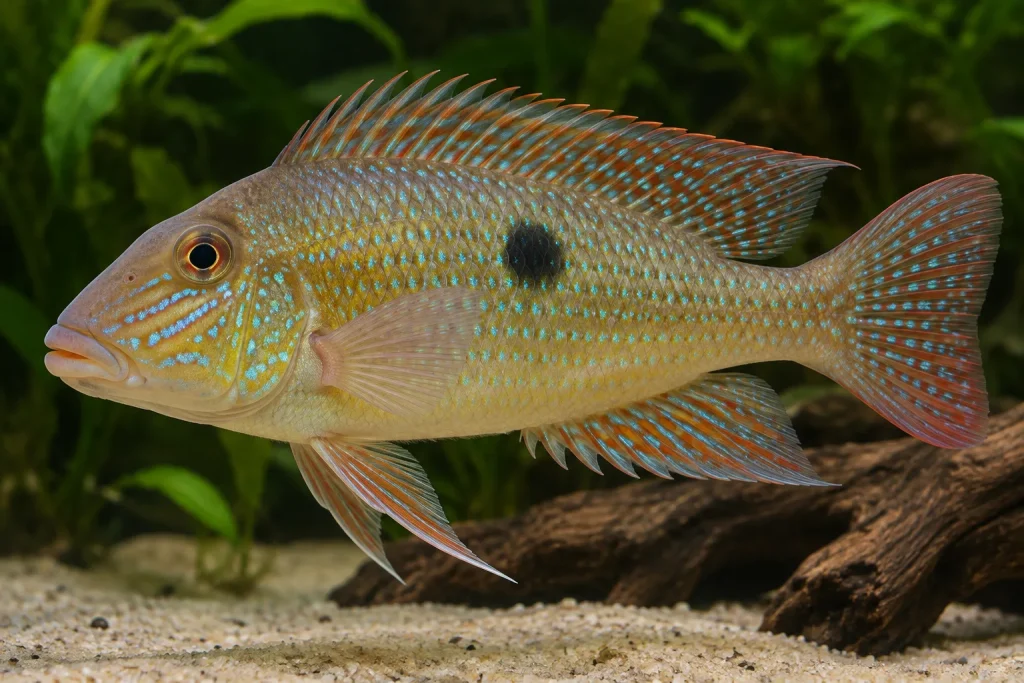
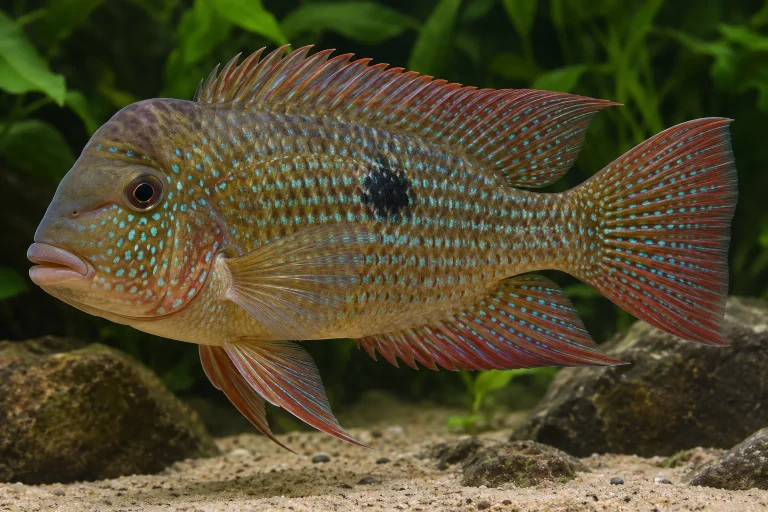
Geophagus mirabilis
Common names: Mirabilis Eartheater
Up to 20 cm
Typical adult length 14–20 cm.


A rare Brazilian eartheater best maintained in a social group over fine sand with excellent filtration.
A slender silver-gold Geophagus with iridescent blue-green spotting, warm fin markings, and a dark lateral spot.
This uncommon species can be confused with related Geophagus. Provenance and adult pattern are essential for reliable identification.
Adult males may become larger and more extended-finned, but sexing juveniles is unreliable.
Keep a group over fine sand in a mature aquarium with strong filtration, high oxygen, wood, and open floor space.
A social, generally peaceful sand-sifter with temporary pair territoriality.
Keep at least five to prevent one fish from receiving constant aggression.
Pairs defend a limited spawning area.
Use peaceful robust companions; avoid small fish, shrimp, and aggressive cichlids.
Warm soft slightly acidic water is preferred. Stable clean conditions are essential.
Some links may earn us a commission on qualifying purchases, at no extra cost to you. Check suitability, price and availability with the seller. How affiliate links work
 Manual aquarium siphon and gravel cleaner
A manual siphon for routine aquarium water changes and accessible waste removal. The seller lists a hose approximately 1.6 m long.
Control the flow and keep the intake clear of fish and delicate planting. Clean the areas appropriate for your substrate and layout rather than disturbing the entire planted bed.
An omnivorous sand-sifter taking small invertebrates, detritus, and prepared foods.
Offer several small sinking meals spread across the substrate.
Available evidence supports biparental substrate spawning and guarding typical of related Geophagus, though detailed aquarium reports are limited.
You can write a note about what worked for you, or send a photograph. We check everything before it appears here.
Cichla orinocensis
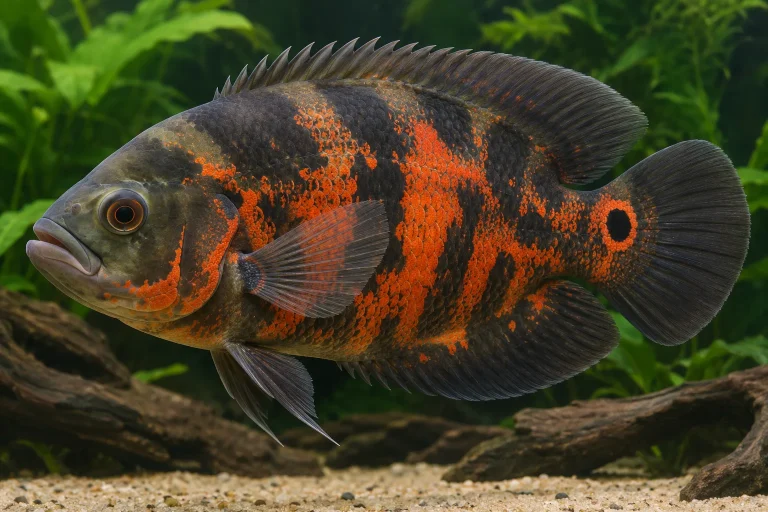
Astronotus ocellatus
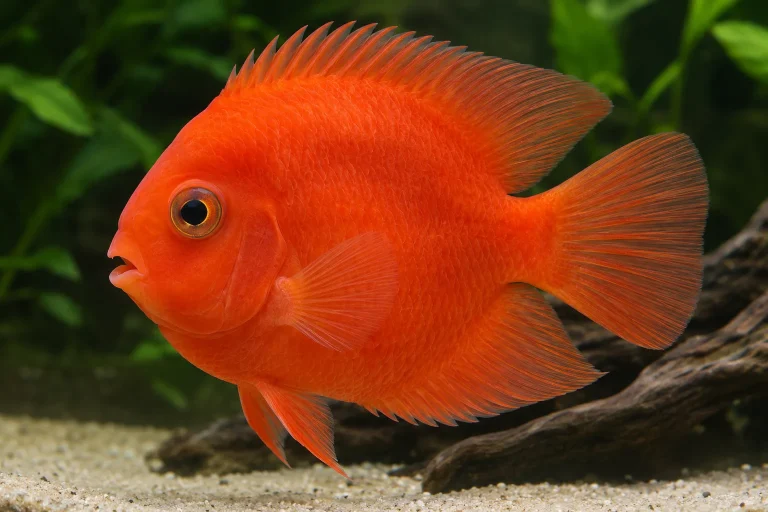
Amphilophus citrinellus × Vieja melanurus
Geophagus brasiliensis