
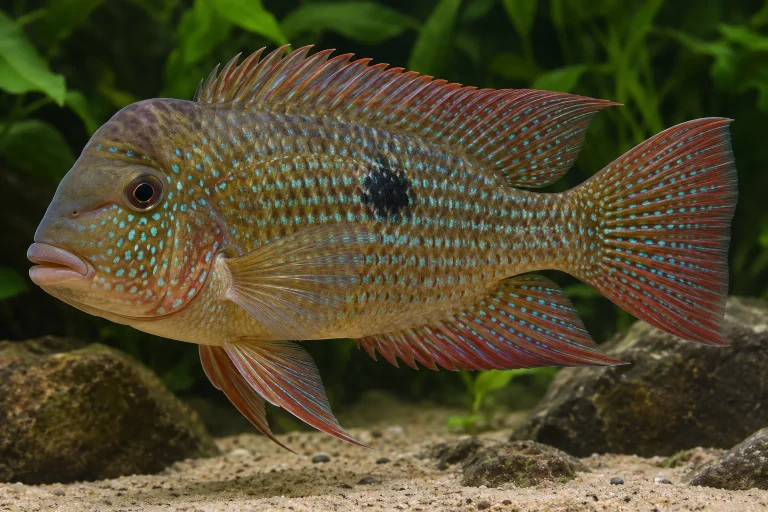
Pearl Cichlid
Geophagus brasiliensis
- Care level
- Intermediate
- Adult size
- 20–30 cm
- Minimum tank
- 450 litres
- Temperature
- 18–28 °C
Species profile
Amphilophus citrinellus × Vieja melanurus
Common names: Parrot Cichlid, Blood Parrot Cichlid
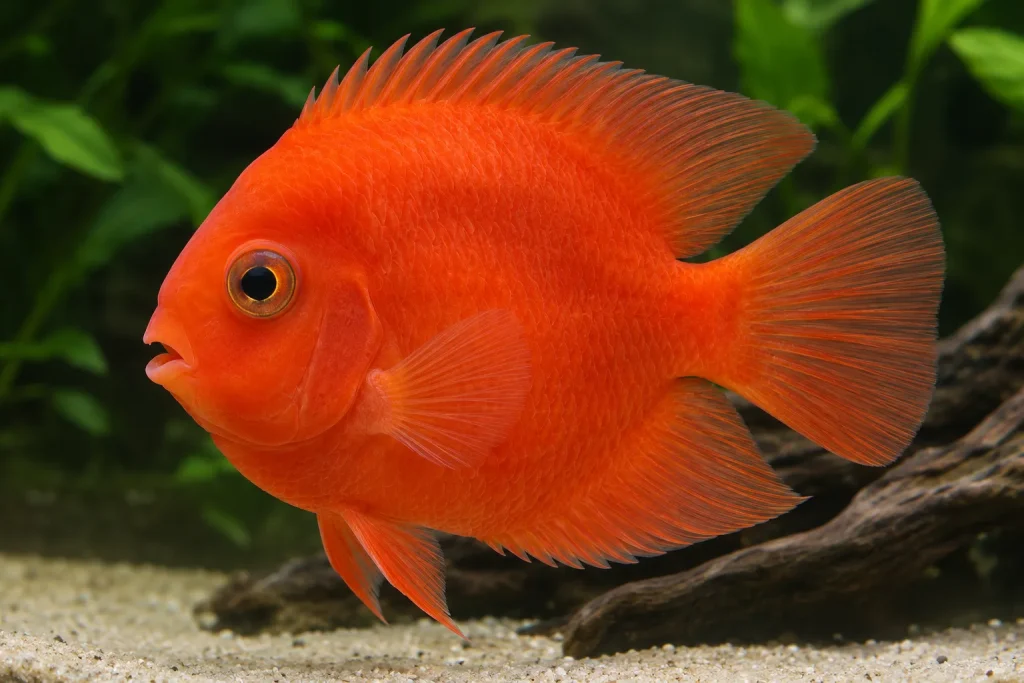
Up to 25 cm
Typical adult length 15–25 cm.

A captive hybrid cichlid with a rounded body and beak-like mouth. Adult care must account for heavy waste, feeding limitations, and variable health.
A deep, rounded orange, red, yellow, or pale cichlid with a beak-like mouth, large eyes, and shortened body. Shape varies widely among lines.
Do not confuse it with the natural parrot cichlid Hoplarchus psittacus. Dyed fluorescent fish and severely deformed individuals should not be supported.
Sexing is difficult. Males may be slightly larger, while females show a broader ovipositor during spawning.
Provide strong filtration, open swimming space, smooth substrate, rounded hides, and tank mates that do not outcompete the fish at feeding. Avoid sharp décor around malformed mouths or spines.
Usually less combative than similarly sized parent species but still territorial and capable of bullying smaller fish.
Keep singly, as a compatible group in a large tank, or with robust calm companions. Individual behaviour varies.
Adults may defend caves or flat surfaces, particularly when laying eggs.
Use medium to large peaceful or semi-aggressive fishes that cannot be swallowed and will not monopolise food. Avoid tiny fish, shrimp, and aggressive predators.
Stable neutral to slightly alkaline water is commonly used. Clean water and high oxygen are important because adults produce substantial waste.
Some links may earn us a commission on qualifying purchases, at no extra cost to you. Check suitability, price and availability with the seller. How affiliate links work
 Manual aquarium siphon and gravel cleaner
A manual siphon for routine aquarium water changes and accessible waste removal. The seller lists a hose approximately 1.6 m long.
Control the flow and keep the intake clear of fish and delicate planting. Clean the areas appropriate for your substrate and layout rather than disturbing the entire planted bed.
An omnivore that often feeds more effectively from sinking pellets and soft foods because of its mouth shape.
Observe each fish during feeding. Use manageable sinking foods and avoid dyed foods or live feeder fish.
Pairs may lay and guard eggs on a cleaned surface, but male infertility is common. Fertile offspring are uncommon and may involve backcrossing with a non-hybrid cichlid.
You can write a note about what worked for you, or send a photograph. We check everything before it appears here.
Geophagus brasiliensis
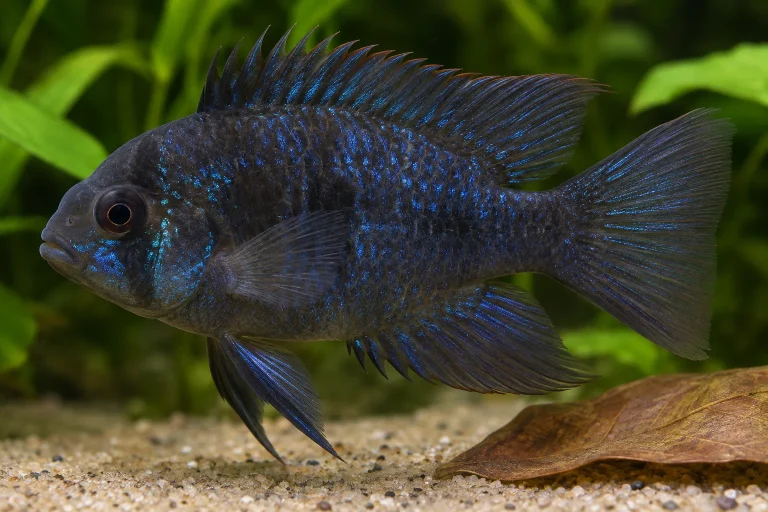
Mikrogeophagus ramirezi var. "Dark Knight"
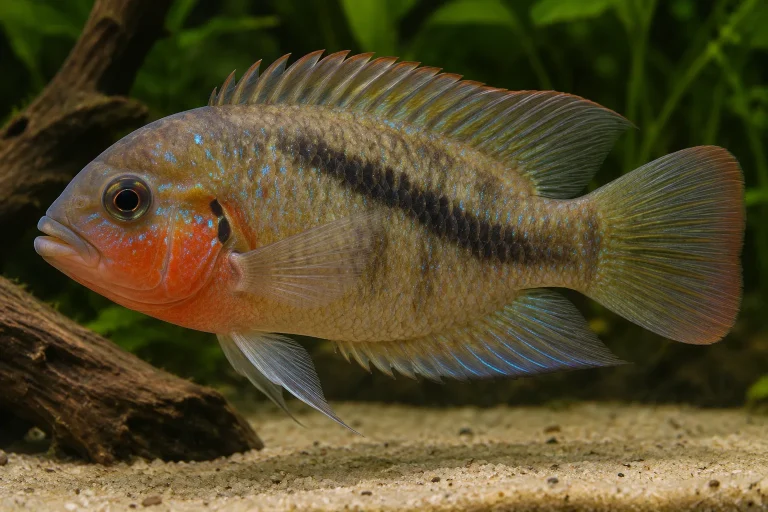
Krobia xinguensis
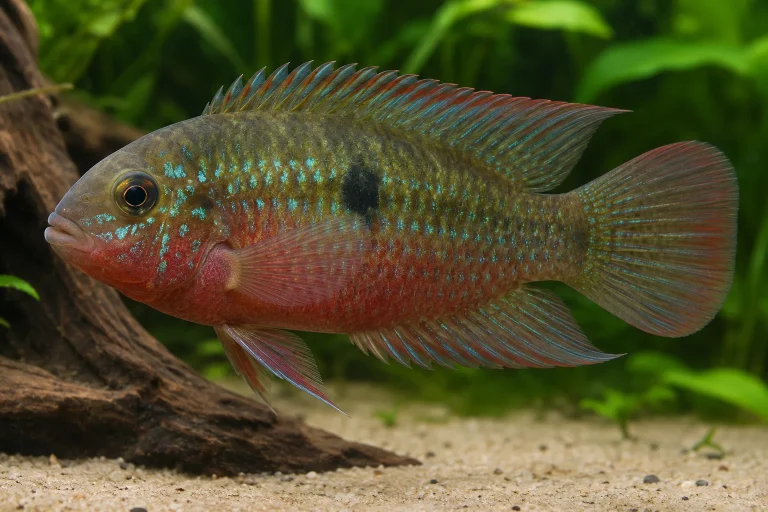
Laetacara dorsigera