Skip to content
Menu

Species profile

Molly

Poecilia sphenops

Common names: Molly, Common Molly, Black Molly, Short-Finned Molly
Recognized speciesLivebearers
Molly (Poecilia sphenops)

Adult size

Up to 8 cm

Typical adult length 6–8 cm.

Up to 8 cm

Countries of origin

  • See all stock from Colombia
  • See all stock from Curaçao
  • See all stock from El Salvador
  • See all stock from Honduras
  • See all stock from Mexico
  • See all stock from Nicaragua
  • See all stock from Venezuela

Good fit for your tank?

Good fit for

  • A hard-water aquarium with other livebearers
  • A keeper who has alkaline tap water
  • A planted tank that has some algae to graze

Think carefully if

  • Your water is soft or acidic
  • You keep tetras or other soft-water species
  • You have a small tank or no plan for fry

A hardy, algae-grazing livebearer from Central America. Mollies need hard, alkaline water and more room than most small livebearers, and they do poorly in soft-water community tanks.

Appearance and Identification

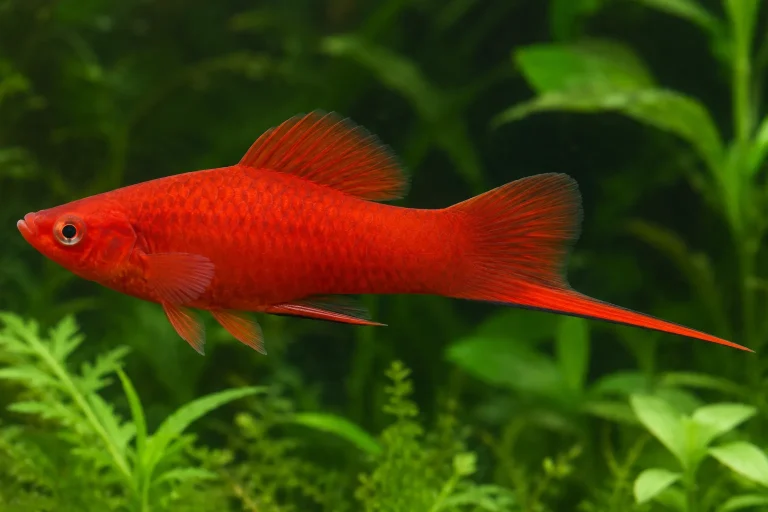
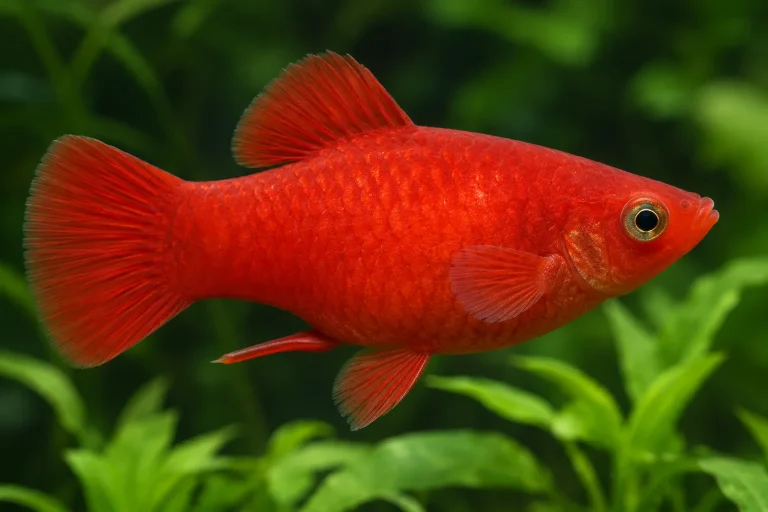
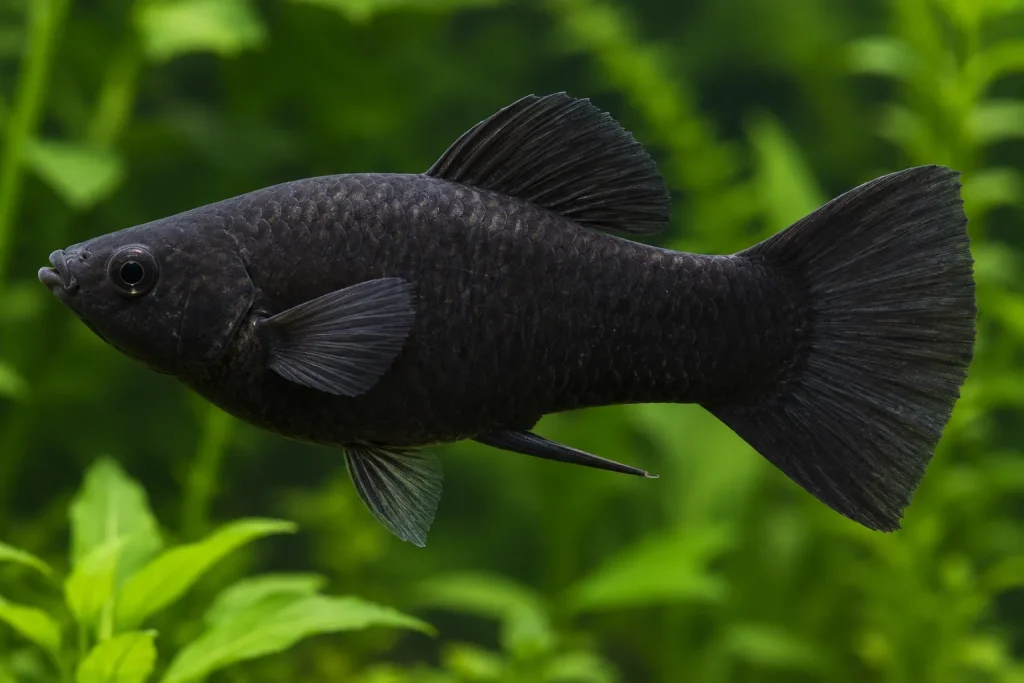
A stocky, broad-tailed fish in many colours, including solid black, white, gold, dalmatian, and sailfin-type forms. Males have a gonopodium and often taller dorsal fins.

Trade mollies are often hybrids, so the species label is not always exact. Balloon mollies are bred with a deformed spine and are prone to swimming and digestive problems.

Males are smaller and more colourful with a gonopodium. Females are larger and rounder.

Tank Requirements

Suggested filter
About 320–400 litres an hour
Suggested heater
About 75–125 W for this tank
Minimum tank volume
80 litres
Minimum tank length
90 cm
Minimum group size
3
Recommended group size
6
Activity level
Active
Flow preference
Low to moderate
Planting preference
Moderately planted
Hiding places
Yes
Lid recommended
Yes
Jumping risk
Moderate

Provide strong filtration, algae-covered surfaces to graze, and dense plants for females and fry. Mollies produce a lot of waste for their size, so regular water changes matter.

Behaviour and Tankmates

Peaceful and active, grazing almost constantly. Males follow females persistently, so females need cover.

Keep several females for each male. Fish are peaceful only with tankmates that tolerate the same hard water.

Males may chase each other, but this is rarely serious when there are enough females and cover.

Suits other livebearers, some rainbowfish, and hard-water-tolerant barbs and tetras. It is not a good fit for a soft-water community. Adults may eat shrimplets.

Check tankmates for this species

Water Parameters

Temperature
21–28 °C
pH
7–8.5
GH
15–30
Stability importance
Important

Hard, alkaline water is the key requirement. Mollies do not need salt if the water is hard enough, although some line-bred fish come from brackish farms, so ask about the seller's water.

Parameter caveat
Keep the water hard and alkaline. Soft, acidic water is a common cause of poor health in livebearers.

Feeding

Diet types
Algae Grazer, Herbivore, Omnivore
Feeding frequency
Once or twice daily
Preferred foods
  • Spirulina or vegetable flakeShould be a main part of the diet, not an occasional extra.
  • Blanched spinach or courgetteOffer once or twice a week, and remove leftovers within a few hours.
  • Small granules plus frozen daphnia or brine shrimpProvides protein, especially for growing fish and gravid females.

An omnivore with a strong need for plant matter, and it spends much of the day grazing algae.

Algae in the tank helps but is not enough by itself. Feed plant matter daily.

Breeding

Breeding type
Livebearer
Breeding difficulty
Easy
Brood or egg count
Up to 120 live young per brood
Parental care
None
Baby foods
  • Newly hatched brine shrimpLivebearer fry are born large enough to take this straight away, and it gives the fastest growth.
  • Finely crushed flakeEasy and widely accepted. Feed small amounts several times a day.
  • MicrowormsUseful for the smallest fry and for those feeding near the floor of the tank.

A livebearer that breeds easily in suitable water. Gestation is about 8 weeks, with broods of up to 120 fry. Keep several females per male, and move a gravid female to a separate tank to give birth, since adults eat their young.

Habitat and Origin

Geographic origin
Captive Bred, Central America, Colombia, Curaçao, El Salvador, Honduras, Mexico, Nicaragua, South America, Venezuela
Natural habitat
Estuary, Freshwater Stream, Vegetated Shoreline
Aquarium contexts
Breeding Aquarium, Planted Aquarium
Audience level
Beginner

Classification

Profile type
Recognized species
Genus
Poecilia
Family
Poeciliidae
Species group
Fish, Livebearers

Have you kept this species?

You can write a note about what worked for you, or send a photograph. We check everything before it appears here.

Share a note or photo

JPG, PNG, or WebP, up to 5 MB.