
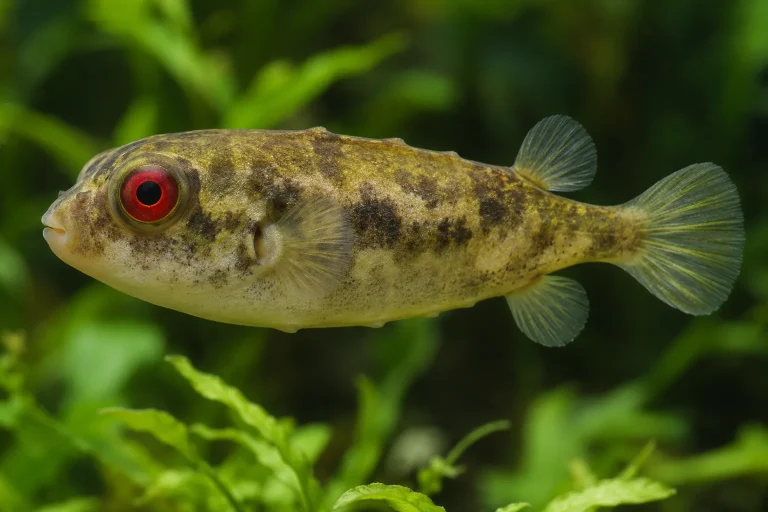
Redeye Puffer
Carinotetraodon lorteti
- Care level
- Intermediate
- Adult size
- 6 cm
- Minimum tank
- 54 litres
- Temperature
- 20–28 °C
Species profile
Carinotetraodon irrubesco
Common names: Red-tailed Redeye Puffer
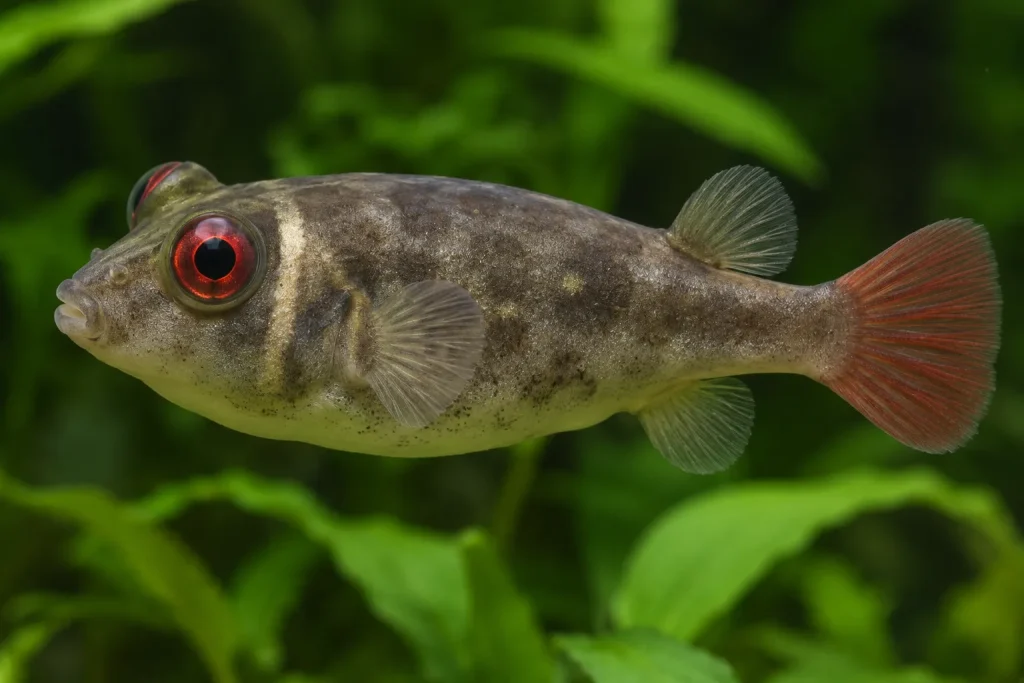
Up to 4.5 cm


A small Indonesian puffer with a reddish tail on the male. It is calmer than some redeye puffers, but it is still a meat eater that is best kept away from long fins.
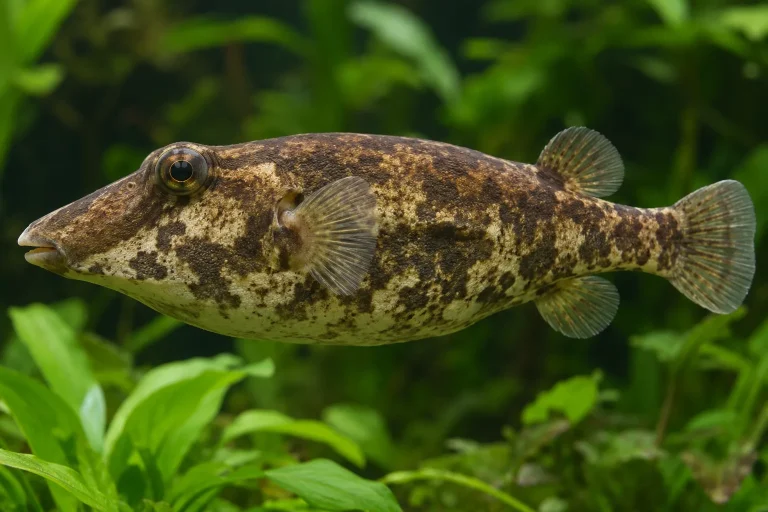
A small puffer with bulging red eyes that sit clearly above the head. Males are greyish and faintly mottled, with a reddish tail fin and a pale stripe behind the eye, and they lack the black spot at the base of the dorsal fin seen in other redeye puffers.
Told from other redeye puffers by the male's red tail and the lack of a black spot at the base of the dorsal fin.
Males have the reddish tail and a mottled grey body, sharply separated from a white belly. Females look different and plainer.
Use dense planting, wood and floating cover, with gentle flow. A group needs more room, so that each male can hold his own area.
Less aggressive than some redeye puffers, but still a watchful hunter. It stays around plants and may rest among them.
Only loosely social. Keep it alone, or as a group only in a well-planted tank with enough space.
Males in particular defend territories.
Keep it alone, or with peaceful schooling fish of a size that cannot be eaten and offers no threat. It may nip long fins, and it will eat shrimp and snails.
Soft to moderately hard freshwater. One habitat in Borneo was murky brown water at about pH 6.
A carnivore. Feed live and frozen meaty foods, with snails or other shelled food to wear down the teeth.
Check the beak regularly. If it overgrows, the fish can no longer eat and the teeth may need to be trimmed by someone experienced.
Has been bred in aquariums, with at least one documented account. The male can be rough with females before spawning, so give plenty of cover.
You can write a note about what worked for you, or send a photograph. We check everything before it appears here.
Carinotetraodon lorteti
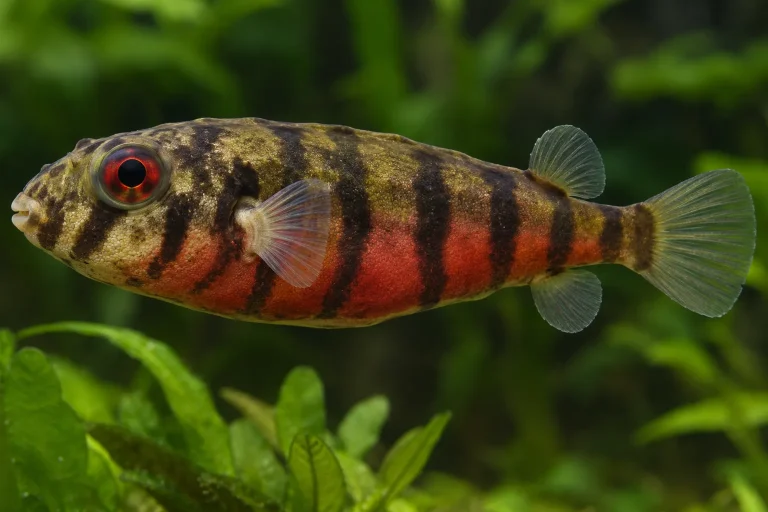
Carinotetraodon salivator
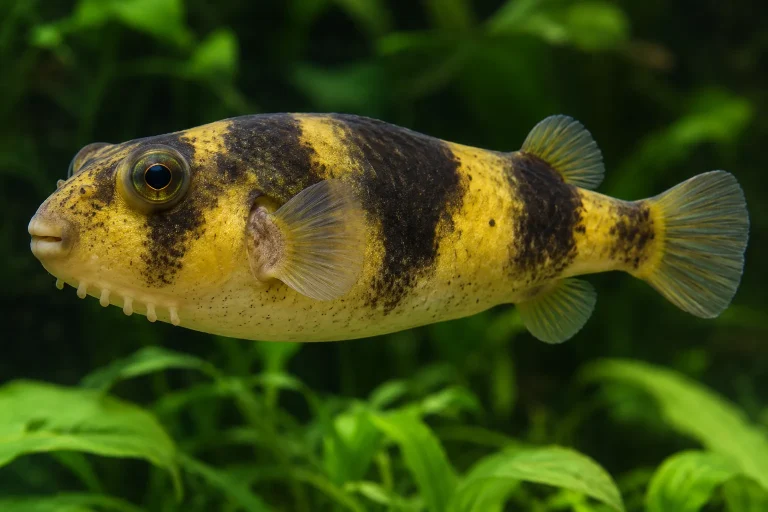
Colomesus asellus
Pao suvattii