
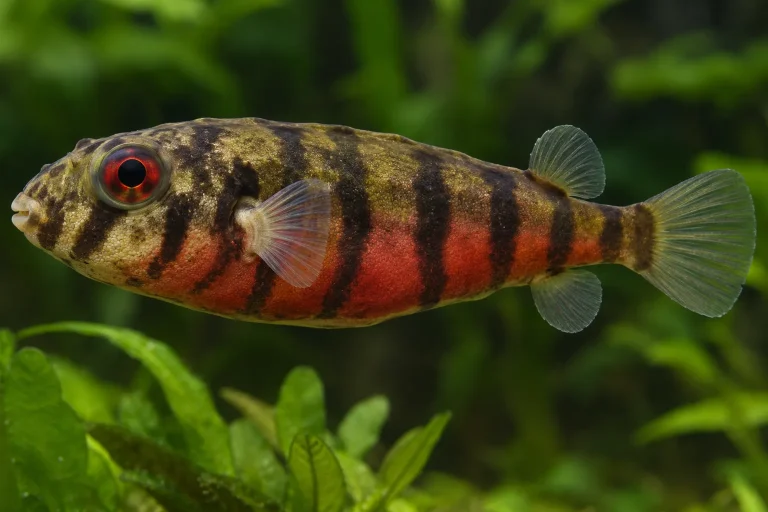
Striped Redeye Puffer
Carinotetraodon salivator
- Care level
- Intermediate
- Adult size
- 5 cm
- Minimum tank
- 54 litres
- Temperature
- 20–28 °C
Species profile
Carinotetraodon lorteti
Common names: Redeye Puffer, Red-eye Puffer
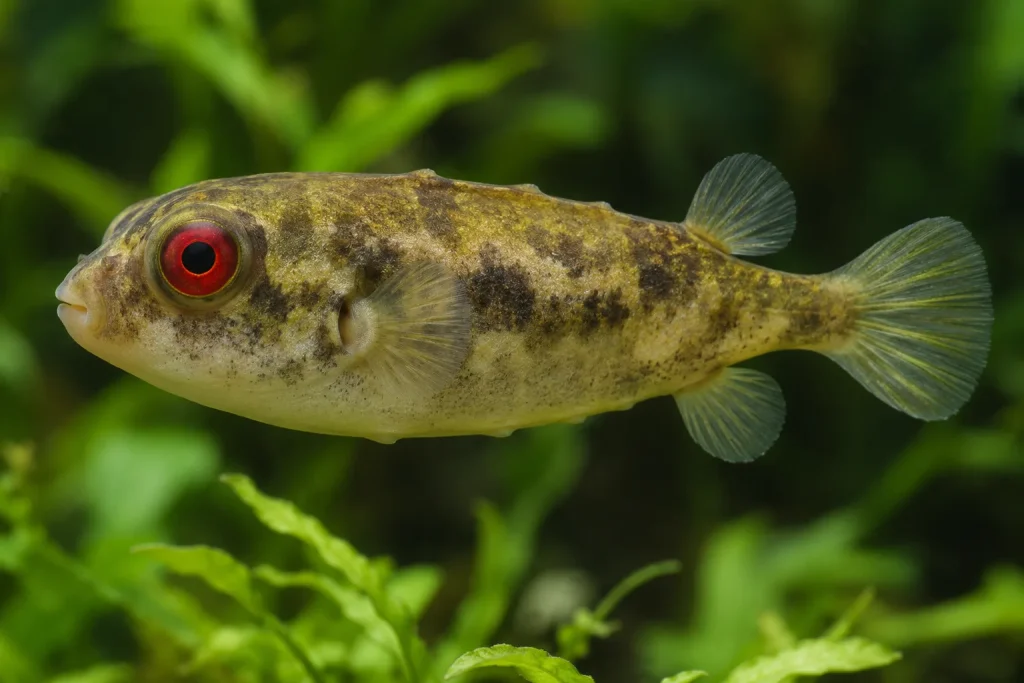
Up to 6 cm




A small, striking puffer with red eyes and a real temper. It bites the fins of tankmates and is territorial, so it is usually best kept alone.
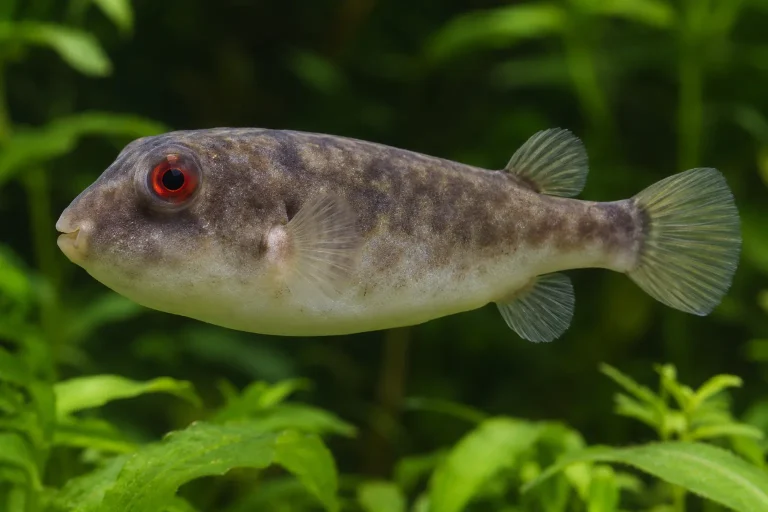
A small puffer with vivid red eyes. Males have a plain body and raised keels along the back and belly that they erect during displays. Females are more patterned.
One of several red-eyed puffers in this genus, and they are easily confused when young. Check the seller's name against the adult pattern.
Adult males have well-developed keels on the back and belly, and a plainer body. Females lack the keels and are mottled.
Use roots, branches and plenty of plants, with floating plants for shade. Leaf litter adds cover. Keep the flow gentle and change water little and often, since this species is sensitive to poor water.
A bold, territorial hunter that often rests among plants and watches for prey.
Best alone. A group can work only if the tank is arranged so that fish cannot see each other all the time.
Territorially aggressive, especially males during courtship.
Not for a community tank. It can nip and bite the fins of tankmates, especially in smaller tanks. It will eat shrimp and snails.
Comes from soft, shady water but tolerates a fairly wide range. Stability and clean water matter most.
A carnivore. Feed live and frozen meaty foods, with snails to keep the teeth worn down.
Check the beak regularly. If it overgrows, the fish can no longer eat and the teeth may need to be trimmed by someone experienced.
Has been bred in aquariums. The male starts courtship with stronger colour and displays of his keels. Semi-adhesive eggs are scattered among plants, and the male guards them. Leaf litter gives the fry an early food source.
You can write a note about what worked for you, or send a photograph. We check everything before it appears here.
Carinotetraodon salivator
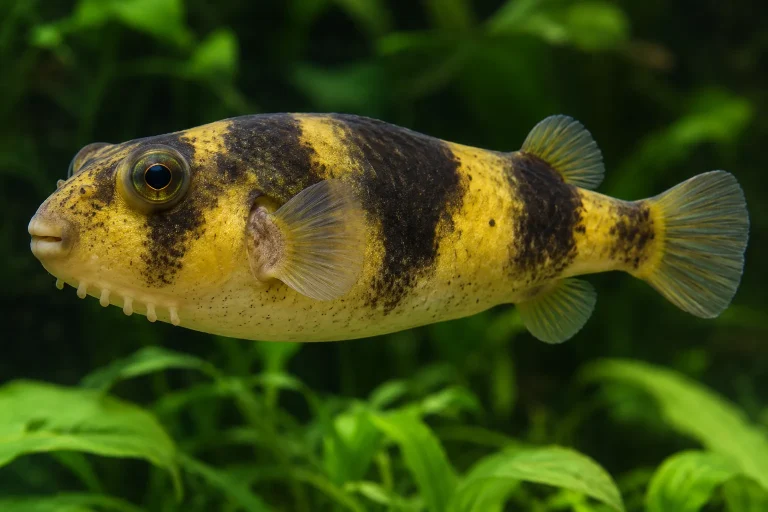
Colomesus asellus
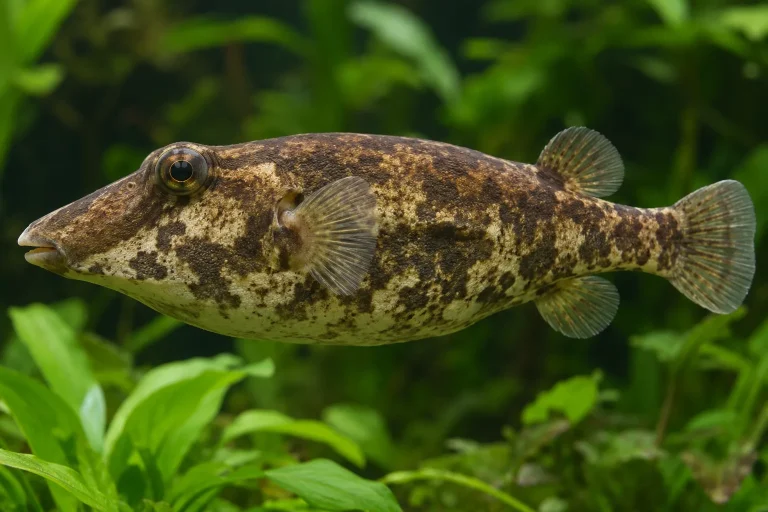
Pao suvattii
Carinotetraodon borneensis