
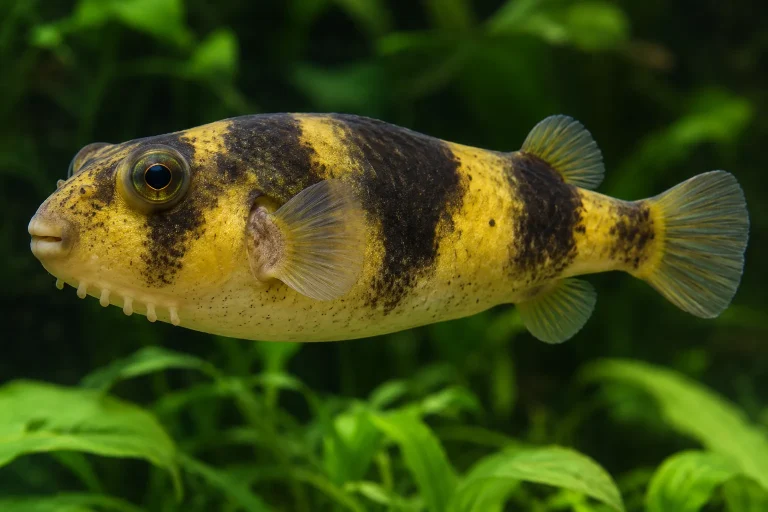
Amazon Puffer
Colomesus asellus
- Care level
- Advanced
- Adult size
- 12.8 cm
- Minimum tank
- 108 litres
- Temperature
- 20–26 °C
Species profile
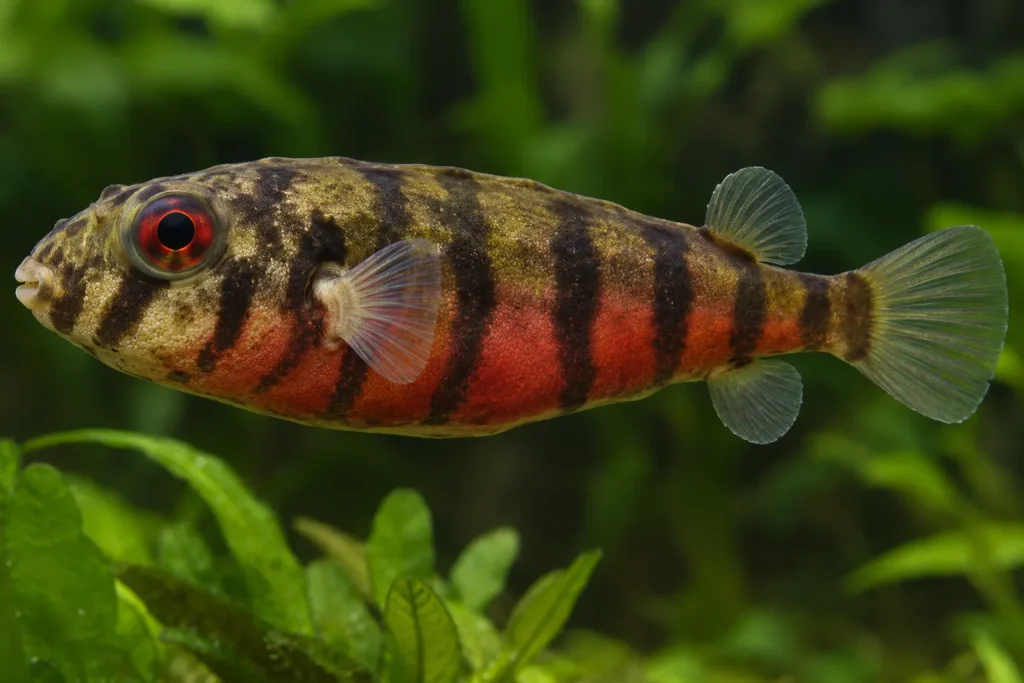
Carinotetraodon salivator
Common names: Striped Redeye Puffer, Zebra Puffer
Up to 5 cm


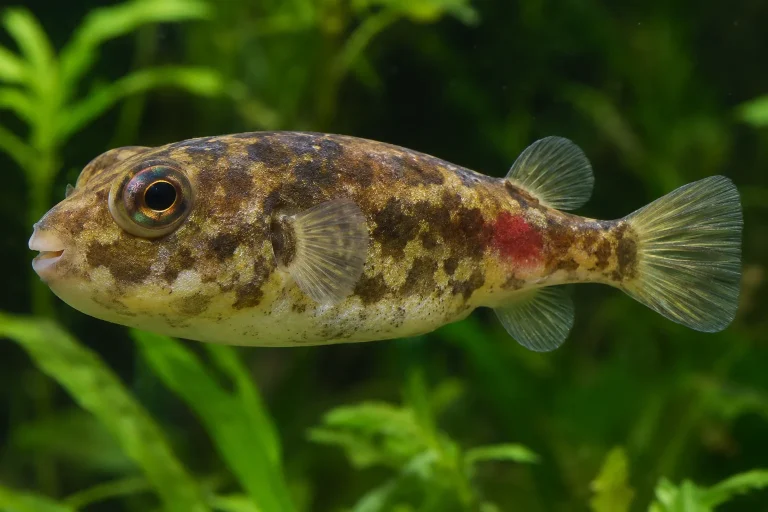
A small Bornean puffer with dark bars on the head and body in both sexes. Unlike its relatives, it seems to prefer flowing water.
A small red-eyed puffer with distinct dark bars on the head and body in both sexes. Mature males have a red belly with crossing dark bars and keels along the back and belly.
The dark bars in both sexes set it apart from other redeye puffers. It sometimes arrives mixed with Bornean Red-eye Puffers.
Adult males develop keels on the back and belly and a red underside with dark bars.
Provide plants, wood and open swimming space, with moderate flow and good oxygen. A wild habitat was a flowing stream rather than the still water most redeye puffers prefer.
An active puffer that is less aggressive than some of its relatives.
Only loosely social. Keep it alone, or as a group only with enough room and cover.
Males tend to be territorial.
Keep it alone or with peaceful schooling fish that are big enough to be safe. It may nip long fins, and it will eat shrimp and snails.
Soft to moderately hard freshwater. Clean, well-oxygenated water matters more than an exact figure.
A carnivore. Feed live and frozen meaty foods, with snails to wear down the teeth.
Check the beak regularly. If it overgrows, the fish can no longer eat and the teeth may need to be trimmed by someone experienced.
No aquarium breeding has been recorded. The related Redeye Puffer scatters eggs among plants, and the male guards them.
You can write a note about what worked for you, or send a photograph. We check everything before it appears here.
Colomesus asellus
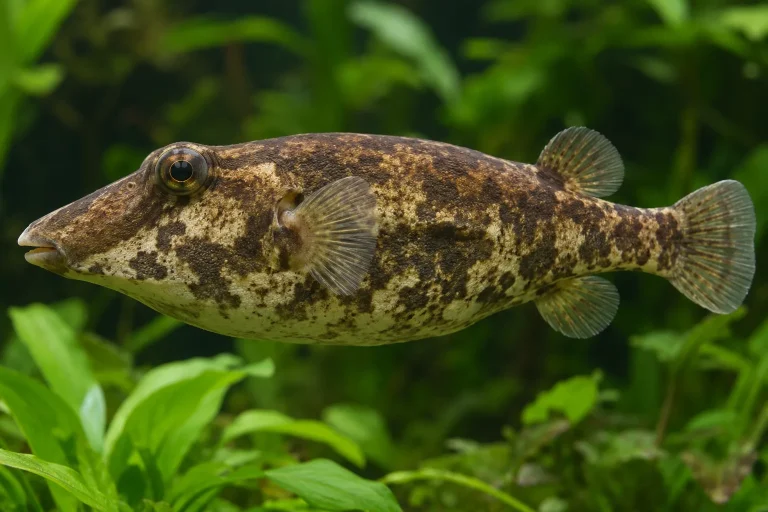
Pao suvattii
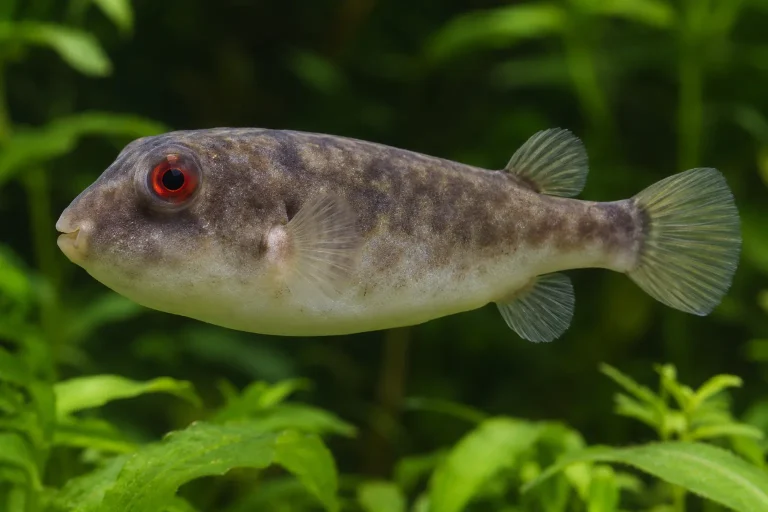
Carinotetraodon borneensis
Pao cochinchinensis