

Xingu Corydoras
Corydoras xinguensis
- Care level
- Beginner
- Adult size
- 3.7 cm
- Minimum tank
- 65 litres
- Temperature
- 22–26 °C
Species profile
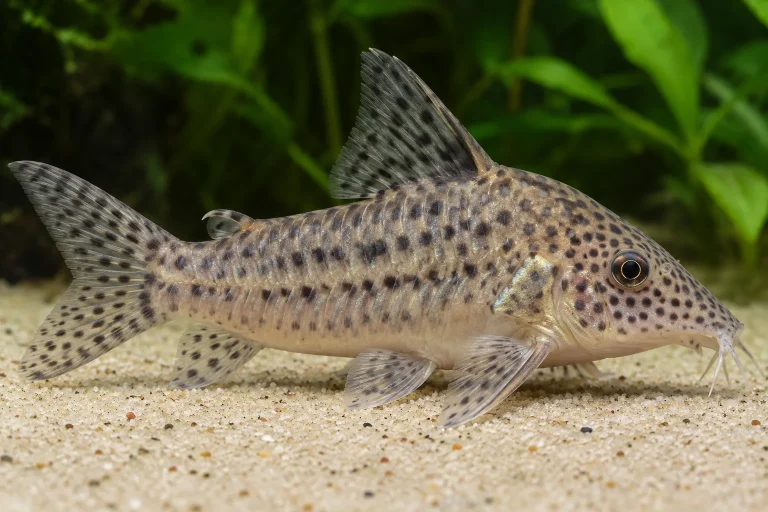
Corydoras trilineatus
Common names: Three Line Corydoras, Three Line Catfish, Threestripe Corydoras, Leopard Catfish
Up to 5.5 cm



A common, easy cory with a net of dark lines and spots, and a dark line along its side. Keep a group of at least 6 in 40 litres or more.
A common, easy cory with a net of dark lines and spots, and a dark line along its side. It is often sold under the name Corydoras julii, a similar fish.
Check the scientific name when buying, as common names vary between sellers and countries.
Females are larger and rounder, and they look broader when viewed from above.
Use a soft sand bottom, because rough gravel can wear down its barbels, and keep the water clean. It sometimes darts to the surface for air, which is normal.
A peaceful, sociable bottom-dweller that spends the day rooting through the sand in a group.
Keep a group of at least 6, and more if you can.
Not territorial.
An ideal community fish, with small, peaceful fish that like similar water. It does not eat algae or clean the tank, so it needs its own food.
Fairly tolerant of different water, if it is clean and stable. Keep the temperature steady.
Eats small invertebrates in the wild. Feed sinking foods that reach the bottom.
Feed small amounts, and remove anything left after a few minutes.
Lays its eggs on a cleaned surface, such as a stone, leaf or the bottom of the tank, and the parents may guard them. Move eggs or adults if you want to raise many fry.
You can write a note about what worked for you, or send a photograph. We check everything before it appears here.
Corydoras xinguensis
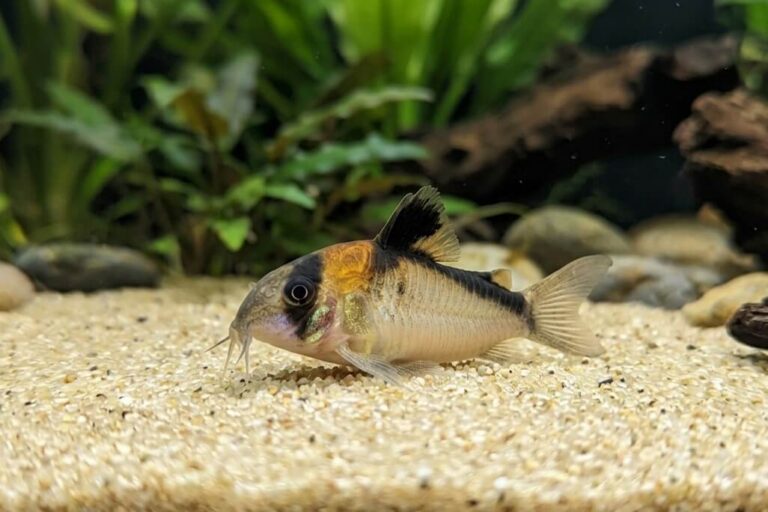
Hoplisoma adolfoi
Brochis agassizii
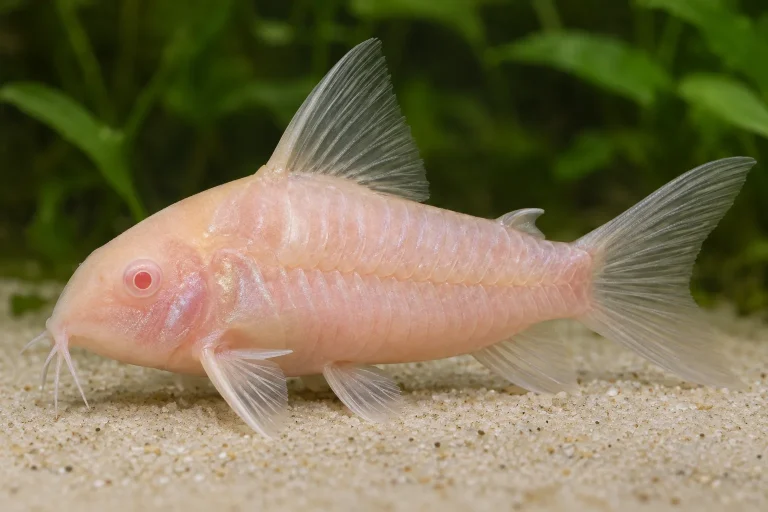
Osteogaster aenea var. "Albino"