Skip to content
Menu

Species profile

Blue Neon Cichlid

Paracyprichromis nigripinnis

Common names: Blue Neon Cichlid
Recognized speciesAfrican Cichlids
Blue Neon Cichlid (Paracyprichromis nigripinnis)

Adult size

Up to 11 cm

Up to 11 cm

Countries of origin

  • See all stock from Burundi
  • See all stock from Democratic Republic of the Congo
  • See all stock from Tanzania
  • See all stock from Zambia

Good fit for your tank?

Good fit for

  • A keeper who has researched this fish and can match its needs

Think carefully if

  • Your water is soft and acidic, because this fish needs hard, alkaline water
  • You only want to keep one or two, because this fish needs a group of 5 or more
  • You cannot provide about 243 litres for a fully grown fish
  • You keep shrimp you want to protect

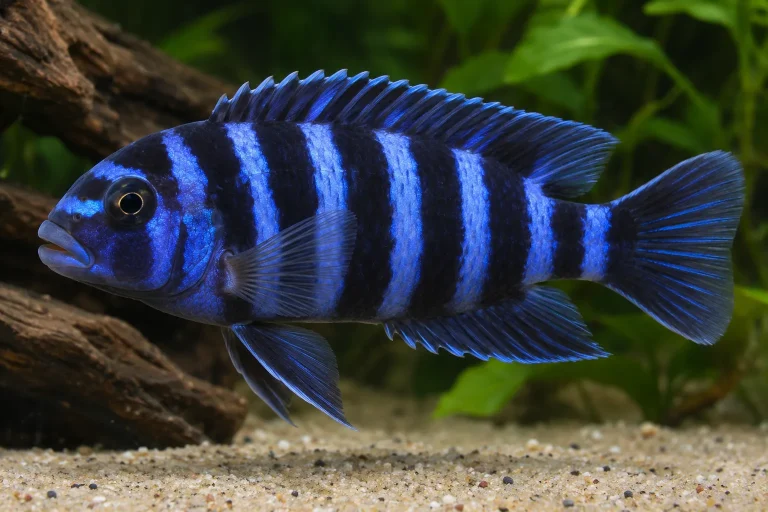
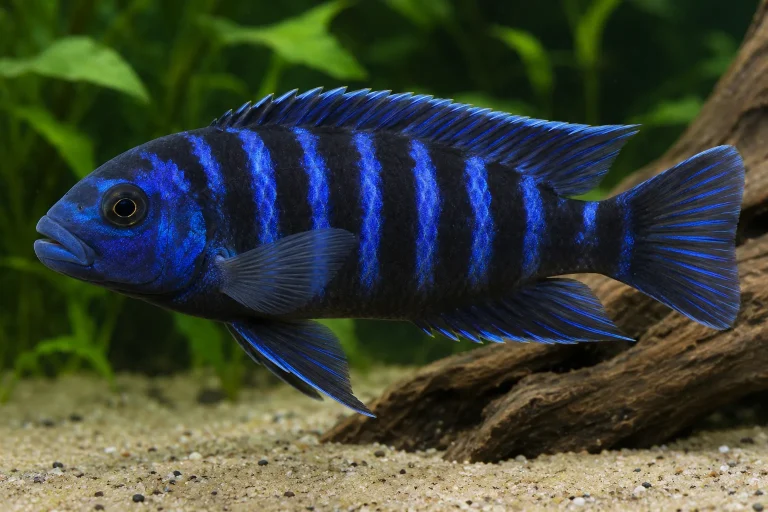
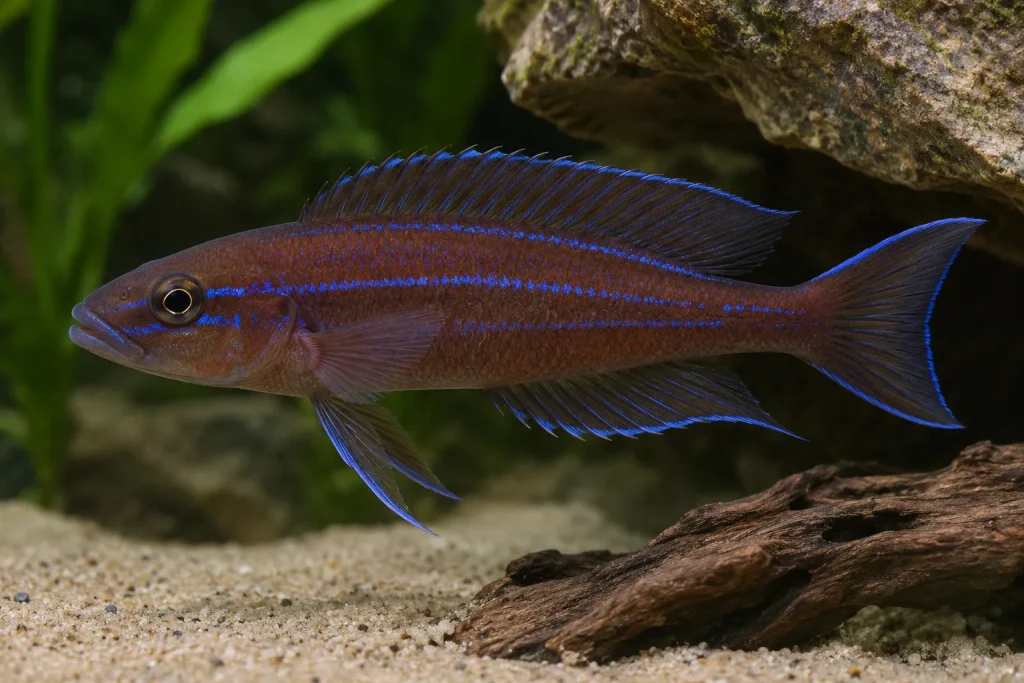
A slim Lake Tanganyika cichlid with neon blue lines on a dark body. Keep a group of at least 5 in 243 litres or more.

Appearance and Identification

A slim Lake Tanganyika cichlid with neon blue lines on a dark body. Males hold territories under rock overhangs, often hanging upside down. It is rarely bred, and it needs a calm tank.

Check the scientific name when buying, as common names vary between sellers and countries.

Males are usually larger and brighter, often with longer fins. Females are often plainer.

Tank Requirements

Suggested filter
About 970–1,220 litres an hour
Suggested heater
About 250–375 W for this tank
Minimum tank volume
243 litres
Minimum tank length
120 cm
Minimum group size
5
Recommended group size
8
Activity level
Active
Flow preference
Moderate
Planting preference
Lightly planted
Hiding places
Yes
Lid recommended
Yes
Jumping risk
Moderate

Build plenty of rockwork with caves and broken sight lines, because this fish needs territories, and use a sandy bottom. Strong filtration matters, as these cichlids produce a lot of waste.

Behaviour and Tankmates

Bold, busy and full of character, with complex behaviour around territory and breeding.

Usually kept as one male with several females, so that no single female takes all the attention.

Males defend territories strongly, and rival males may fight.

Best with other African cichlids of a similar size and temperament that need the same hard, alkaline water. It is not suited to a soft-water community. It is likely to eat shrimp.

Check tankmates for this species

Water Parameters

Temperature
24–27 °C
pH
7.5–9
GH
8–25
Stability importance
Important

Fairly tolerant of different water, if it is clean and stable. Keep the temperature steady.

Parameter caveat
Keep up regular water changes, and acclimatise new fish slowly.

Feeding

Diet types
Omnivore
Feeding frequency
Daily
Preferred foods
  • Quality pellets or flakeA good staple. Choose a size that fits its mouth.
  • Frozen bloodworm, daphnia and brine shrimpOffer several times a week for colour and condition.
  • Algae or vegetable-based foodInclude some plant matter for balance.

Check what your species eats in the wild, because grazers can get bloat on rich, meaty foods. A good cichlid pellet suits most.

Feed small amounts, and remove anything left after a few minutes.

Breeding

Breeding type
Mouthbrooder
Breeding difficulty
Difficult
Parental care
Mouthbrooding
Baby foods
  • Newly hatched brine shrimpThe fry can usually take this from the start.
  • Crushed flakeA simple addition as they grow.

A mouthbrooder. The female usually holds the eggs and young fry in her mouth for a few weeks, and releases free-swimming young. Give her cover, and avoid stressing her during this time.

Habitat and Origin

Geographic origin
Africa, Burundi, Democratic Republic of the Congo, Tanzania, Zambia
Natural habitat
Rocky Shoreline
Audience level
Intermediate

Classification

Profile type
Recognized species
Genus
Paracyprichromis
Family
Cichlidae
Species group
African Cichlids, Cichlids, Fish

Have you kept this species?

You can write a note about what worked for you, or send a photograph. We check everything before it appears here.

Share a note or photo

JPG, PNG, or WebP, up to 5 MB.