
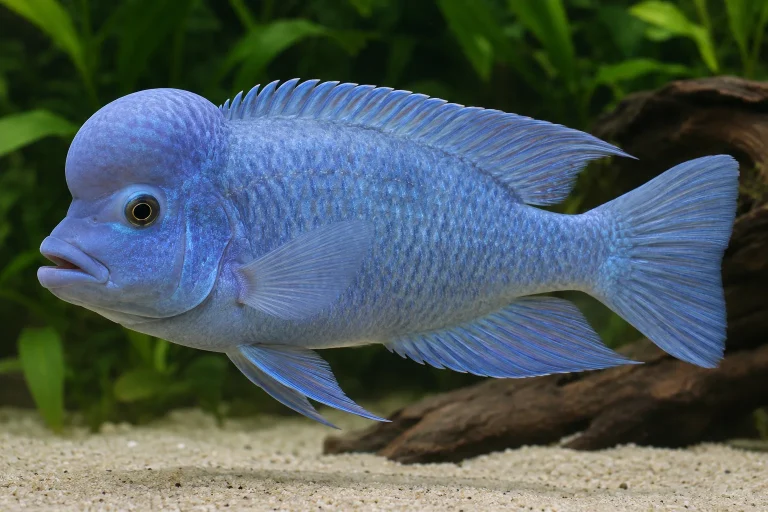
Blue Dolphin Cichlid
Cyrtocara moorii
- Care level
- Advanced
- Adult size
- 25 cm
- Minimum tank
- 217 litres
- Temperature
- 25–29 °C
Species profile
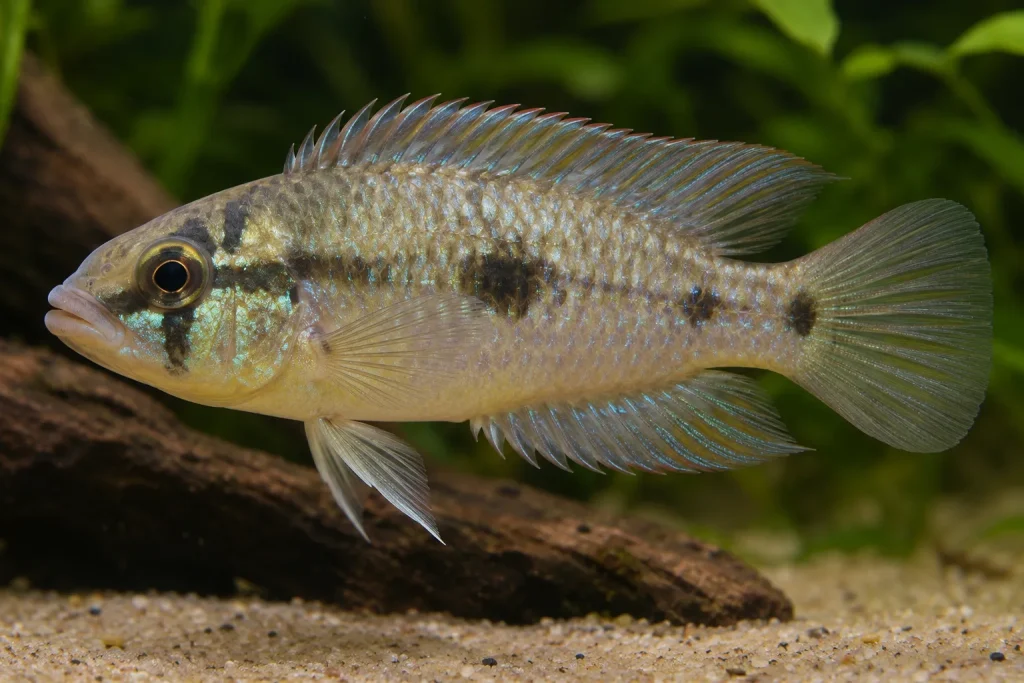
Anomalochromis thomasi
Common names: African Butterfly Cichlid
Up to 8 cm


A peaceful, easily bred dwarf cichlid from forest streams in West Africa, with dark spots on a pale, iridescent body. Keep a group of at least 5 in 72 litres or more.
A peaceful, easily bred dwarf cichlid from forest streams in West Africa, with dark spots on a pale, iridescent body. It suits soft to neutral water, not the hard water most African cichlids need, and it is one of the best first cichlids.
Check the scientific name when buying, as common names vary between sellers and countries.
Males usually grow larger, with longer fins, but sexing can be hard outside breeding.
Provide wood, rocks and clear territories, with enough open water for a fish of this size. Strong filtration helps, because cichlids produce a lot of waste.
A characterful fish that interacts with its surroundings and often recognises its keeper.
Often best as a pair, or as a small group in a roomy tank.
Can be territorial, especially when breeding.
Choose tankmates with care, by size and temperament. It may eat much smaller fish, and it can harass peaceful ones when breeding. It is likely to eat shrimp.
Fairly tolerant of different water, if it is clean and stable. Keep the temperature steady.
Takes good-quality pellets, along with frozen foods for variety.
Feed small amounts, and remove anything left after a few minutes.
Lays its eggs on a cleaned surface, such as a stone, leaf or the bottom of the tank, and the parents may guard them. Move eggs or adults if you want to raise many fry.
You can write a note about what worked for you, or send a photograph. We check everything before it appears here.
Cyrtocara moorii
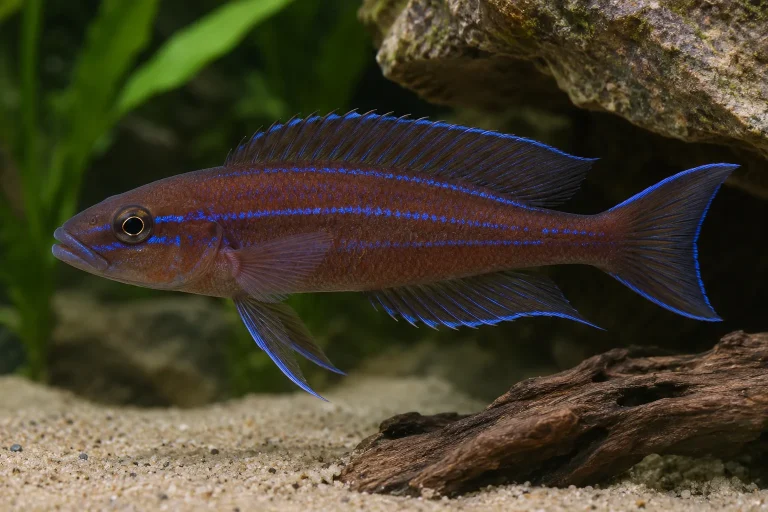
Paracyprichromis nigripinnis
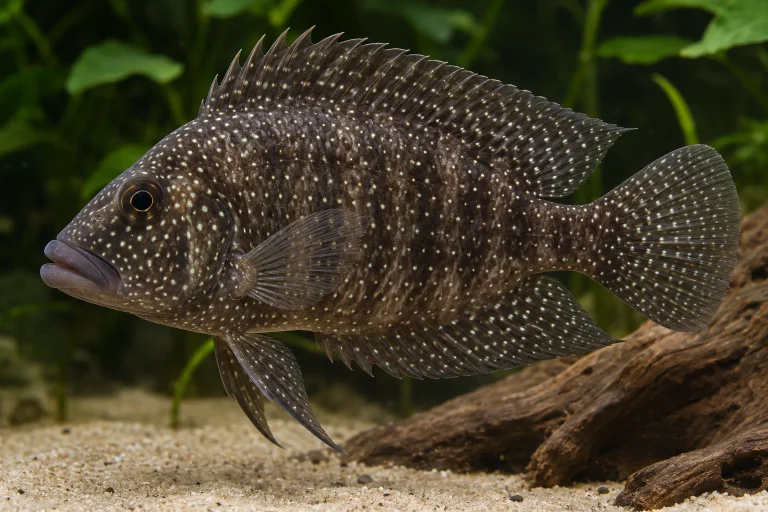
Altolamprologus calvus
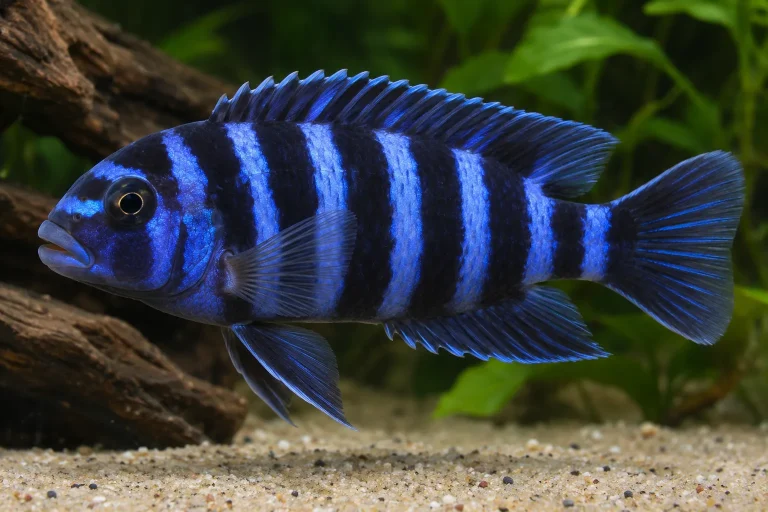
Chindongo demasoni