
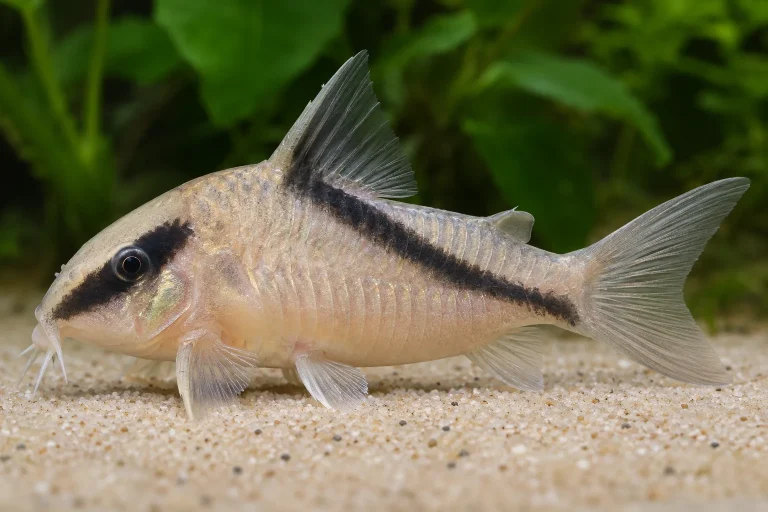
Bandit Corydoras
Hoplisoma metae
- Care level
- Advanced
- Adult size
- 4–5.5 cm
- Minimum tank
- 75 litres
- Temperature
- 22–27 °C
Species profile
Scleromystax barbatus
Common names: Banded Corydoras, Bearded Corydoras, Checkerboard Corydoras
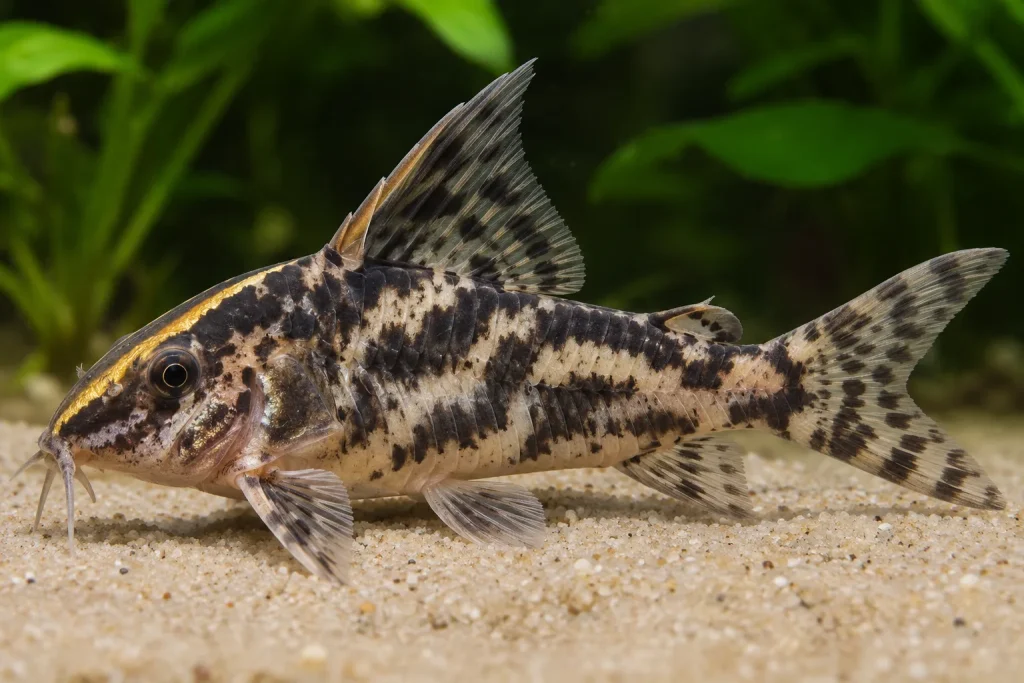
Up to 10 cm
Typical adult length 8.5–10 cm.

Banded Corydoras is a peaceful South American callichthyid catfish recognised by bold dark reticulation and banding, with adult males developing longer fins and cheek odontodes. It should be kept in a same-species group over fine sand in clean, oxygen-rich freshwater.
Adult males develop striking black-and-cream marbling, a gold stripe over the snout, cheek bristles and an extended dorsal fin. Females remain larger, greyer and more evenly peppered, making mature pairs far more different than most cory-type catfish.
Identify this profile by the combination of bold dark reticulation and banding, with adult males developing longer fins and cheek odontodes. Colour alone can be unreliable in stressed, juvenile, or poorly conditioned fish, so body shape, snout length, fin pattern, and provenance should also be checked.
Sexual differences become clear in adults. Males develop bold dark patterning, cheek bristles and an extended dorsal fin, while females remain larger-bodied and more softly mottled; juveniles can still be difficult to separate.
Use a spacious, well-oxygenated aquarium with fine sand, flowing areas, roots, stones and broken sight lines. Adult males can challenge one another, so provide ample floor space and several separate retreats rather than concentrating the group around one cave.
Generally peaceful toward other species, but adult males may display, chase and defend small areas against one another. A roomy layout with visual barriers reduces conflict while allowing the group to forage normally.
Keep at least 6 of the same species or coded population, with 8 or more preferred where space permits. A mixed collection of single corys does not fully replace a proper same-species group.
It is not territorial. Males may briefly chase one another or follow females during courtship, but sustained aggression is unusual when the group has adequate floor space.
Can share a community with peaceful, sturdy fish, but the aquarium must provide room for male displays and several separate retreats. Avoid aggressive cichlids, persistent fin-nippers and crowded groups of territorial bottom fish.
This species prefers cooler, well-oxygenated water than most tropical community fish. Avoid prolonged high temperatures and provide strong gas exchange.
Some links may earn us a commission on qualifying purchases, at no extra cost to you. Check suitability, price and availability with the seller. How affiliate links work
 Manual aquarium siphon and gravel cleaner
A manual siphon for routine aquarium water changes and accessible waste removal. The seller lists a hose approximately 1.6 m long.
Control the flow and keep the intake clear of fish and delicate planting. Clean the areas appropriate for your substrate and layout rather than disturbing the entire planted bed.
Use quality sinking foods with regular frozen or live invertebrate foods for conditioning. Spread food across the floor so subordinate fish and females can feed away from displaying males.
Feed after faster surface and midwater fish have taken their share, and confirm that every individual reaches food. Use small portions once or twice daily, remove persistent leftovers, and vary prepared and frozen or live foods.
A conditioned group may spawn by the usual T-position and place adhesive eggs individually on plants, glass or other firm surfaces. Adult males can become more territorial during breeding, and eggs are best protected from the adults; success is less routine than with common Bronze or Peppered Corydoras.
You can write a note about what worked for you, or send a photograph. We check everything before it appears here.
Hoplisoma metae

Hoplisoma sp. CW049
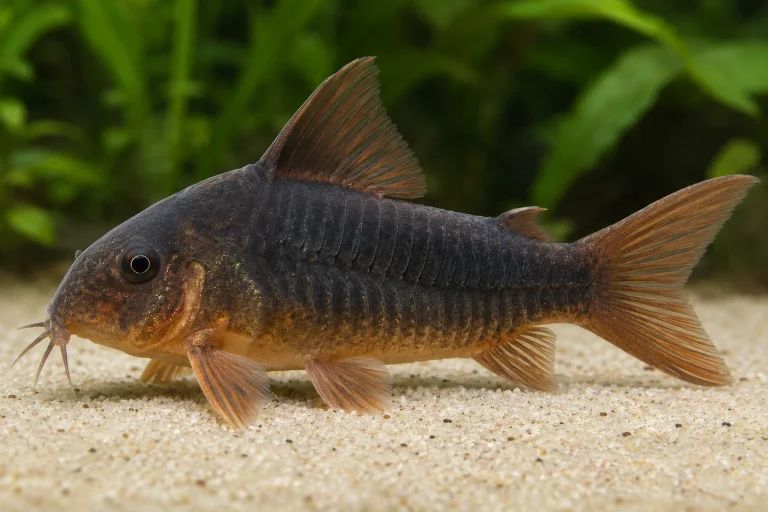
Osteogaster aenea var. "Black Venezuela"
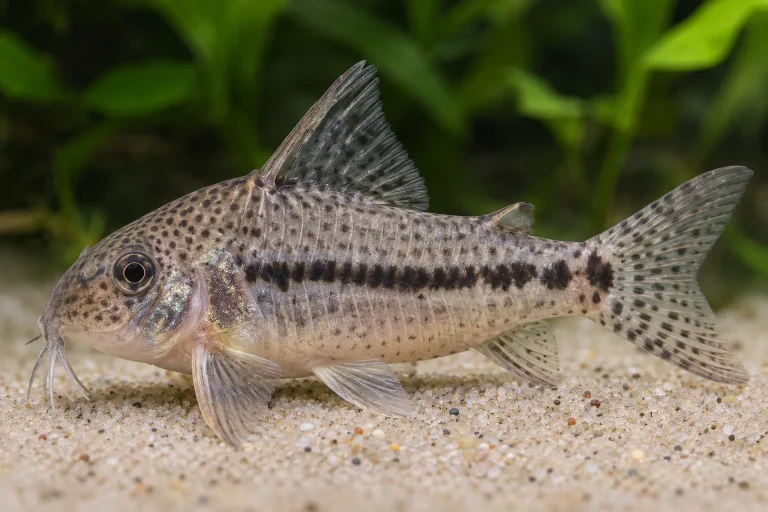
Hoplisoma bondi