
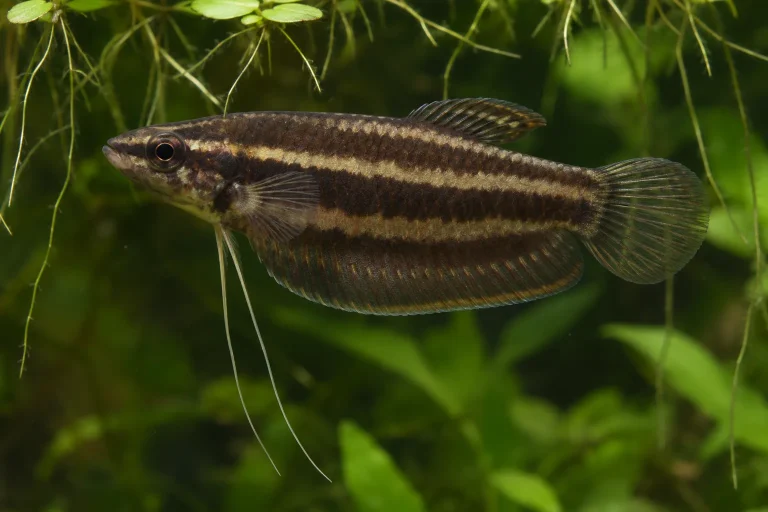
Bintan Licorice Gourami
Parosphromenus bintan
- Care level
- Intermediate
- Adult size
- 2.6 cm
- Minimum tank
- 16 litres
- Temperature
- 22–28 °C
Species profile
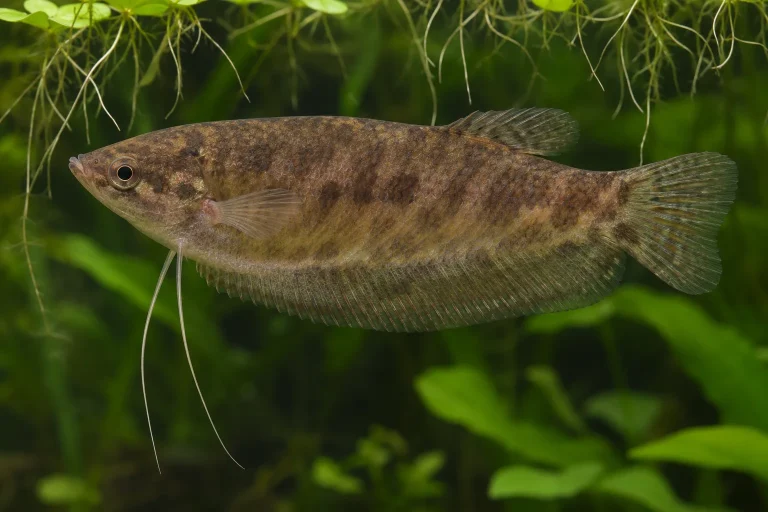
Trichogaster fasciata
Common names: Banded Gourami, Rainbow Gourami, Striped Gourami, Stripled Gourami
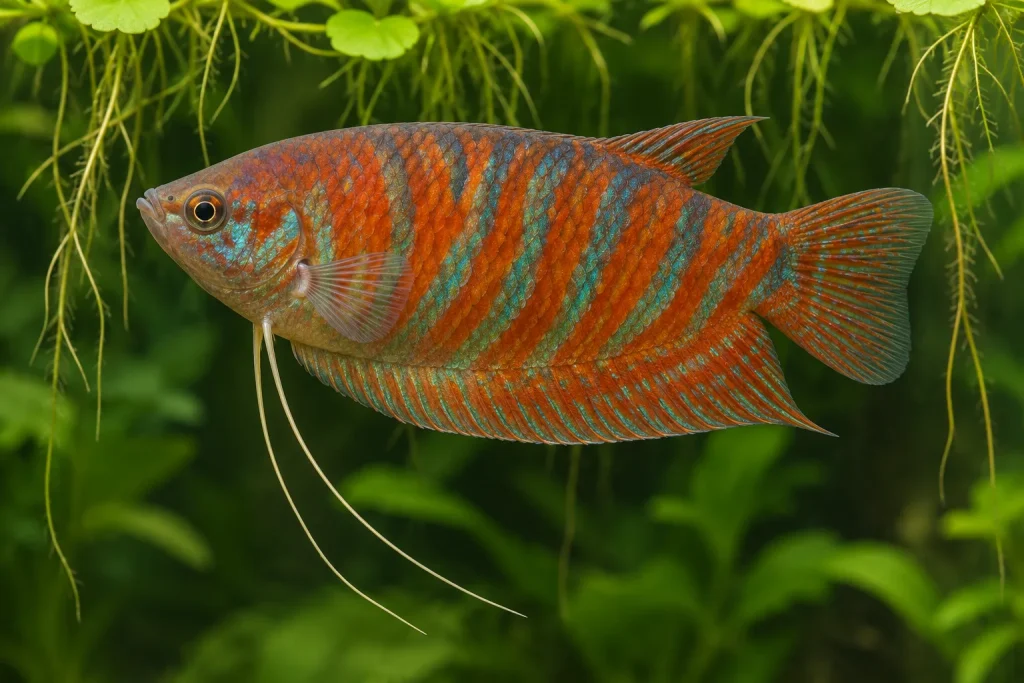
Up to 10 cm






A peaceful, larger gourami with blue-green bars on an orange-red body. Keep alone or in a small group in 71 litres or more.
A peaceful, larger gourami with blue-green bars on an orange-red body. Males are far brighter than females, with pointed dorsal and anal fins. Despite the alternative name of Giant Gourami, it only reaches about 10 cm.
Check the scientific name when buying, as common names vary between sellers and countries.
Males are usually brighter, with more pointed dorsal fins, and females are rounder.
Keep the water calm, with floating plants and tall stems for cover, and leave a little open water at the surface, because gouramis breathe air. A lid keeps the air above the water warm, which protects the labyrinth organ.
A calm, deliberate fish that explores with its long, thread-like pelvic fins and takes breaths of air from the surface.
Can be kept singly or in a small group. Males may squabble, so give them cover if you keep more than one.
Males can be territorial, especially when building a nest.
Usually suits a calm community of fish that are not too boisterous. Avoid fin nippers, which go for its long pelvic fins. It is likely to eat shrimp.
Fairly tolerant of different water, if it is clean and stable.
Takes prepared foods readily, along with live and frozen foods.
Feed small amounts, and remove anything left after a few minutes.
A bubble nester. The male builds a floating nest among plants, spawns with the female beneath it, then guards the eggs and fry. Remove the female afterwards. Fry need tiny foods, and warm, humid air above the water.
You can write a note about what worked for you, or send a photograph. We check everything before it appears here.
Parosphromenus bintan
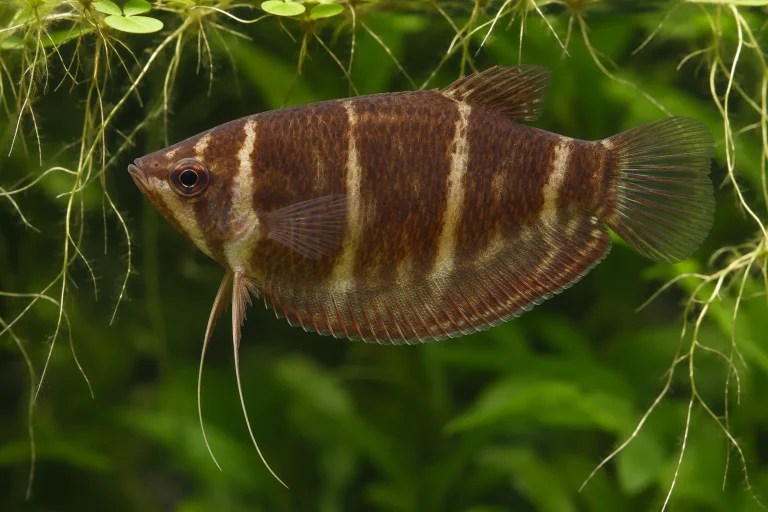
Sphaerichthys osphromenoides
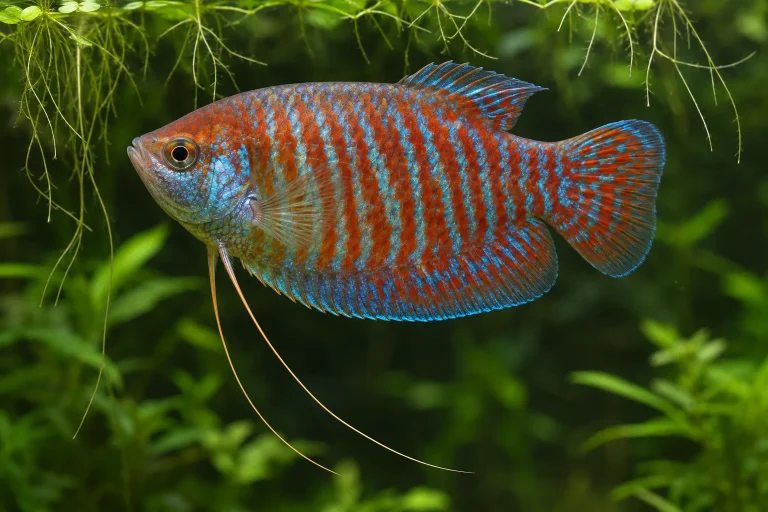
Trichogaster lalius
Ctenops nobilis