
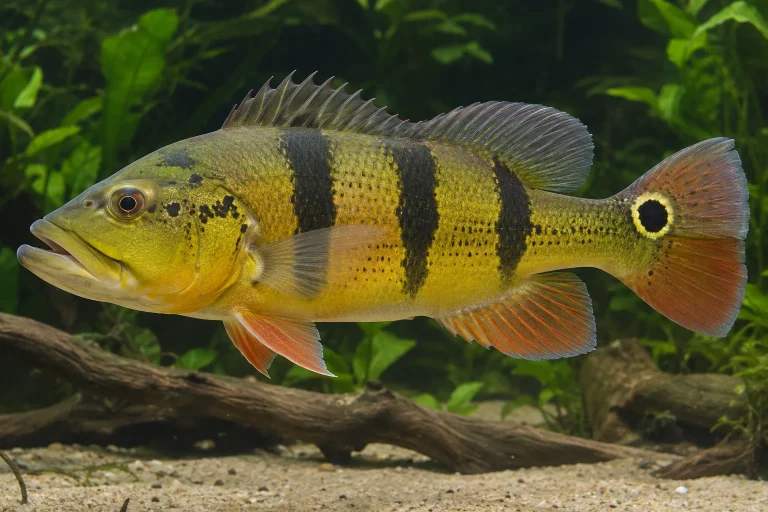
Butterfly Peacock Bass
Cichla ocellaris
- Care level
- Specialist
- Adult size
- 45–75 cm
- Minimum tank
- 1800 litres
- Temperature
- 24–30 °C
Species profile
Mikrogeophagus altispinosus
Common names: Bolivian Ram Cichlid, Bolivian Butterfly Cichlid
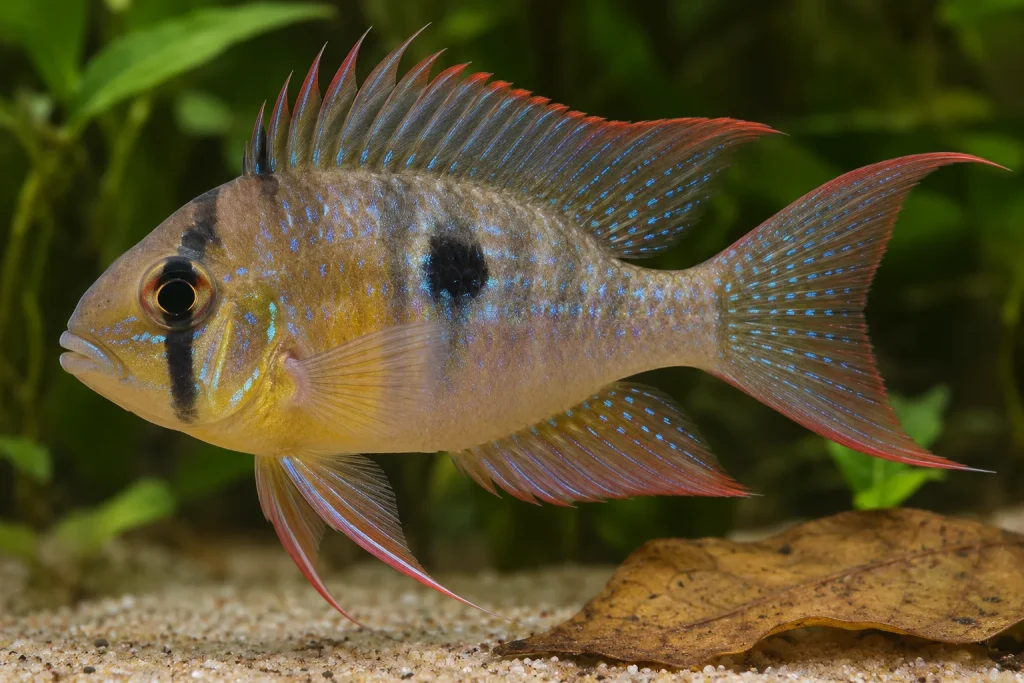
Up to 9 cm
Typical adult length 6–9 cm.



A hardy, comparatively peaceful dwarf cichlid from Bolivia and Brazil that suits planted community aquaria with fine sand.
A compact tan to silver cichlid with a dark eye bar, a flank spot, red fin edges, blue iridescence, and elongated pelvic filaments.
It is larger, deeper-bodied, and more tolerant of cooler water than M. ramirezi. The flank spot and red fin edging are useful features.
Males usually become larger with longer dorsal, pelvic, and caudal extensions. Mature females may have a fuller pinkish abdomen.
Provide fine sand, flat stones, wood, plants, open feeding areas, and visual barriers. A compatible pair needs a territory of its own.
Generally peaceful in a community but territorial around a chosen spawning site.
Best as a bonded pair or a small group in a larger aquarium where pairs can separate.
Both parents defend eggs and fry, usually within a limited area.
Works with peaceful tetras, rasboras, pencilfish, and calm catfish in adequate space. Shrimplets may be eaten.
It tolerates soft to moderately hard water and does not require the very high temperature used for German blue rams.
Some links may earn us a commission on qualifying purchases, at no extra cost to you. Check suitability, price and availability with the seller. How affiliate links work
 Manual aquarium siphon and gravel cleaner
A manual siphon for routine aquarium water changes and accessible waste removal. The seller lists a hose approximately 1.6 m long.
Control the flow and keep the intake clear of fish and delicate planting. Clean the areas appropriate for your substrate and layout rather than disturbing the entire planted bed.
An omnivorous micropredator that picks small invertebrates and edible particles from the substrate.
Feed varied small sinking foods and occasional live or frozen prey. Ensure shy fish receive food.
A biparental open substrate spawner. Eggs are placed on a cleaned stone or shallow pit and both parents guard eggs, larvae, and fry.
You can write a note about what worked for you, or send a photograph. We check everything before it appears here.
Cichla ocellaris
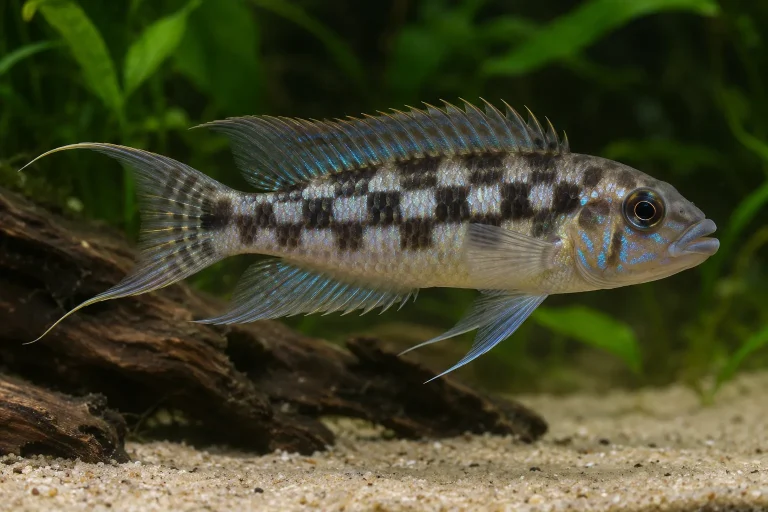
Dicrossus filamentosus
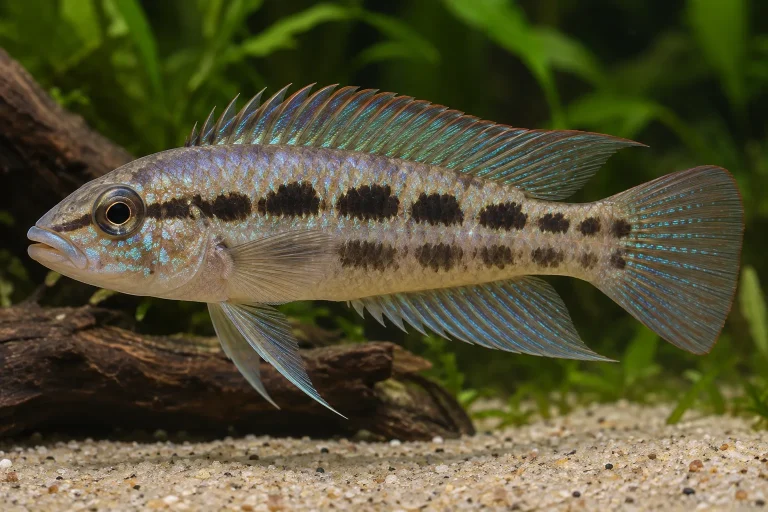
Dicrossus maculatus
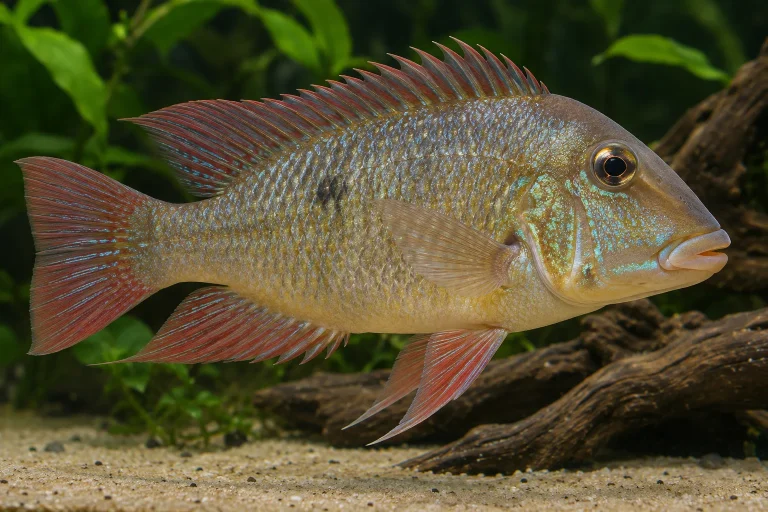
Satanoperca jurupari