

Checkered Barb
Oliotius oligolepis
- Care level
- Beginner
- Adult size
- 4.5 cm
- Minimum tank
- 68 litres
- Temperature
- 18–25 °C
Species profile
Dawkinsia chalakkudiensis
Common names: Chalak Barb
Up to 12.5 cm
A large relative of the Denison Barb from Kerala, with a black line and a red line along its side, but no red on the head. Keep a group of at least 6 in 243 litres or more.
A large relative of the Denison Barb from Kerala, with a black line and a red line along its side, but no red on the head. It needs cool, flowing water, and it was first exported as the Denison Barb.
Check the scientific name when buying, as common names vary between sellers and countries.
Mature females are usually rounder in the belly, and males are usually slimmer and often brighter.
A long tank with open swimming water, plants around the edges and steady filtration suits this fish. A darker substrate and some floating plants usually bring out its colour.
Active and social, and most settled when kept with its own kind.
Keep a group of at least 6, and more if you can. Larger groups are calmer and show better colour and behaviour.
Not territorial, although males may spar and display.
Suits a community of similar-sized, peaceful fish that like the same water. Avoid large predators, which will treat it as food. It is likely to eat shrimp. Choose its tankmates with care.
Keep the pH steady, because this fish is sensitive to swings.
An omnivore that eats invertebrates and plant matter. Pellets, flake and frozen foods with some vegetable matter suit it.
Feed small amounts, and remove anything left after a few minutes.
Not commonly bred in aquariums, and little has been recorded about how it spawns.
You can write a note about what worked for you, or send a photograph. We check everything before it appears here.
Oliotius oligolepis
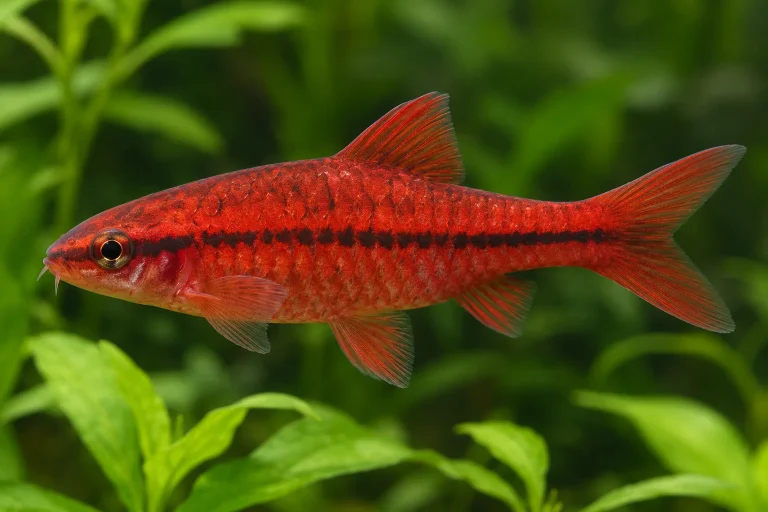
Puntius titteya
Barbodes everetti
Dawkinsia denisonii