
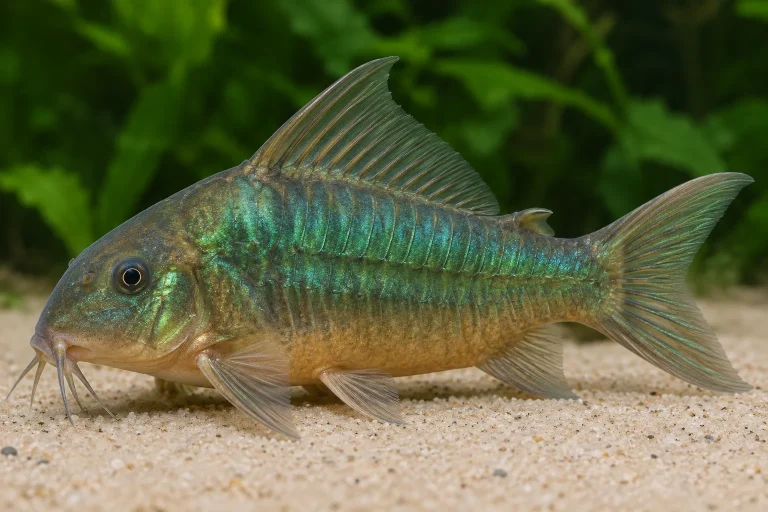
Emerald Brochis Corydoras
Brochis splendens
- Care level
- Intermediate
- Adult size
- 7–8.5 cm
- Minimum tank
- 100 litres
- Temperature
- 21–27 °C
Species profile
Gastrodermus elegans
Common names: Elegant Corydoras, Elegant Cory, Gastrodermus elegans
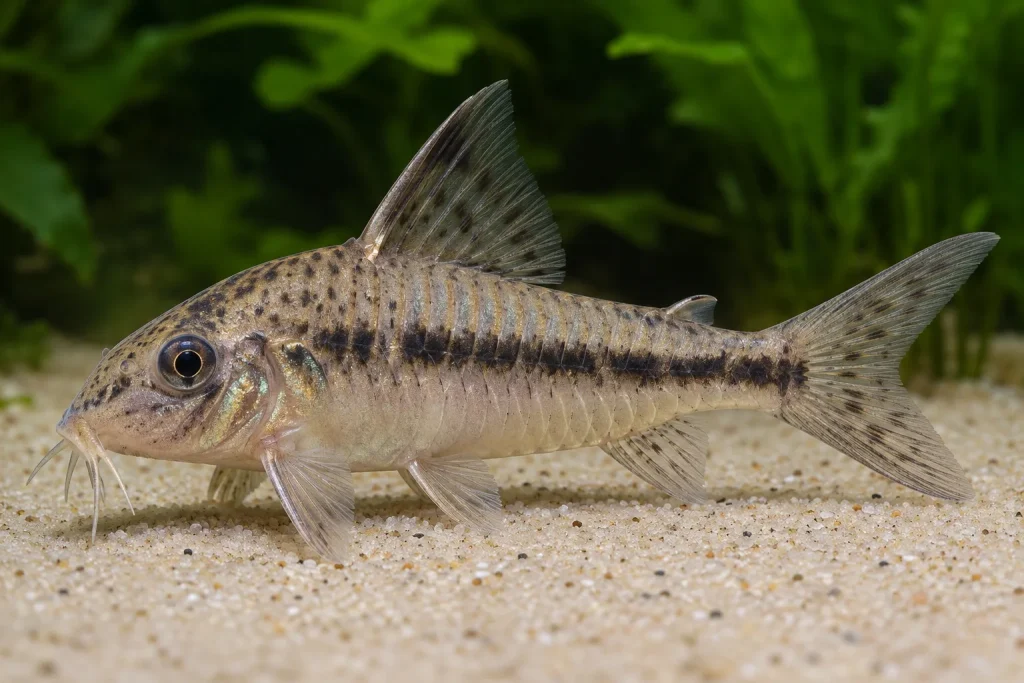
Up to 5.5 cm
Typical adult length 4–5.5 cm.



Elegant Corydoras is a peaceful South American callichthyid catfish recognised by a fine mottled or banded pattern with noticeable sexual differences and more frequent midwater swimming than most corys. It should be kept in a same-species group over fine sand in clean, oxygen-rich freshwater.
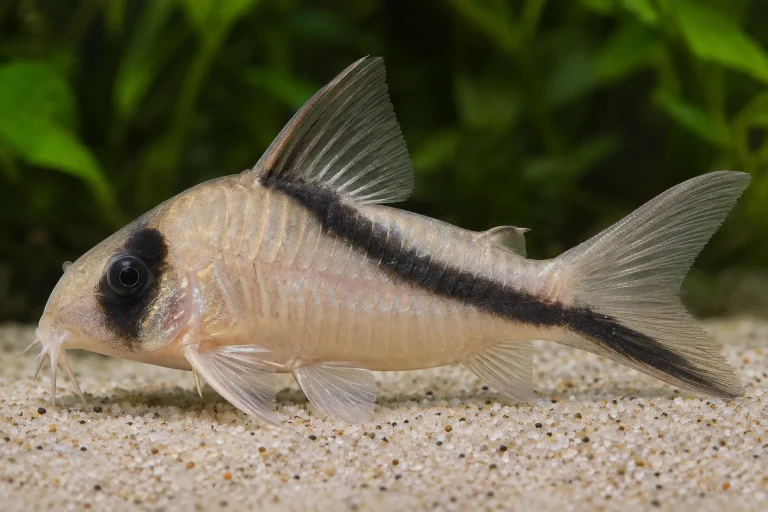
A slender, large-eyed cory with a pale grey to beige body and a dark horizontal stripe or series of blotches along the flank. Several pattern forms occur, and adults have a lighter, more delicate build than typical Bronze or Peppered Corydoras.
Identify this profile by the combination of a fine mottled or banded pattern with noticeable sexual differences and more frequent midwater swimming than most corys. Older sources commonly list this fish as Corydoras elegans; the current profile follows the accepted or revised placement Gastrodermus elegans. Colour alone can be unreliable in stressed, juvenile, or poorly conditioned fish, so body shape, snout length, fin pattern, and provenance should also be checked.
Females are usually broader and fuller through the abdomen, while males remain slimmer. Colour and pattern overlap strongly between the sexes, so body shape in mature fish is the safer guide.
Keep a sizeable group in a mature aquarium with fine sand, gentle open swimming room above the bottom, plants or wood for cover and consistently clean, oxygen-rich water. These fish may spend more time away from the substrate than many corys, so avoid crowding the lower and middle levels.
A peaceful, coordinated shoaling fish that often uses the lower and middle water as well as the substrate. A small group can appear nervous or inactive, while a larger group shows more natural hovering, darting and foraging behaviour.
Keep at least 6 of the same species or coded population, with 8 or more preferred where space permits. A mixed collection of single corys does not fully replace a proper same-species group.
It is not territorial. Males may briefly chase one another or follow females during courtship, but sustained aggression is unusual when the group has adequate floor space.
Works best with small, peaceful midwater fish and other gentle bottom species. Avoid aggressive or highly competitive tank mates, and do not assume dwarf shrimp young will be safe from opportunistic feeding.
Some links may earn us a commission on qualifying purchases, at no extra cost to you. Check suitability, price and availability with the seller. How affiliate links work
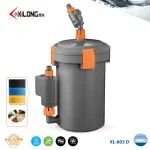 Xilong XL-803D canister filter – up to 100 L
An external-filter option for the moderate-flow setup described above. The seller lists a 400 L/h pump and an aquarium capacity of up to 100 litres.
Check the volume of your actual aquarium and the needs of its complete stocking. Use the flow control or spray bar to avoid a concentrated current. A larger tank or a species requiring strong river flow needs a different filter selection.
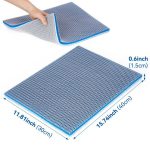 Cut-to-fit aquarium filter media pad
A cut-to-fit pad for compatible filter compartments. The listing describes a sheet approximately 16 by 12 inches; check the offered variant and the space inside your filter.
The seller description varies between five and eight layers, so confirm the actual sheet before ordering. Keep the filter manufacturer’s media arrangement and avoid obstructing the flow.
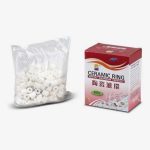 Xinyou ceramic filter rings – 300 g
A biological-media option for a filter with a suitable media basket. This listing is a 300 g pack of ceramic rings.
Check the ring size and available basket space. Installing new media does not make a new aquarium instantly cycled, and these rings do not replace routine water-quality checks.
Soft to moderately hard, slightly acidic to neutral water is suitable. Provide good oxygenation and keep ammonia and nitrite at zero.
Some links may earn us a commission on qualifying purchases, at no extra cost to you. Check suitability, price and availability with the seller. How affiliate links work
 Manual aquarium siphon and gravel cleaner
A manual siphon for routine aquarium water changes and accessible waste removal. The seller lists a hose approximately 1.6 m long.
Control the flow and keep the intake clear of fish and delicate planting. Clean the areas appropriate for your substrate and layout rather than disturbing the entire planted bed.
Use small sinking or slow-falling foods, including quality micro-pellets, wafers and varied frozen or live invertebrate foods. Feed across more than one area because these fish may take food in the lower water as well as from the substrate.
Feed after faster surface and midwater fish have taken their share, and confirm that every individual reaches food. Use small portions once or twice daily, remove persistent leftovers, and vary prepared and frozen or live foods.
Captive spawning is reported less often than for common corys. A well-conditioned group, excellent water quality and seasonal-style changes may help, but egg production and fry survival can be inconsistent; the adults do not provide parental care.
You can write a note about what worked for you, or send a photograph. We check everything before it appears here.
Brochis splendens
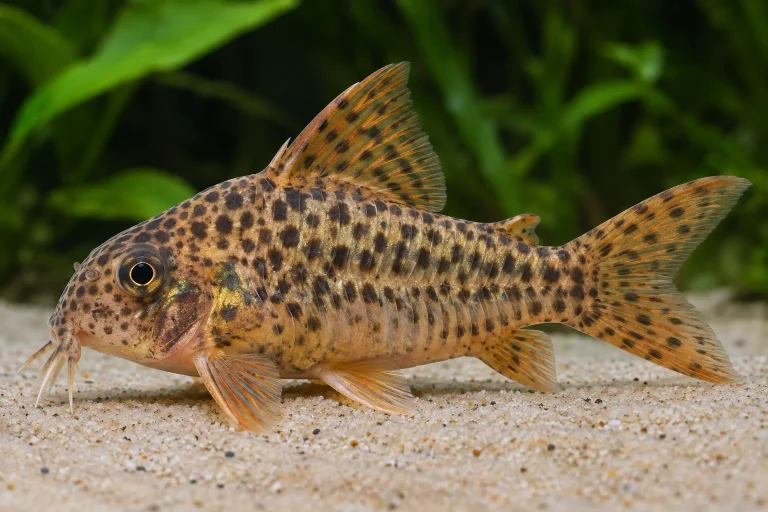
Hoplisoma eversi
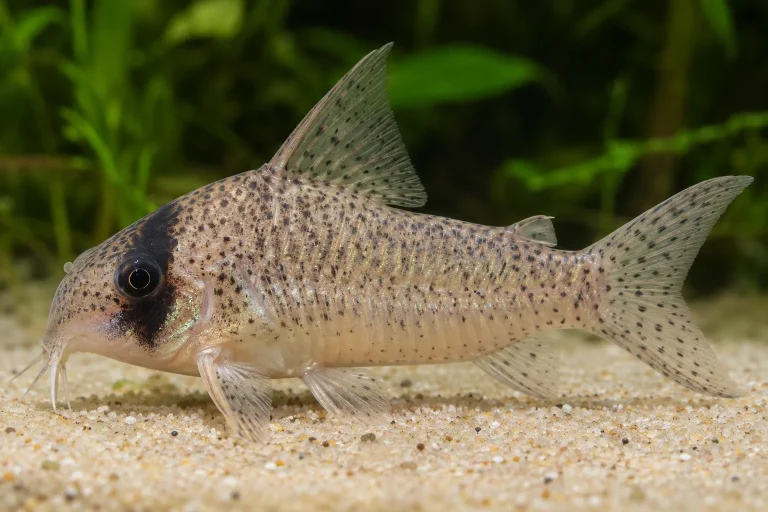
Hoplisoma atropersonatum
Hoplisoma melini