
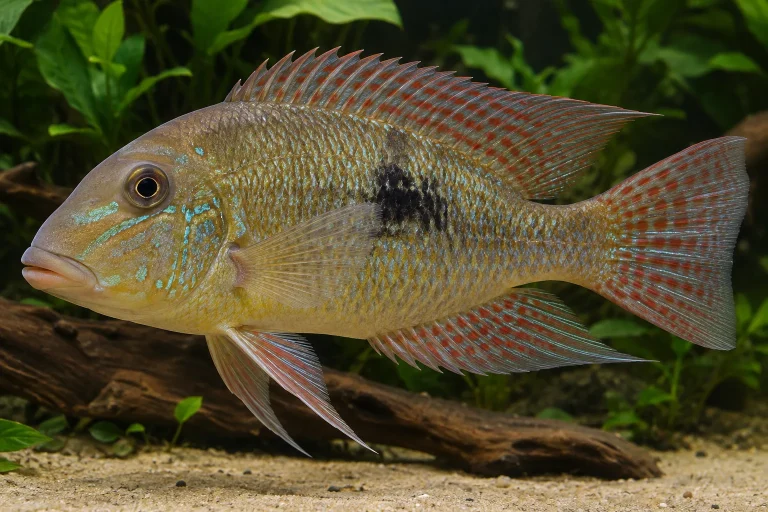
Megasema Eartheater
Geophagus megasema
- Care level
- Intermediate
- Adult size
- 15–22 cm
- Minimum tank
- 400 litres
- Temperature
- 24–29 °C
Species profile
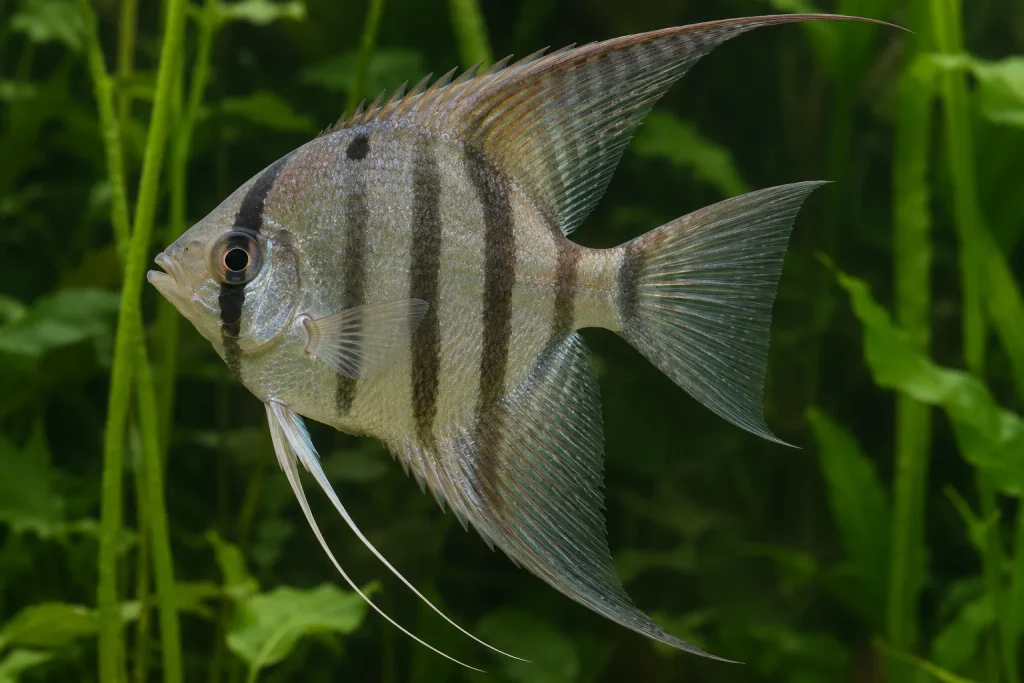
Pterophyllum leopoldi
Common names: Leopold's Angelfish, Dwarf Angelfish
Up to 15 cm
Typical adult length 10–15 cm.

The smallest recognised angelfish species, a social Amazonian cichlid requiring a tall calm aquarium and group structure.
A relatively compact angelfish with a straighter forehead than P. altum, a dark bar through the eye, vertical body bars, and a small predorsal mark.
It is smaller and more elongated than many P. scalare forms. The predorsal notch and bar pattern are useful, but provenance remains important.
External sex differences are weak. Mature males may be larger, but breeding tubes and pair behaviour are more reliable.
Use a tall mature aquarium with branches, plants, open vertical swimming room, subdued light, and gentle filtration. Keep a group until pairs form.
Generally calm and social, becoming territorial after pairing.
Maintain a group of juveniles or adults with enough room for pair separation.
Pairs defend vertical spawning surfaces and nearby cover.
Keep with calm warm-water fish. Very small fish and shrimp may be eaten.
Warm soft slightly acidic water is preferred, especially for wild fish and breeding.
Some links may earn us a commission on qualifying purchases, at no extra cost to you. Check suitability, price and availability with the seller. How affiliate links work
 Manual aquarium siphon and gravel cleaner
A manual siphon for routine aquarium water changes and accessible waste removal. The seller lists a hose approximately 1.6 m long.
Control the flow and keep the intake clear of fish and delicate planting. Clean the areas appropriate for your substrate and layout rather than disturbing the entire planted bed.
An omnivorous micropredator taking insects, crustaceans, worms, and prepared foods.
Offer varied small meals and ensure all group members receive food.
A biparental substrate spawner placing eggs on vertical leaves, wood, or similar surfaces.
You can write a note about what worked for you, or send a photograph. We check everything before it appears here.
Geophagus megasema
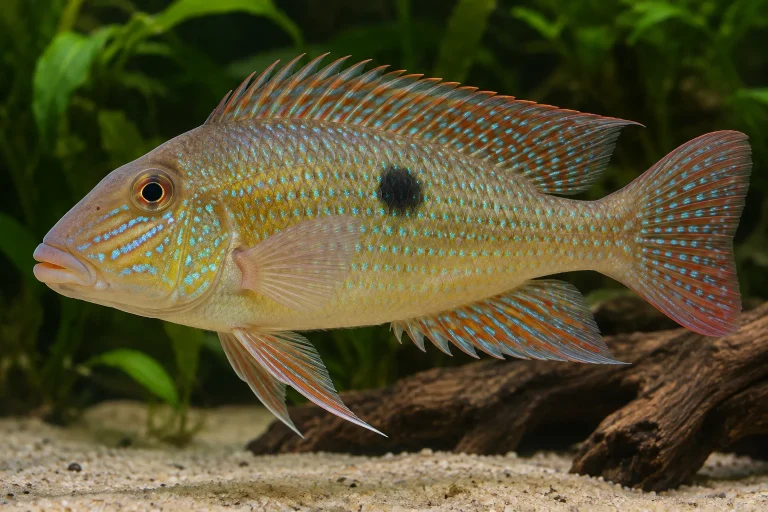
Geophagus mirabilis
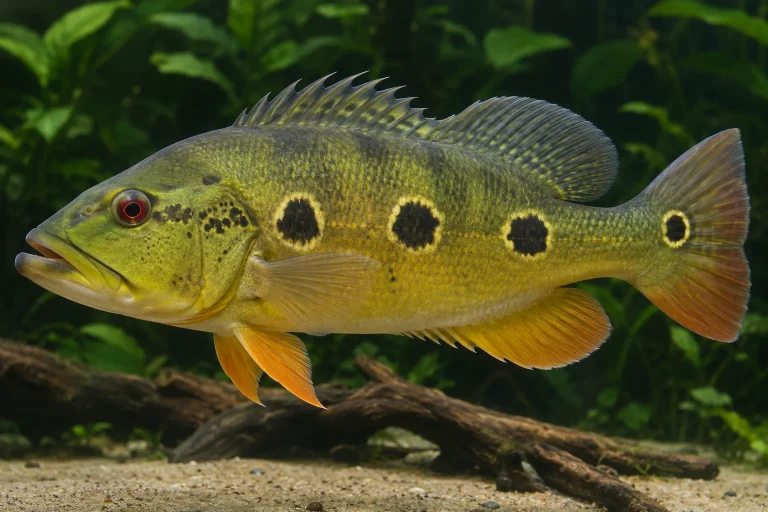
Cichla orinocensis
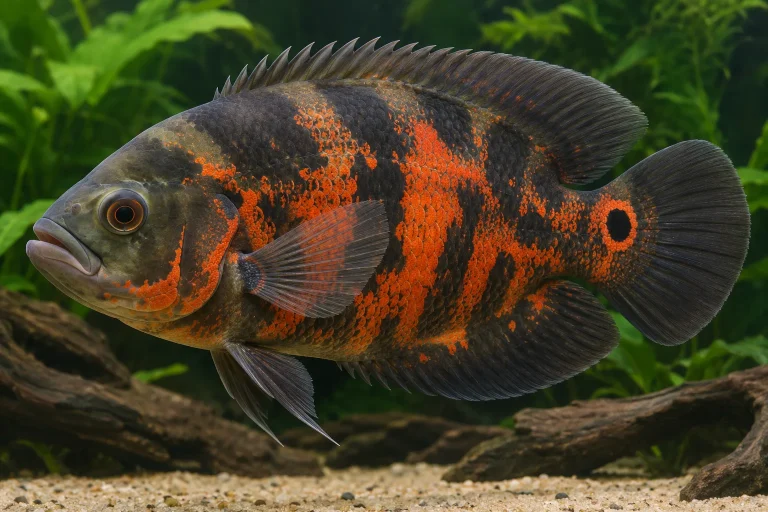
Astronotus ocellatus