Skip to content
Menu

Species profile

Pantano Cichlid

Cincelichthys pearsei

Common names: Pantano Cichlid

Recognized speciesCichlids

Adult size

Up to 42.5 cm

Up to 42.5 cm

Countries of origin

  • See all stock from Guatemala
  • See all stock from Mexico

Good fit for your tank?

Good fit for

  • A keeper with room for a large aquarium

Think carefully if

  • You cannot provide about 864 litres for a fully grown fish
  • You keep shrimp you want to protect

A large Central American cichlid that grows to over 40 cm and feeds largely on plants, which is unusual. Keep alone or in a small group in 864 litres or more.

Appearance and Identification

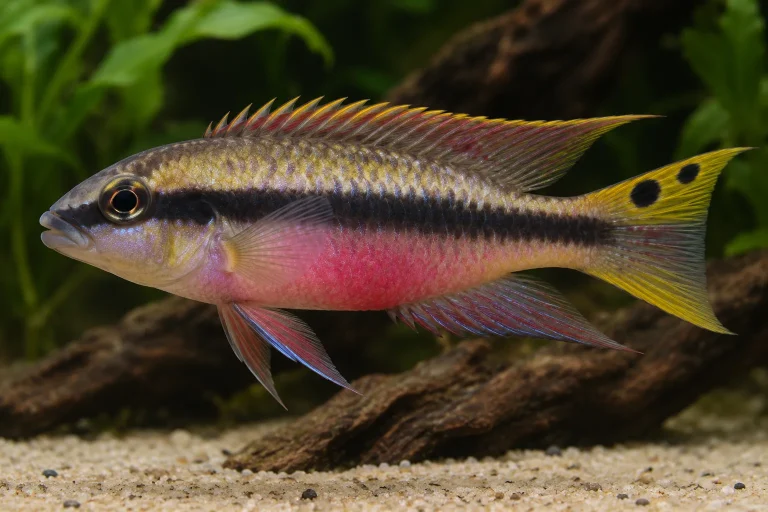
A large Central American cichlid that grows to over 40 cm and feeds largely on plants, which is unusual. It needs a very big tank, and it is rarely seen.

Check the scientific name when buying, as common names vary between sellers and countries.

Males usually grow larger, with longer fins, but sexing can be hard outside breeding.

Tank Requirements

Suggested filter
About 3,460–4,320 litres an hour
Suggested heater
About 875–1300 W for this tank
Minimum tank volume
864 litres
Minimum tank length
240 cm
Minimum group size
1
Recommended group size
2
Activity level
Moderate
Flow preference
Low to moderate
Planting preference
Moderately planted
Hiding places
Yes
Lid recommended
Yes
Jumping risk
Moderate

Provide wood, rocks and clear territories, with enough open water for a fish of this size. Strong filtration helps, because cichlids produce a lot of waste.

Behaviour and Tankmates

A characterful fish that interacts with its surroundings and often recognises its keeper.

Often best as a pair, or as a small group in a roomy tank.

Can be territorial, especially when breeding.

Choose tankmates with care, by size and temperament. It may eat much smaller fish, and it can harass peaceful ones when breeding. It is likely to eat shrimp.

Check tankmates for this species

Water Parameters

Temperature
24–30 °C
pH
7.2–8.5
GH
10–25
Stability importance
Important

Fairly tolerant of different water, if it is clean and stable.

Parameter caveat
Keep up regular water changes, and acclimatise new fish slowly.

Feeding

Diet types
Omnivore
Feeding frequency
Daily
Preferred foods
  • Quality pellets or flakeA good staple. Choose a size that fits its mouth.
  • Frozen bloodworm, daphnia and brine shrimpOffer several times a week for colour and condition.
  • Algae or vegetable-based foodInclude some plant matter for balance.

Takes good-quality pellets, along with frozen foods for variety.

Feed small amounts, and remove anything left after a few minutes.

Breeding

Breeding type
Substrate Spawner
Breeding difficulty
Moderate
Parental care
Variable
Baby foods
  • Newly hatched brine shrimpThe fry can usually take this from the start.
  • Crushed flakeA simple addition as they grow.

Lays its eggs on a cleaned surface, such as a stone, leaf or the bottom of the tank, and the parents may guard them. Move eggs or adults if you want to raise many fry.

Habitat and Origin

Geographic origin
Central America, Guatemala, Mexico
Natural habitat
Brackish Water, Lake, River
Aquarium contexts
Large Freshwater Aquarium, Planted Aquarium
Audience level
Specialist

Classification

Profile type
Recognized species
Genus
Cincelichthys
Family
Cichlidae
Species group
Cichlids, Fish
Previous scientific names
Herichthys pearsei, Name also used in the hobby.

Have you kept this species?

You can write a note about what worked for you, or send a photograph. We check everything before it appears here.

Share a note or photo

JPG, PNG, or WebP, up to 5 MB.