
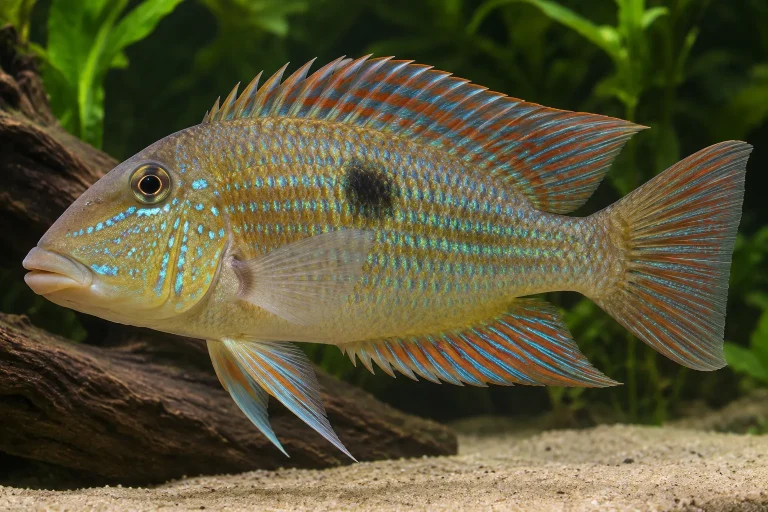
Sveni Eartheater
Geophagus sveni
- Care level
- Intermediate
- Adult size
- 15–22 cm
- Minimum tank
- 400 litres
- Temperature
- 24–29 °C
Species profile
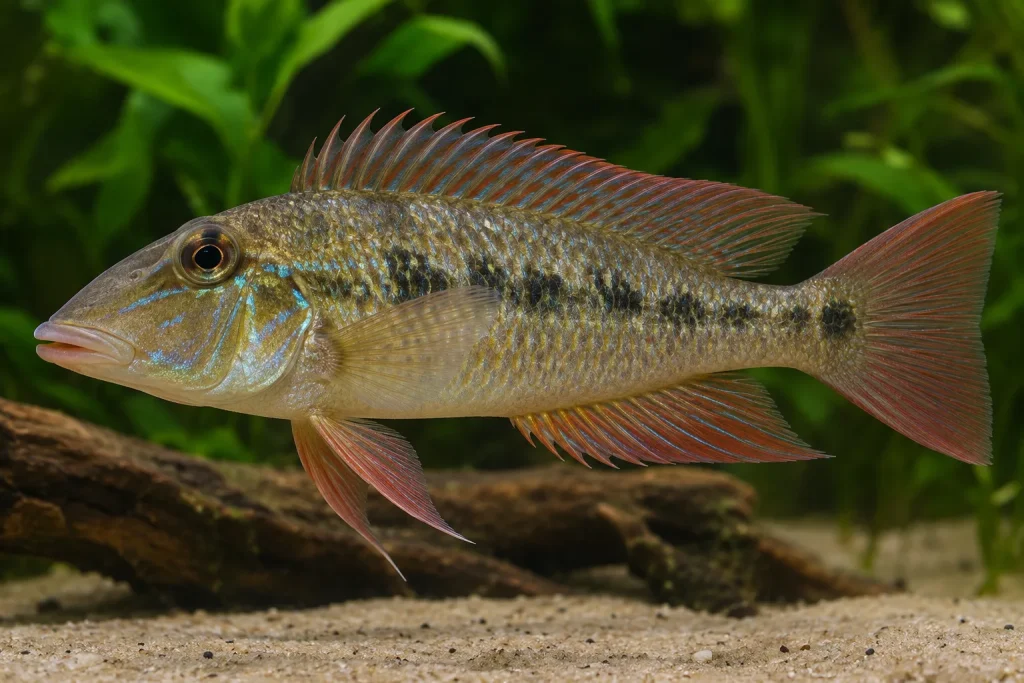
Satanoperca acuticeps
Common names: Sharphead Eartheater
Up to 22 cm
Typical adult length 15–22 cm.


A pointed-headed Amazonian sand-sifter that needs a peaceful group, fine substrate, and pristine water.
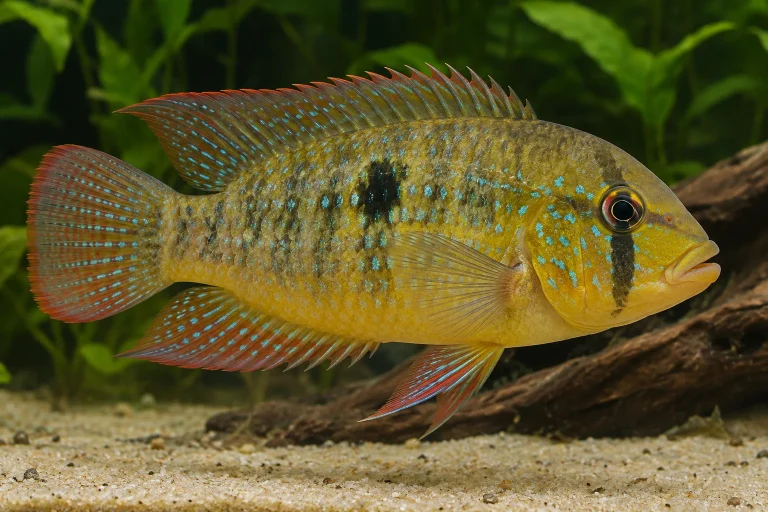
A slender silver-gold Satanoperca with a pointed snout, blue-green iridescence, dark flank markings, and reddish fins.
The pointed head and pattern separate it from deeper-headed Satanoperca, but locality and adult markings remain important.
Sexes are similar. Adult males may be somewhat larger and longer-finned.
Keep a group over a broad bed of fine sand with powerful filtration, high oxygen, wood, and open swimming room.
Peaceful, social, and constantly sifts sand for edible particles.
Maintain at least five or six to spread social pressure.
Pairs defend a temporary breeding site.
Use calm medium to large South American fish. Small fish and shrimp may be eaten.
Warm soft acidic water is preferred. Excellent cleanliness and low nitrate are essential.
Some links may earn us a commission on qualifying purchases, at no extra cost to you. Check suitability, price and availability with the seller. How affiliate links work
 Manual aquarium siphon and gravel cleaner
A manual siphon for routine aquarium water changes and accessible waste removal. The seller lists a hose approximately 1.6 m long.
Control the flow and keep the intake clear of fish and delicate planting. Clean the areas appropriate for your substrate and layout rather than disturbing the entire planted bed.
An omnivorous benthic sifter taking invertebrates, detritus, and plant material.
Feed small sinking portions across the sand several times daily.
A biparental substrate-spawning mouthbrooder. Eggs are laid on a cleaned surface and larvae are later carried by the parents.
You can write a note about what worked for you, or send a photograph. We check everything before it appears here.
Geophagus sveni
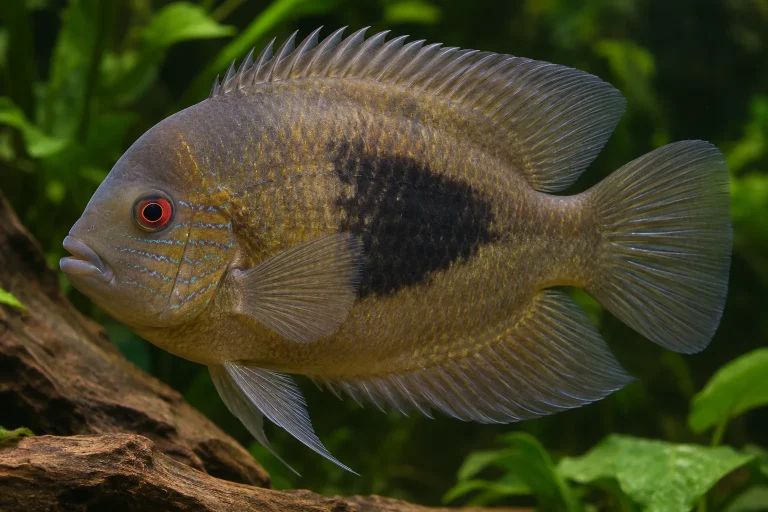
Uaru amphiacanthoides
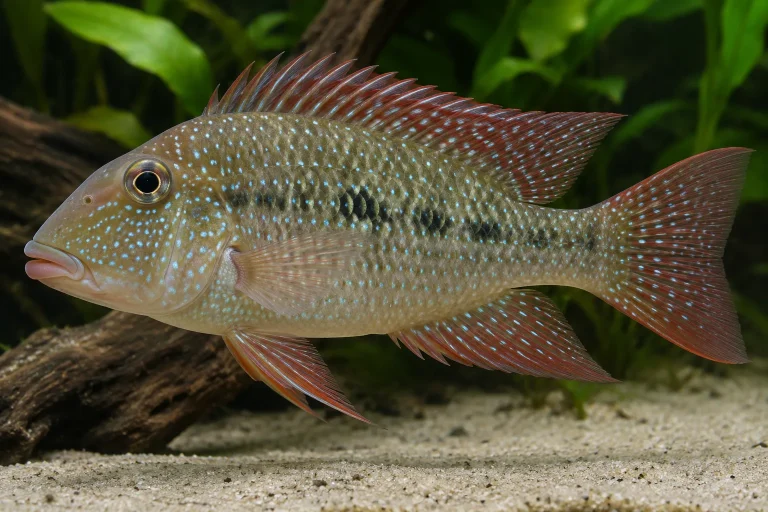
Satanoperca leucosticta
Aequidens metae