
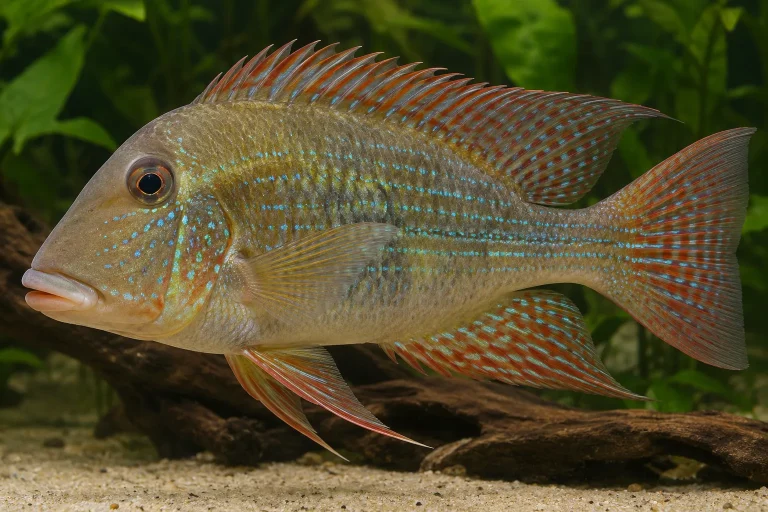
Altifron Eartheater
Geophagus altifrons
- Care level
- Intermediate
- Adult size
- 20–27 cm
- Minimum tank
- 500 litres
- Temperature
- 24–29 °C
Species profile
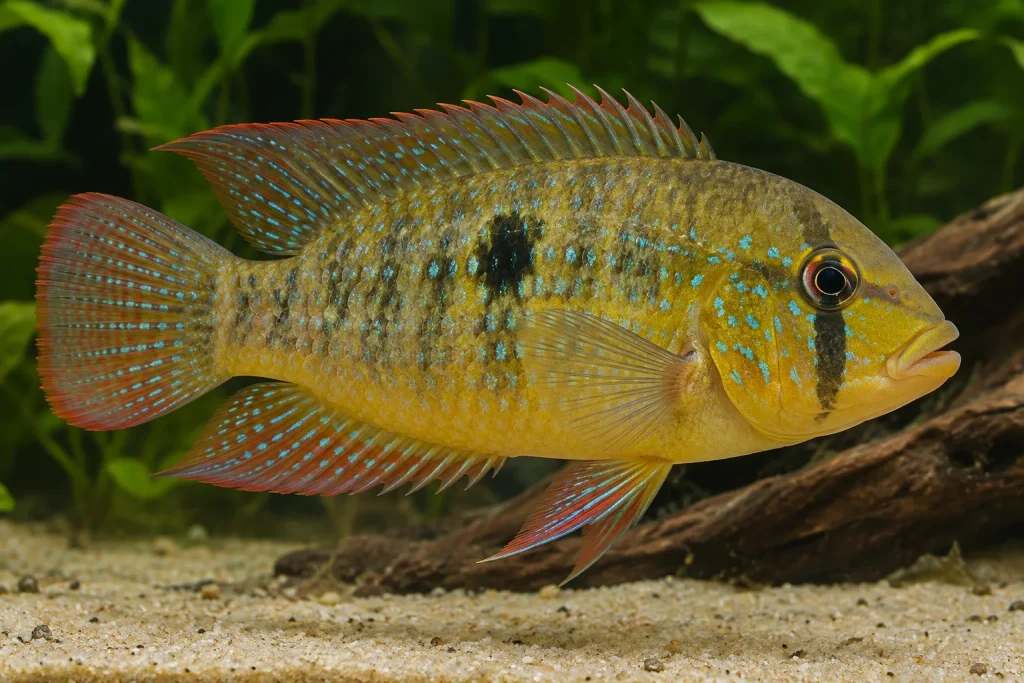
Aequidens metae
Common names: Yellow Acara, Meta River Acara
Up to 18 cm
Typical adult length 12–18 cm.

A moderate-sized Orinoco cichlid with yellow-gold colour and blue iridescence, best kept as a compatible pair in a spacious aquarium.
A yellow to olive cichlid with blue-green iridescent spots, a dark flank blotch, an eye stripe, and reddish fin accents.
It is separated from similar Aequidens by flank pattern, head markings, fin pattern, and Meta-Orinoco provenance.
Males are usually larger with longer dorsal and anal fins. Females become fuller and more strongly patterned before spawning.
Provide fine sand, wood, rounded rocks, open swimming space, strong filtration, and visual barriers. A pair needs a defined territory.
Generally manageable for its size but territorial, particularly as a pair.
Keep as a compatible pair or in a group only with substantial space.
Both parents defend the spawning surface and fry.
Use robust peaceful medium-sized fish. Avoid small fish, shrimp, and aggressive cichlids in confined tanks.
Warm soft to moderately mineralised water is suitable. Stable clean water is more important than an exact pH.
Some links may earn us a commission on qualifying purchases, at no extra cost to you. Check suitability, price and availability with the seller. How affiliate links work
 Manual aquarium siphon and gravel cleaner
A manual siphon for routine aquarium water changes and accessible waste removal. The seller lists a hose approximately 1.6 m long.
Control the flow and keep the intake clear of fish and delicate planting. Clean the areas appropriate for your substrate and layout rather than disturbing the entire planted bed.
An omnivore taking invertebrates, plant matter, and prepared foods.
Use balanced pellets with vegetables and frozen invertebrates. Avoid mammal meat.
A biparental substrate spawner. Eggs are laid on a flat stone, wood, or cleaned surface and defended by both parents.
You can write a note about what worked for you, or send a photograph. We check everything before it appears here.
Geophagus altifrons
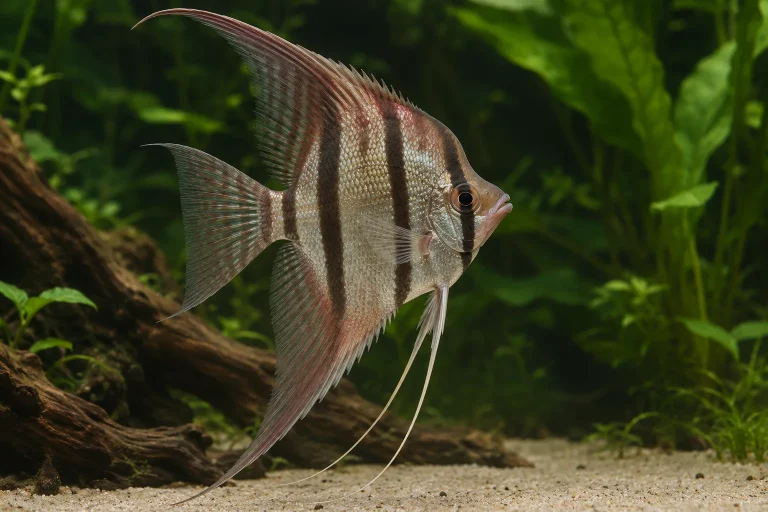
Pterophyllum altum
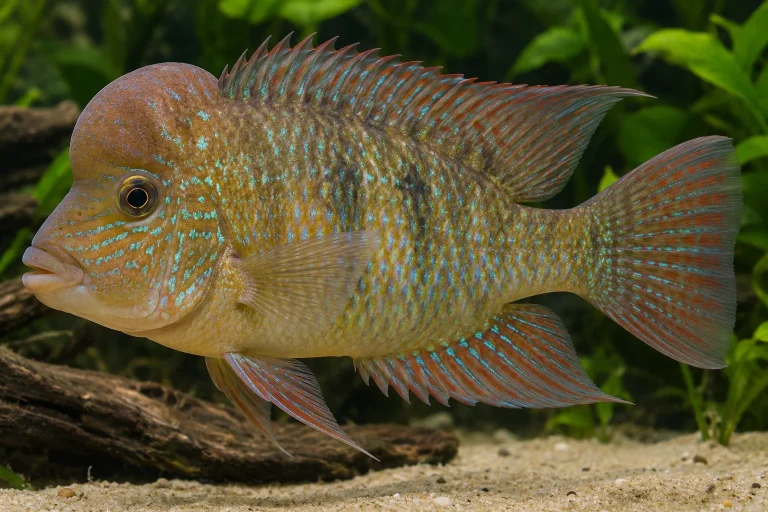
Gymnogeophagus balzanii
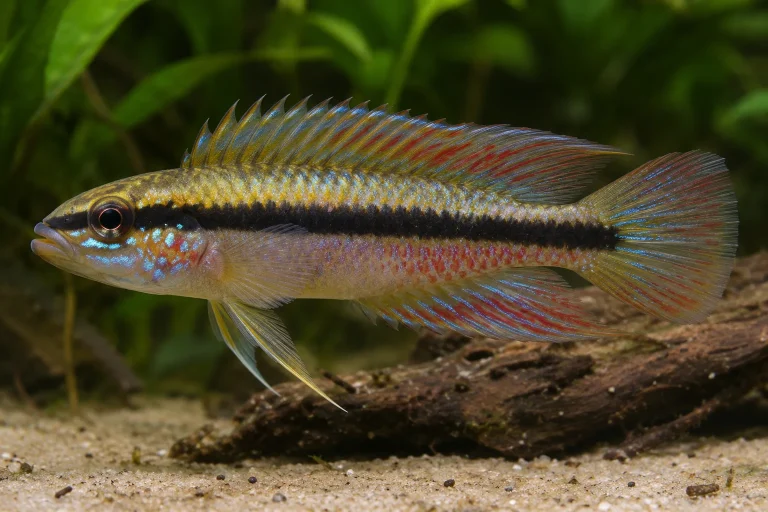
Taeniacara candidi