
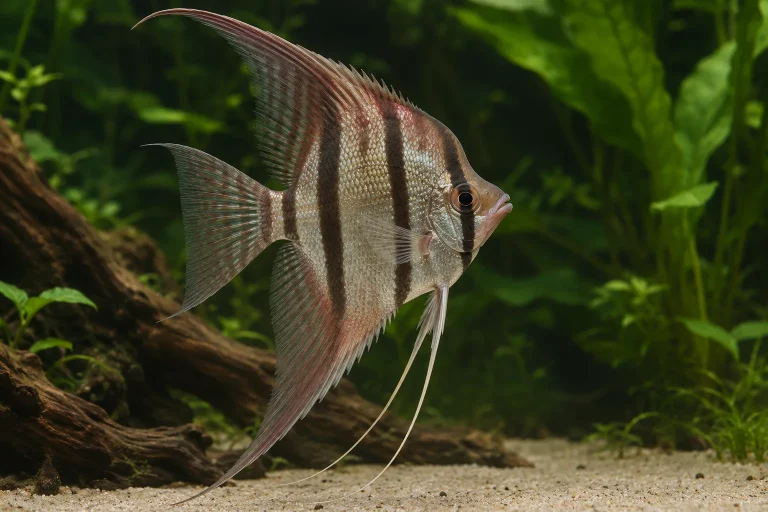
Altum Angelfish
Pterophyllum altum
- Care level
- Advanced
- Adult size
- 18–22 cm
- Minimum tank
- 400 litres
- Temperature
- 27–31 °C
Species profile
Geophagus altifrons
Common names: Altifron Eartheater, Altifrons Eartheater
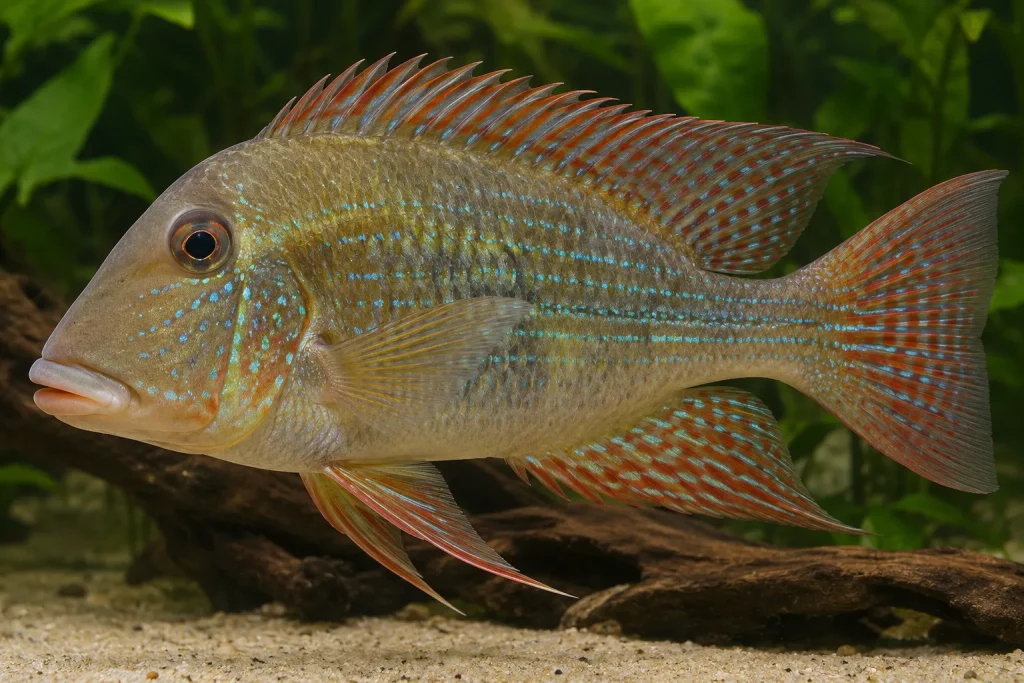
Up to 27 cm
Typical adult length 20–27 cm.


A large, peaceful Amazonian eartheater that sifts fine sand continuously and should be maintained in a spacious group.
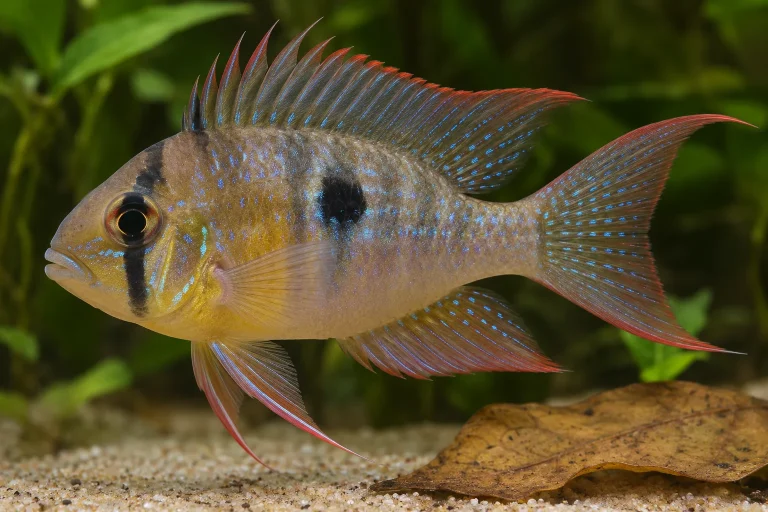
Adults have a deep silver to olive body with iridescent blue-green spotting and red or orange patterning in the fins.
The species is variable across its range and is often confused with other Geophagus; locality data, flank spot pattern, fin markings, and adult proportions are important.
Adult males may become larger with longer fin extensions and stronger colour, but sexing immature fish is unreliable.
Use a tank with a broad area of fine inert sand, powerful biological filtration, open swimming room, wood, and securely anchored plants. Keep at least five or six to distribute social pressure.
Generally peaceful for its size, socially assertive within the group, and constantly engaged in substrate sifting.
A group develops a loose hierarchy. Pairs may become more territorial during spawning but normally remain manageable in a large tank.
Breeding pairs defend a selected spawning area while the wider group continues to use the remaining tank.
Combine with robust peaceful South American fishes that are too large to swallow and do not compete aggressively at the bottom. Avoid small shrimp, tiny fish, and highly aggressive cichlids.
Warm soft to moderately mineralised water is suitable. Clean water, high oxygen, and low nitrate are more important than chasing a single pH value.
Some links may earn us a commission on qualifying purchases, at no extra cost to you. Check suitability, price and availability with the seller. How affiliate links work
 Manual aquarium siphon and gravel cleaner
A manual siphon for routine aquarium water changes and accessible waste removal. The seller lists a hose approximately 1.6 m long.
Control the flow and keep the intake clear of fish and delicate planting. Clean the areas appropriate for your substrate and layout rather than disturbing the entire planted bed.
An omnivorous benthic sifter that takes insect larvae, small crustaceans, detritus, plant matter, and prepared foods.
Feed several smaller sinking meals across the sand so all group members can forage. Avoid large hard food pieces and mammal meat.
A biparental substrate-spawning cichlid. A pair cleans a flat surface or shallow pit, guards eggs and larvae, and moves the brood when threatened.
You can write a note about what worked for you, or send a photograph. We check everything before it appears here.
Pterophyllum altum
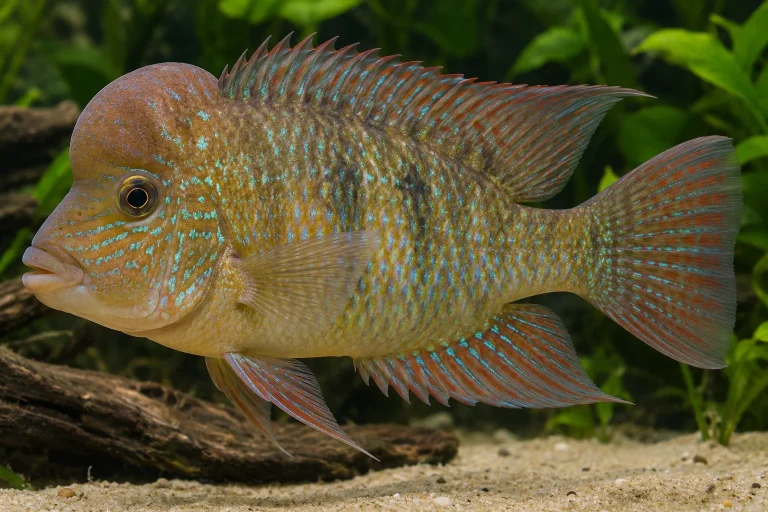
Gymnogeophagus balzanii
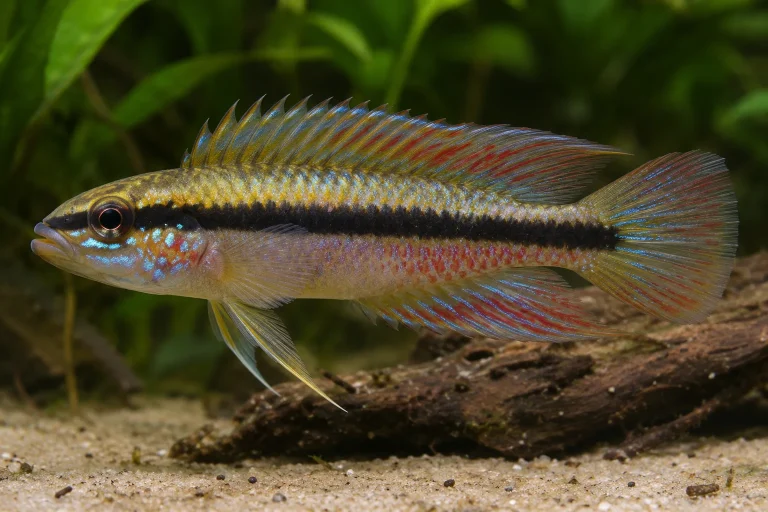
Taeniacara candidi
Mikrogeophagus altispinosus