
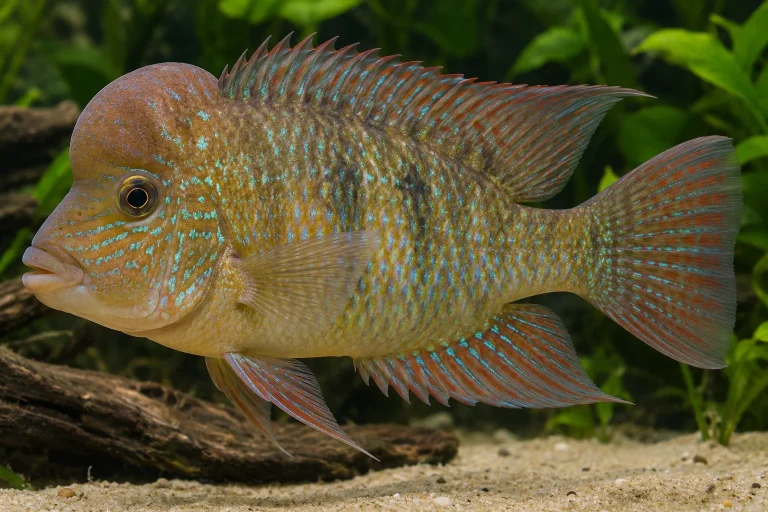
Argentine Humphead
Gymnogeophagus balzanii
- Care level
- Intermediate
- Adult size
- 12–20 cm
- Minimum tank
- 300 litres
- Temperature
- 18–26 °C
Species profile
Pterophyllum altum
Common names: Altum Angelfish, Orinoco Altum
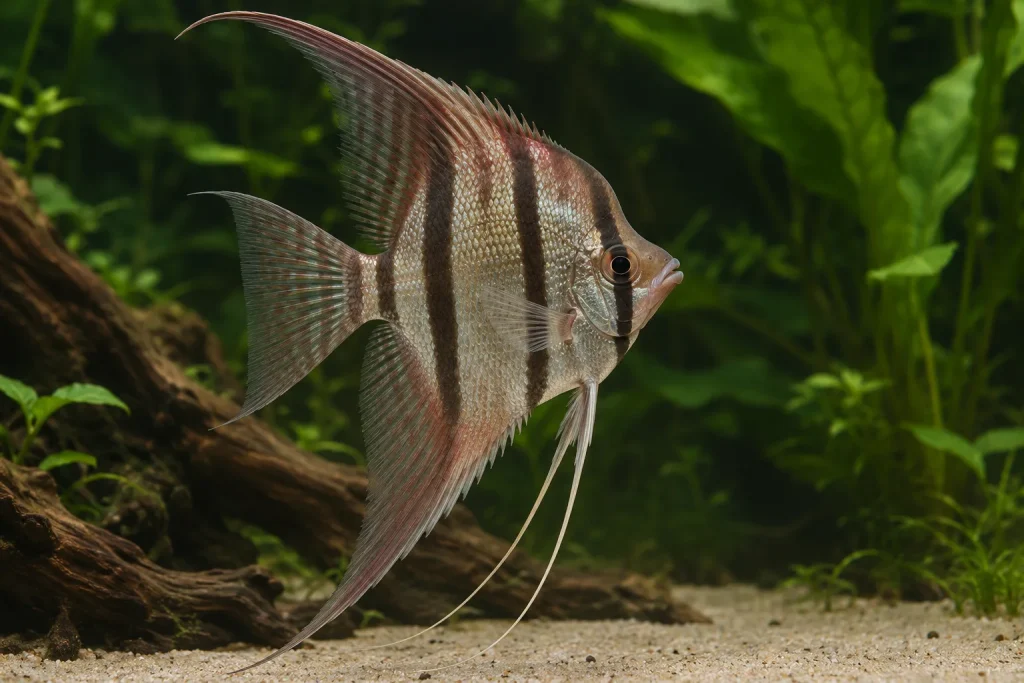
Up to 22 cm
Typical adult length 18–22 cm.



The tallest wild angelfish, requiring a deep, warm, very soft aquarium and careful acclimation.
A very tall, laterally compressed angelfish with a strongly concave forehead, long dorsal and anal fins, reddish bars, and dark vertical bands.
True P. altum has a deeper body, a pronounced predorsal notch, and a different bar pattern from P. scalare. Many commercial “altums” are scalare forms or hybrids.
External sex differences are weak outside spawning. Mature males may have a broader head and females a fuller abdomen, but the breeding papilla is more dependable.
Use a mature aquarium at least 70 cm tall with open vertical swimming space, tall wood, broad-leaved plants, subdued light, and gentle filtration. A group of six reduces pair fixation and stress.
A stately middle-level cichlid that is shy when unsettled and territorial after pairs form.
Young fish should be raised in a group. Mature pairs may separate from the group and defend vertical spawning sites.
Pair aggression is usually focused around eggs and larvae but can be serious in cramped tanks.
Keep with calm warm-water fish that do not nip fins. Very small fish and shrimp may be eaten. Avoid boisterous cichlids and fast feeders.
Wild fish are associated with warm, very soft acidic water. Captive-raised stock may tolerate slightly higher values but should still be kept low in minerals.
Some links may earn us a commission on qualifying purchases, at no extra cost to you. Check suitability, price and availability with the seller. How affiliate links work
 Manual aquarium siphon and gravel cleaner
A manual siphon for routine aquarium water changes and accessible waste removal. The seller lists a hose approximately 1.6 m long.
Control the flow and keep the intake clear of fish and delicate planting. Clean the areas appropriate for your substrate and layout rather than disturbing the entire planted bed.
A micropredatory omnivore that takes insect larvae, crustaceans, worms, and prepared foods.
Offer small meals two or three times daily. Wild imports may need live or frozen foods before accepting pellets.
A biparental substrate spawner that places eggs on vertical wood, leaves, or broad surfaces. Both parents fan and defend the clutch and larvae.
You can write a note about what worked for you, or send a photograph. We check everything before it appears here.
Gymnogeophagus balzanii
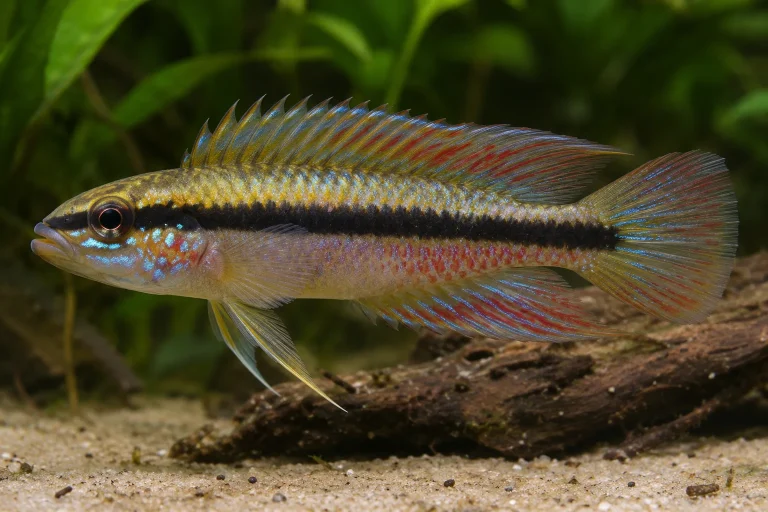
Taeniacara candidi
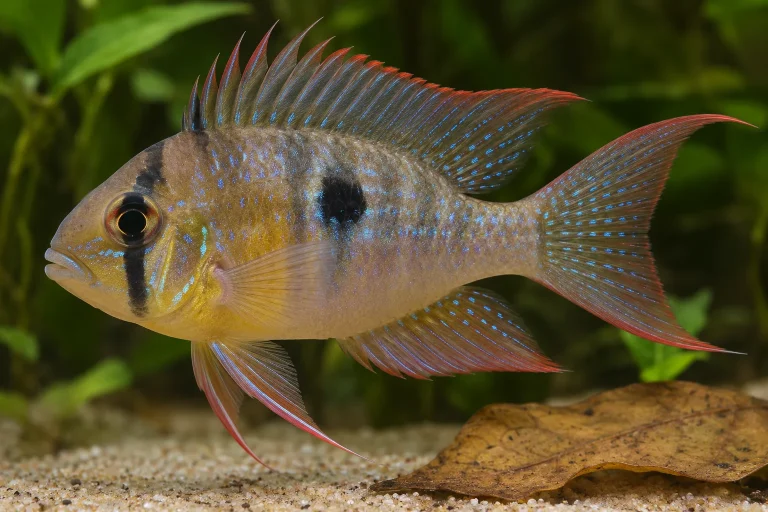
Mikrogeophagus altispinosus
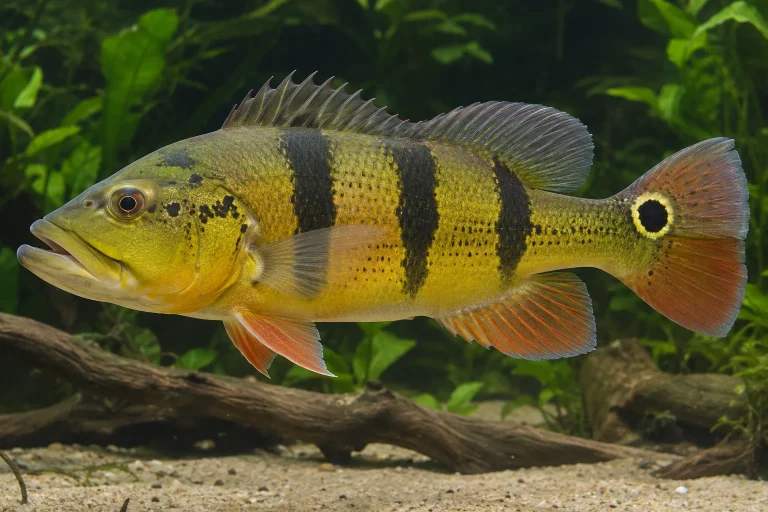
Cichla ocellaris