

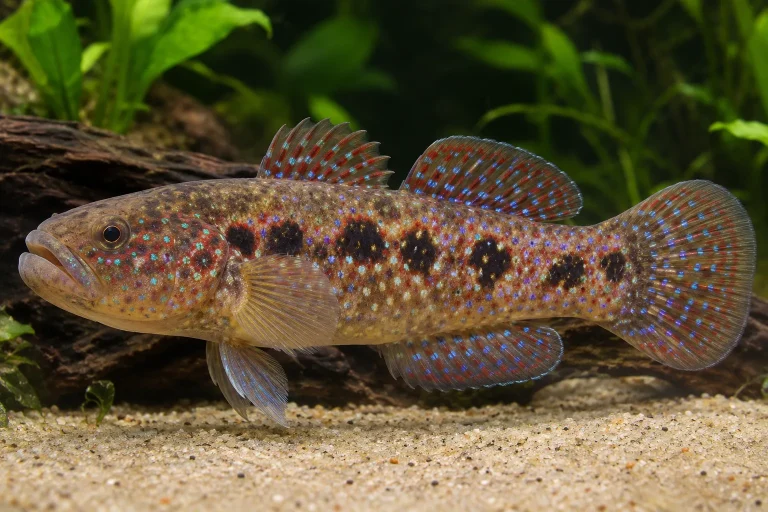
Southern Purple Spotted Gudgeon
Mogurnda adspersa
- Care level
- Advanced
- Adult size
- 7–14 cm
- Minimum tank
- 160 litres
- Temperature
- 18–26 °C
Species profile
Microphysogobio tafangensis
Common names: Purple Sailfin Gudgeon
Up to 9 cm
Typical adult length 7–9 cm.


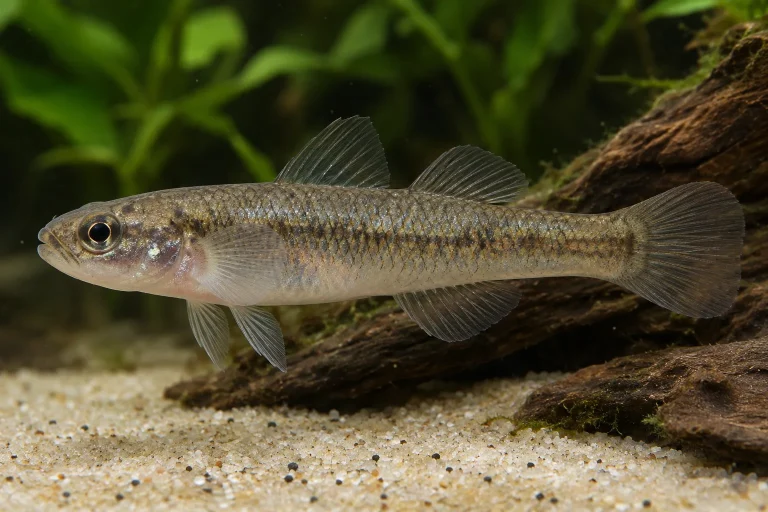
Purple Sailfin Gudgeon is a a small, elongate bottom-oriented cypriniform with a low body, underslung mouth, subtle brown-grey patterning, and paired fins adapted for holding position over river substrate.
Despite the trade name, the Purple Sailfin Gudgeon is not a true sleeper gudgeon. It is a small river-dwelling fish from the gobionid group, with a long, low body and a downward-facing mouth adapted for feeding close to the bottom.
Its colouring is fairly subtle, with soft brown and grey markings rather than bold patterns. It tends to look best in an aquarium with pale sand, fine gravel, smooth stones, and plenty of open bottom space.
The accepted scientific name is Microphysogobio tafangensis. It belongs to the family Gobionidae within the order Cypriniformes, rather than the sleeper gudgeon family Eleotridae.
This species is Microphysogobio tafangensis, not “Microphysogobi.” It belongs to Gobionidae within Cypriniformes and is not an eleotrid sleeper gudgeon. The name “Purple Sailfin Gudgeon” does not appear to be widely established in major fish databases, so it is worth checking the supplier’s identification before buying.
Reliable external sexing information is scarce. Mature females may become fuller through the abdomen, while males may remain slimmer, but these differences are not dependable outside the breeding season. A group of mature fish offers a better chance of obtaining both sexes than selecting individuals by appearance.
Keep this species in a long aquarium set up to resemble a clear, flowing river. The water should be clean, well oxygenated, and moved by a steady current rather than a harsh blast from one direction.
Use fine sand or smooth gravel for the base, with rounded stones and plenty of open bottom space. The fish spends much of its time searching the substrate for food, so sharp gravel and rough debris should be avoided. Plants and pieces of wood can be added around the quieter edges, but do not crowd the main feeding area.
Purple Sailfin Gudgeons are bottom-dwelling foragers and are likely to feel more secure when kept in a group. They may spread out across the aquarium instead of swimming together in a tight school. Make sure food reaches several parts of the tank, as competition can become noticeable when everything lands in one place.
Suitable tank mates include peaceful fish that also prefer clean, oxygen-rich water and some current. Small danios, minnows, and calm species that remain higher in the aquarium are usually better choices than large predators or territorial bottom dwellers. Avoid fish that need very warm, still water, as well as aggressive feeders that take most of the sinking food before the gudgeons can reach it.
This species is a bottom-oriented forager that spends much of its time searching over sand, fine gravel, and stones. It is expected to behave best in a social group, with individuals spreading across the bottom rather than forming a tight school. Crowding and competition become more obvious when food is placed in only one spot.
Keep at least six, preferably eight or more, unless reliable species-specific observations indicate otherwise. A group allows natural foraging and reduces stress in an unfamiliar aquarium.
Not expected to hold strong permanent territories, although individuals may jostle over food or preferred current-facing positions.
Choose peaceful fishes that also appreciate clean, well-oxygenated water and moderate current. Small danios, peaceful minnows, and non-aggressive upper-level species are safer choices than large predators or territorial bottom dwellers. Avoid combining it with fishes that require very warm, still water or that monopolise sinking food.
Use cool to moderately warm, well-oxygenated freshwater with stable mineral content. Strong biological filtration and low dissolved waste are important for a river-associated bottom fish.
Some links may earn us a commission on qualifying purchases, at no extra cost to you. Check suitability, price and availability with the seller. How affiliate links work
 Manual aquarium siphon and gravel cleaner
A manual siphon for routine aquarium water changes and accessible waste removal. The seller lists a hose approximately 1.6 m long.
Control the flow and keep the intake clear of fish and delicate planting. Clean the areas appropriate for your substrate and layout rather than disturbing the entire planted bed.
Provide fine sinking omnivore foods, small frozen or live insect larvae, and soft foods containing plant or aufwuchs material. Spread food across a wide section of the bottom so every fish can feed. The aquarium should be mature enough to support natural grazing, but natural growth alone should not be treated as a complete diet.
Use small portions once or twice daily and confirm that each fish is feeding. Avoid allowing food to lodge beneath stones and decay.
Reliable aquarium breeding information is not available. As an egg-laying gobionid, it should not be managed like a cave-spawning eleotrid. A cautious experimental approach would use a separate river-style breeding tank, seasonal changes in temperature and flow, fine spawning substrate, and protection that prevents adults from reaching scattered eggs.
You can write a note about what worked for you, or send a photograph. We check everything before it appears here.
Mogurnda adspersa
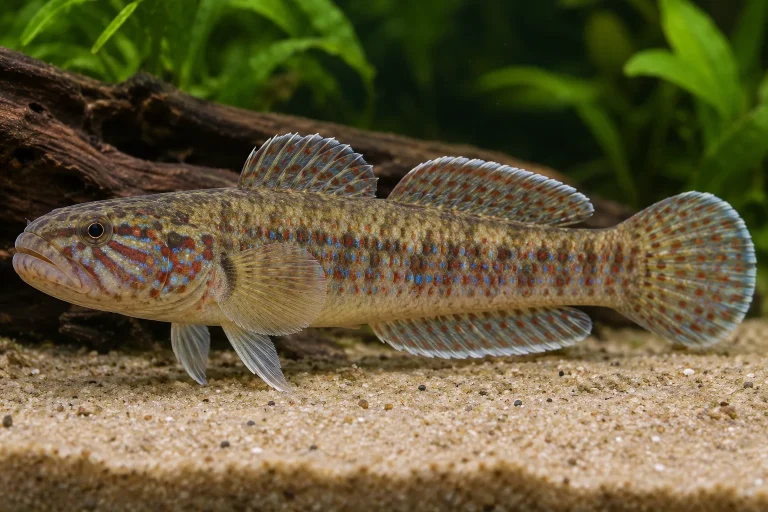
Giuris tolsoni
Hypseleotris cyprinoides
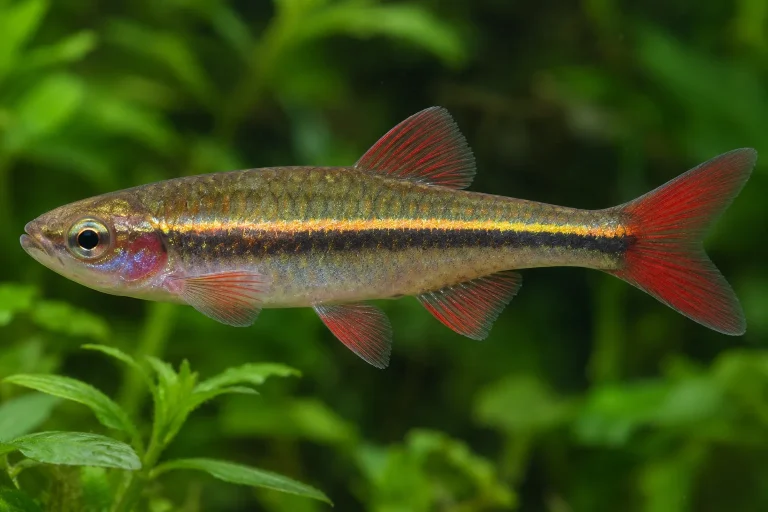
Tanichthys albonubes