
Care Guide
Dwarf Gourami Care Guide
Dwarf gouramis are colourful, peaceful labyrinth fish that need a planted tank of at least 40 to 60 litres, warm stable water of 24 to 28 °C, calm tank mates and access to the surface to breathe air. Keep one male per tank, and buy from a careful source, because the species is prone to an incurable virus.

Understanding Dwarf Gouramis
The dwarf gourami (Trichogaster lalius) comes from slow, densely vegetated waters in South Asia, including India and Bangladesh. It grows to about 5 to 6 cm. Males are brightly coloured with red and blue bars, while females are greyer and rarely sold.
Like bettas, gouramis have a labyrinth organ that lets them breathe air from the surface. They still need clean, oxygenated water, but they must also be able to reach the surface easily.
Tank Size and Habitat
A single male suits a tank of about 40 litres, and a male with females or a community needs 60 litres or more. Dense planting, floating plants and gentle flow match their natural habitat and make them more confident.
Keep a lid on the tank. It stops jumping and keeps the air just above the water warm and humid, which helps the labyrinth organ. Leave a small gap between the water and the lid so the fish can breathe at the surface.
Water Conditions and Temperature
Keep the temperature between 24 and 28 °C, with a pH of about 6.0 to 7.5 and soft to moderately hard water. Stability matters more than an exact figure.
Use a reliable heater and thermometer, as sudden temperature drops can weaken their immune system. Test regularly, keep ammonia and nitrite at zero, and change water at a matched temperature.
Feeding Dwarf Gouramis
Dwarf gouramis are omnivores. Feed a good flake or micro pellet as the staple, and add frozen or live bloodworm, brine shrimp and daphnia a few times a week. Some vegetable content, such as spirulina flake, is useful too.
Feed small amounts once or twice a day. They feed slowly from the surface and middle water, so faster tank mates can take their food; scatter food so they get their share.
Behavior and Social Needs
Most dwarf gouramis are peaceful, but males can be territorial. Two males in one tank often fight, and a male may also chase other gouramis or fish with a similar shape or colour. Keep one male per tank unless the tank is large and heavily planted.
Breeding males build bubble nests among floating plants and may defend the area. A shy, hiding gourami usually needs more cover and calmer tank mates.
Compatible Tank Mates
Choose small, calm fish such as rasboras, small tetras, Corydoras, kuhli loaches, otocinclus and peaceful livebearers. Cherry shrimp and snails are generally safe with adults, though small shrimplets may be eaten.
Avoid fin nippers such as tiger barbs, other male gouramis, bettas, and aggressive cichlids. Very boisterous fish stress them and outcompete them at feeding time.
Health Concerns and Routine Care
Dwarf gouramis are prone to dwarf gourami iridovirus (DGIV) and to mycobacterial infections, both of which have no reliable cure. Buy from a seller with healthy, active stock, avoid fish that look thin or pale, and quarantine new arrivals for several weeks.
Watch for loss of colour, lethargy, refusing food, sores, a swollen belly or a fish that stays at the bottom. Isolate a sick fish quickly to protect the rest of the tank.
Frequently Asked Questions
What Tank Size Does a Dwarf Gourami Need?
About 40 litres for a single male, and 60 litres or more for a community or a male with females. A longer tank with dense planting and floating plants suits them best.
Can Dwarf Gouramis Live Together?
Two males usually fight, so keep only one male per tank. A male can be kept with one or more females, but females are hard to find in shops.
What Do Dwarf Gouramis Eat?
A quality flake or micro pellet as the staple, plus frozen or live bloodworm, brine shrimp and daphnia. A little vegetable food, such as spirulina flake, helps round out the diet.
Do Dwarf Gouramis Need Access to the Surface?
Yes. They breathe air through their labyrinth organ, so they need easy access to the surface. Leave a small air gap under the lid and avoid covering the whole surface with plants.
What Fish Can Live With Dwarf Gouramis?
Small, calm fish such as rasboras, small tetras, Corydoras, kuhli loaches, otocinclus and peaceful livebearers. Avoid fin nippers, bettas and other male gouramis.
Are Dwarf Gouramis Aggressive?
They are generally peaceful, but males can be territorial towards other males and similar-looking fish. With one male, calm tank mates and plenty of plants, aggression is rarely a problem.
What Health Problems Should Keepers Watch For?
Dwarf gourami iridovirus and mycobacterial infections are the main concerns, along with ordinary stress-related diseases. Signs include fading colour, lethargy, sores, a swollen belly and refusing food. Careful sourcing and quarantine are the best protection.
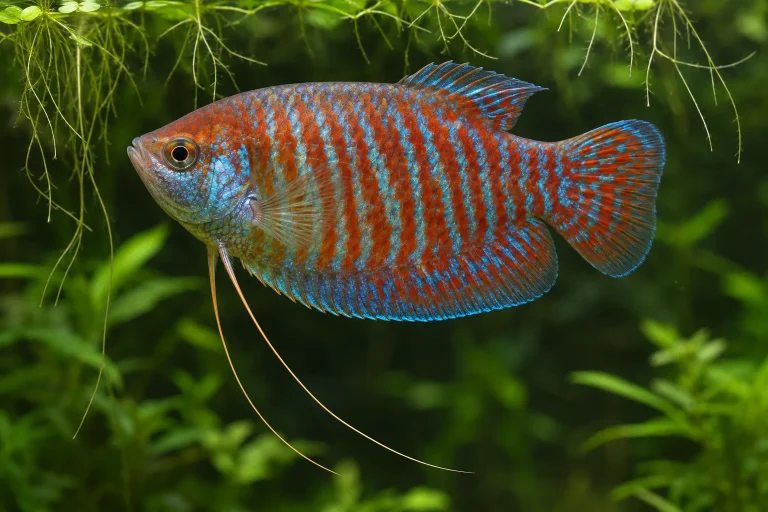
Dwarf Gourami
Trichogaster lalius
- Care level
- Intermediate
- Adult size
- 6–8.8 cm
- Minimum tank
- 55 litres
- Temperature
- 22–27 °C
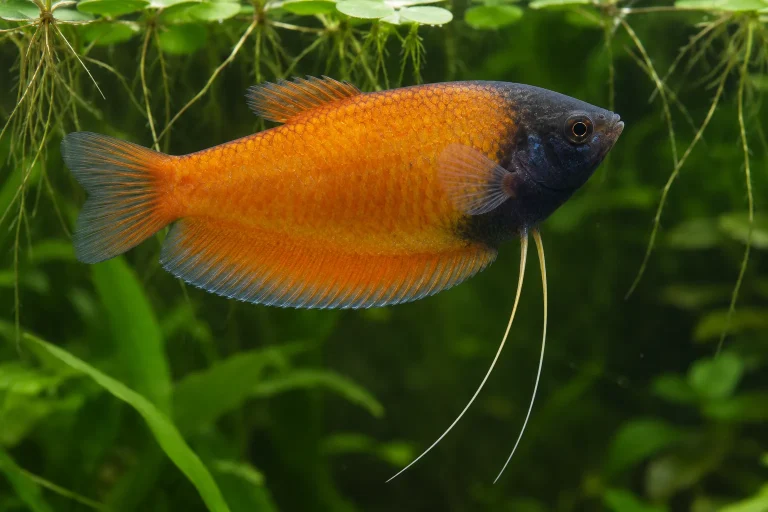
Honey Gourami
Trichogaster chuna
- Care level
- Beginner
- Adult size
- 4–5.5 cm
- Minimum tank
- 55 litres
- Temperature
- 22–27 °C
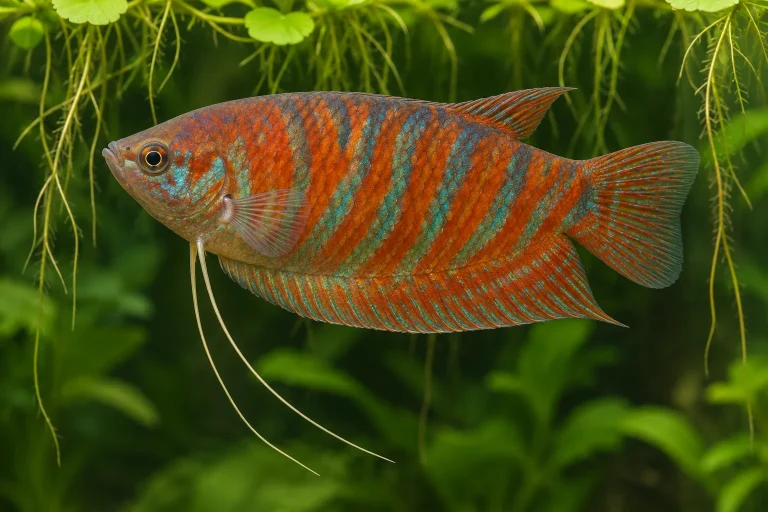
Banded Gourami
Trichogaster fasciata
- Care level
- Intermediate
- Adult size
- 10 cm
- Minimum tank
- 71 litres
- Temperature
- 21–28 °C
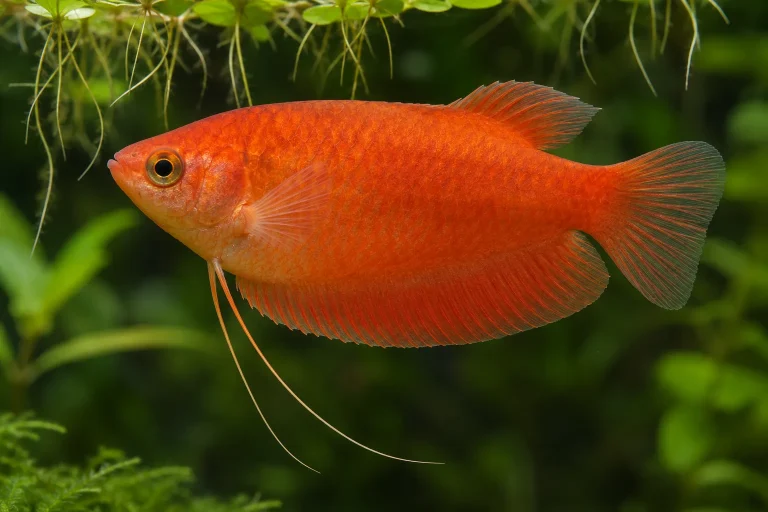
Red Robin Gourami
Trichogaster chuna var. "Red Robin"
- Care level
- Intermediate
- Adult size
- 5.5 cm
- Minimum tank
- 54 litres
- Temperature
- 22–27 °C