
Care Guide
Assassin Snail Care Guide
Assassin snails, Anentome helena, are freshwater snails known for hunting other snails. Their striking yellow-and-brown shells and burrowing behavior make them interesting animals in their own right, but they are most often purchased to control unwanted snail populations. That reputation can lead to poor planning: an assassin snail still needs suitable water, food, substrate, and long-term care after the pest snails decline.
They are not a substitute for correcting chronic overfeeding, which is one of the main reasons nuisance snail populations explode. If the aquarium continuously produces excess food, removing snails addresses the visible population rather than the cause. Keep assassin snails because you are prepared to feed and house them permanently, and consider their predatory behavior before placing them with ornamental snails you want to keep.

Tank Setup and Substrate
Assassin snails spend significant time on or beneath the substrate, so fine sand or smooth small gravel supports natural burrowing better than sharp material. Provide open patches where they can move easily along with wood, rock, or plants for structure. A secure lid is sensible for any snail aquarium.
Assassin snails are not rapid mass breeders like some common pest snails. They reproduce sexually, so a single individual cannot be assumed to produce a colony by itself. Eggs are typically laid individually on hard surfaces, and juveniles may remain hidden in substrate.
Water Conditions and Shell Health
Stable mineralized water supports shell maintenance. Very soft, acidic conditions can contribute to shell erosion over time. Test source water before adding random calcium products; GH, KH, and pH together give more useful context than assuming every shell mark means calcium deficiency.
Because males and females are not easily distinguished externally, breeding requires more than one snail with the possibility of both sexes being present. Population growth is usually much slower than bladder or ramshorn snail explosions, which makes long-term numbers easier to manage.
What Assassin Snails Eat
Assassin snails are carnivorous scavengers and predators. They may eat pest snails, carrion, and suitable protein-rich sinking foods. Once nuisance snails become scarce, the keeper must continue feeding them rather than assuming they can live indefinitely on algae or plant debris.
An inactive assassin may simply be buried, resting, or digesting a meal. Persistent inactivity combined with a foul smell, loss of body control, or failure to respond over time deserves closer investigation. Avoid repeatedly pulling a healthy buried snail out of the substrate to check it.
Using Assassin Snails for Pest-Snail Control
They hunt by locating and consuming other snails, but results depend on prey species, size, aquarium layout, and the number of assassins. They are not an instant eradication tool. A large pest-snail population may take time to decline even when predation is occurring.
Shell damage does not repair into perfect old shell, so judge current conditions by new growth near the shell opening. Stable appropriate minerals and a complete diet support new shell formation better than placing chalk or random mineral blocks in an untested tank.
Tank Mates and Snail Compatibility
Pest snails often multiply because excess fish food is available. If feeding remains excessive, young pest snails can continue appearing and organic waste remains high. Reduce chronic leftovers while assassins work so the aquarium no longer supports explosive prey reproduction.
When transferring assassins, acclimate them to meaningful differences in temperature and water chemistry. Snails can close their operculum and appear inactive after transport. Place them upright on substrate and give them time rather than repeatedly moving them.
Breeding and Population Growth
Do not keep assassin snails with ornamental snails you would be upset to lose. Nerites, mystery snails, rabbit snails, and other desirable species may be at risk depending on size and circumstances. Predatory behavior cannot be switched off because a particular snail is expensive.
If the original pest population disappears, decide whether you want to keep the assassins and feed them prepared foods, move them to another suitable aquarium, or responsibly rehome them. Buying a predator creates a continuing care obligation.
Health and Long-Term Care
Peaceful fish and many shrimp can coexist with assassins when water requirements overlap, but tiny or vulnerable invertebrates deserve caution. Avoid known snail-eating fish or crustaceans that may attack the assassins themselves.
Never intentionally introduce pest snails from questionable sources solely as food without considering disease, contaminants, or unwanted hitchhikers. Cultured foods and suitable prepared alternatives can reduce that risk.
Frequently Asked Questions
Do Assassin Snails Eat Pest Snails?
Assassin snails are carnivorous scavengers and predators. They may eat pest snails, carrion, and suitable protein-rich sinking foods. Once nuisance snails become scarce, the keeper must continue feeding them rather than assuming they can live indefinitely on algae or plant debris.
Will Assassin Snails Eat Nerite or Mystery Snails?
Assassin snails are carnivorous scavengers and predators. They may eat pest snails, carrion, and suitable protein-rich sinking foods. Once nuisance snails become scarce, the keeper must continue feeding them rather than assuming they can live indefinitely on algae or plant debris.
What Do Assassin Snails Eat After Pest Snails Are Gone?
Assassin snails are carnivorous scavengers and predators. They may eat pest snails, carrion, and suitable protein-rich sinking foods. Once nuisance snails become scarce, the keeper must continue feeding them rather than assuming they can live indefinitely on algae or plant debris.
Do Assassin Snails Eat Algae?
Assassin snails are carnivorous scavengers and predators. They may eat pest snails, carrion, and suitable protein-rich sinking foods. Once nuisance snails become scarce, the keeper must continue feeding them rather than assuming they can live indefinitely on algae or plant debris.
Can Assassin Snails Live With Shrimp?
Assassin snails spend significant time on or beneath the substrate, so fine sand or smooth small gravel supports natural burrowing better than sharp material. Provide open patches where they can move easily along with wood, rock, or plants for structure. A secure lid is sensible for any snail aquarium.
Do Assassin Snails Reproduce Quickly?
Do not keep assassin snails with ornamental snails you would be upset to lose. Nerites, mystery snails, rabbit snails, and other desirable species may be at risk depending on size and circumstances. Predatory behavior cannot be switched off because a particular snail is expensive.
Why Is My Assassin Snail Buried?
Assassin snails spend significant time on or beneath the substrate, so fine sand or smooth small gravel supports natural burrowing better than sharp material. Provide open patches where they can move easily along with wood, rock, or plants for structure. A secure lid is sensible for any snail aquarium.
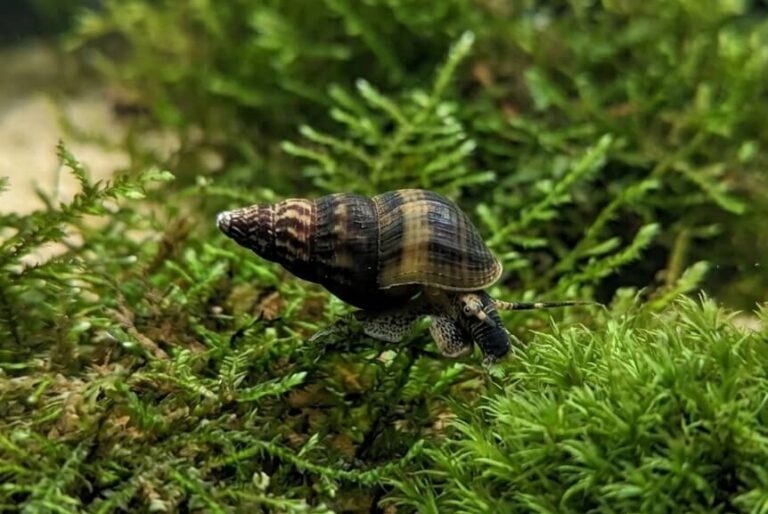
Assassin Snail
Anentome helena
- Care level
- Beginner
- Adult size
- 1.5–3 cm
- Minimum tank
- 20 litres
- Temperature
- 20–28 °C