
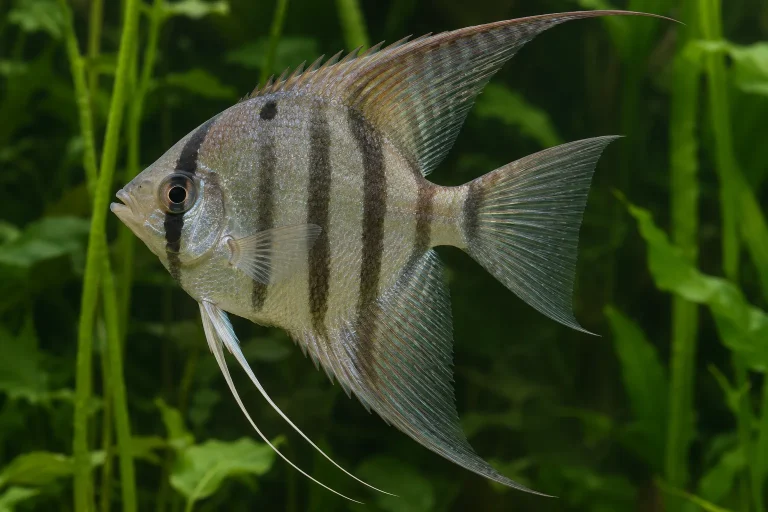
Leopold’s Angelfish
Pterophyllum leopoldi
- Care level
- Intermediate
- Adult size
- 10–15 cm
- Minimum tank
- 250 litres
- Temperature
- 25–29 °C
Species profile
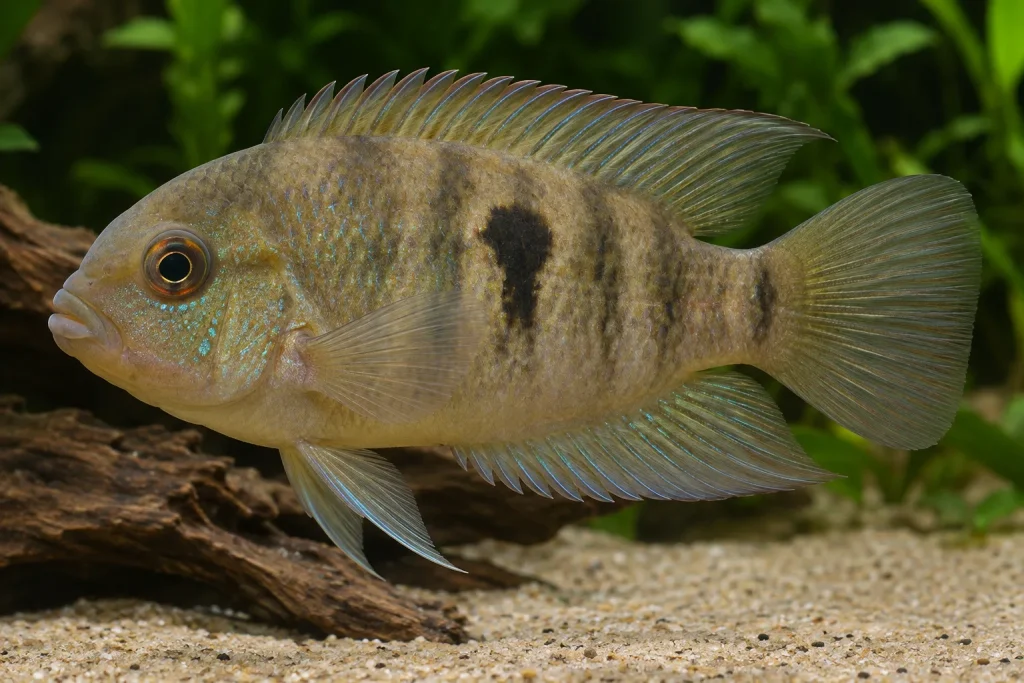
Cleithracara maronii
Common names: Keyhole Cichlid
Up to 12 cm
Typical adult length 8–12 cm.



A shy, peaceful Guianan cichlid recognised by a keyhole-shaped flank mark and suited to calm planted communities.
A beige to olive cichlid with a dark keyhole-shaped flank blotch, subtle bars, and blue-green iridescence.
The keyhole-shaped flank mark and rounded body are characteristic. Stress can darken the entire fish.
Males may be larger with more pointed dorsal and anal fins. Females become fuller before spawning.
Provide plants, wood, leaf litter, shaded retreats, open swimming areas, and a calm community. A group or compatible pair needs visual security.
Peaceful and cautious, often darkening or hiding when alarmed.
Can be kept as a pair or small group in a spacious calm aquarium.
Breeding pairs defend a modest area around eggs and fry.
Suitable with peaceful tetras, pencilfish, rasboras, and calm catfish. Tiny shrimp and fry may be eaten.
Soft slightly acidic water is preferred, though captive fish tolerate moderate mineral content when stable.
Some links may earn us a commission on qualifying purchases, at no extra cost to you. Check suitability, price and availability with the seller. How affiliate links work
 Manual aquarium siphon and gravel cleaner
A manual siphon for routine aquarium water changes and accessible waste removal. The seller lists a hose approximately 1.6 m long.
Control the flow and keep the intake clear of fish and delicate planting. Clean the areas appropriate for your substrate and layout rather than disturbing the entire planted bed.
An omnivore taking small invertebrates, plant matter, and prepared foods.
Use sinking and slowly falling foods so shy fish can feed without competition.
A biparental substrate spawner. Eggs are laid on a flat stone, leaf, or wood surface and guarded by both parents.
You can write a note about what worked for you, or send a photograph. We check everything before it appears here.
Pterophyllum leopoldi
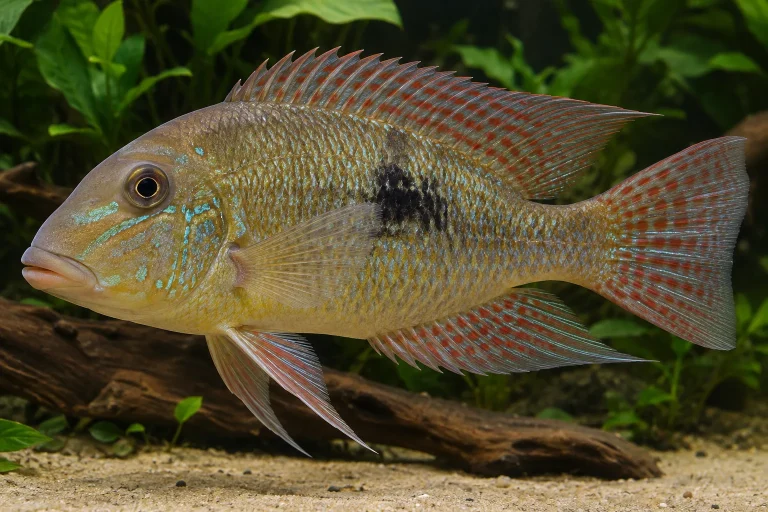
Geophagus megasema
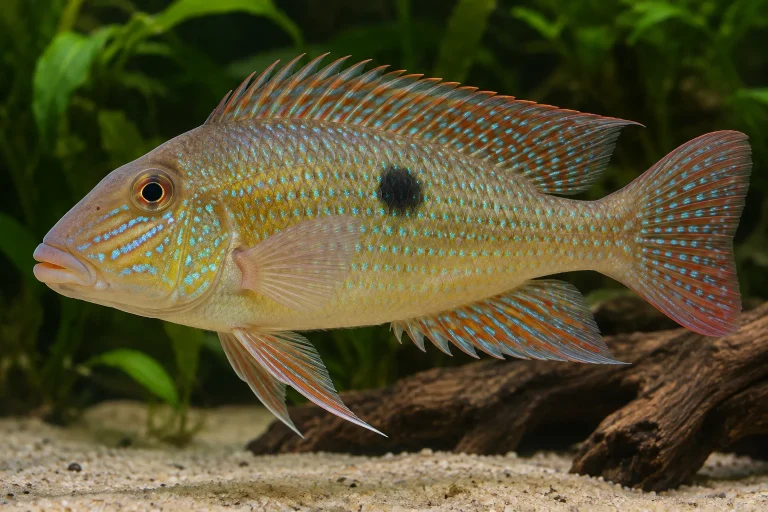
Geophagus mirabilis
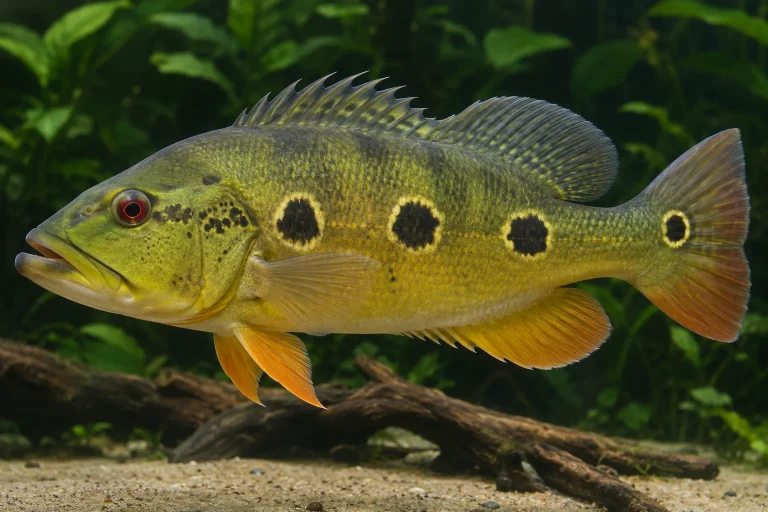
Cichla orinocensis