
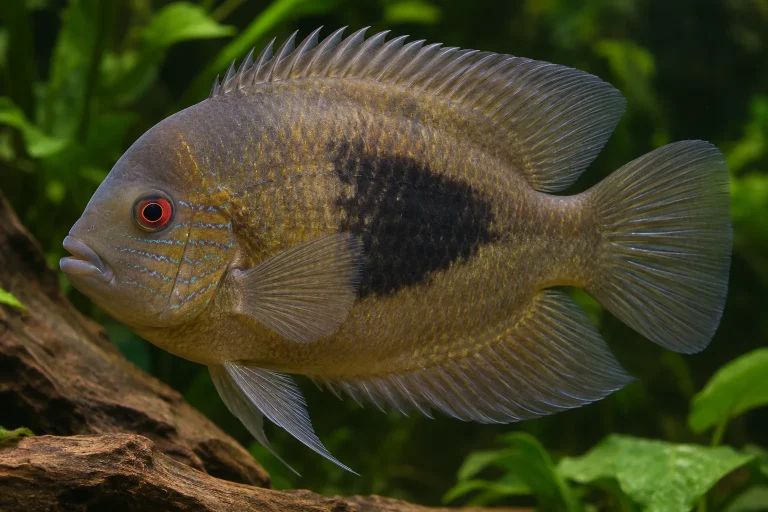
Uaru Cichlid
Uaru amphiacanthoides
- Care level
- Advanced
- Adult size
- 20–30 cm
- Minimum tank
- 600 litres
- Temperature
- 26–30 °C
Species profile
Geophagus sveni
Common names: Sveni Eartheater, Sven’s Eartheater
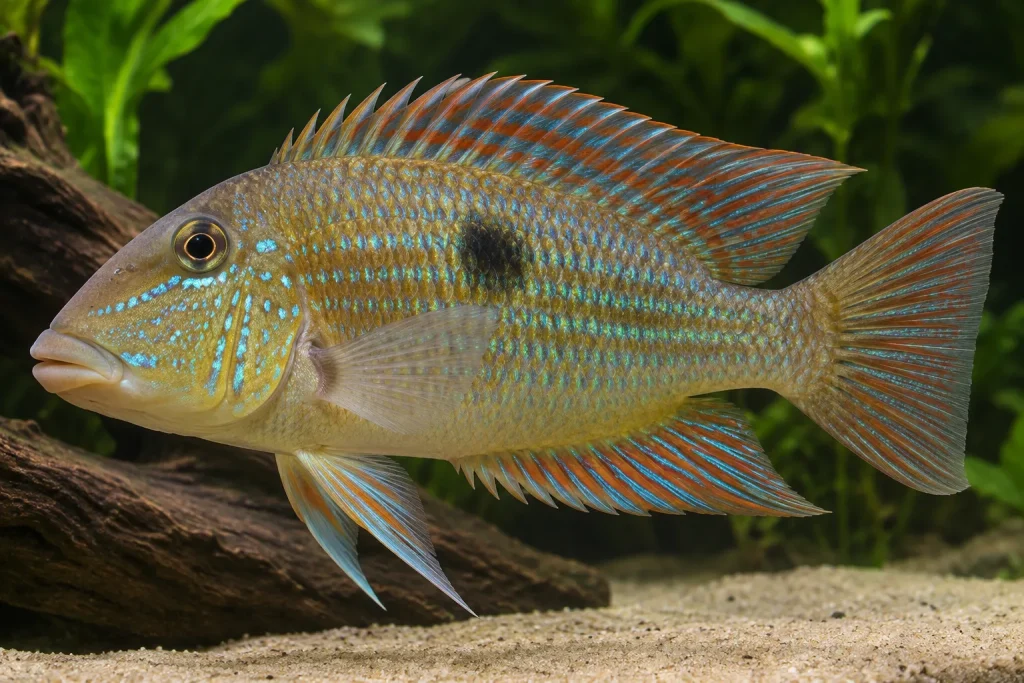
Up to 22 cm
Typical adult length 15–22 cm.

A colourful Brazilian eartheater that should be kept in a spacious group over fine sand.
A silver-gold Geophagus with a dark flank spot, extensive blue-green iridescence, and red-orange striping in the fins.
It is often sold under other Geophagus names. Adult caudal pattern, flank spot, body shape, and Tocantins provenance are useful.
Males may become larger with longer fins and stronger colour, but juveniles are difficult to sex.
Provide a broad fine-sand floor, powerful filtration, high oxygen, open swimming room, and a group of at least five.
Generally peaceful and social with temporary pair territoriality.
A group is essential for stable social behaviour.
Pairs defend a selected spawning site.
Use peaceful robust tank mates. Tiny fish and shrimp may be eaten.
Warm soft to moderately mineralised water is suitable when clean and stable.
Some links may earn us a commission on qualifying purchases, at no extra cost to you. Check suitability, price and availability with the seller. How affiliate links work
 Manual aquarium siphon and gravel cleaner
A manual siphon for routine aquarium water changes and accessible waste removal. The seller lists a hose approximately 1.6 m long.
Control the flow and keep the intake clear of fish and delicate planting. Clean the areas appropriate for your substrate and layout rather than disturbing the entire planted bed.
An omnivorous sand-sifter taking small invertebrates, detritus, and plant matter.
Spread several small sinking meals across the sand.
A biparental substrate spawner with both parents guarding the clutch and fry.
You can write a note about what worked for you, or send a photograph. We check everything before it appears here.
Uaru amphiacanthoides
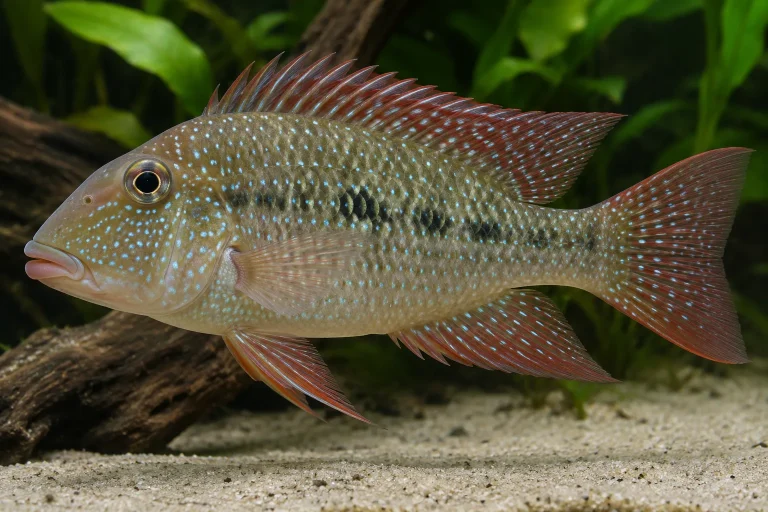
Satanoperca leucosticta
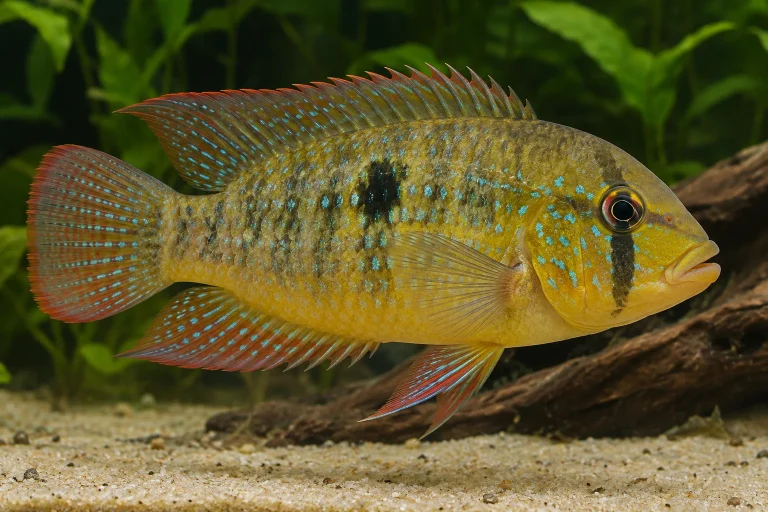
Aequidens metae
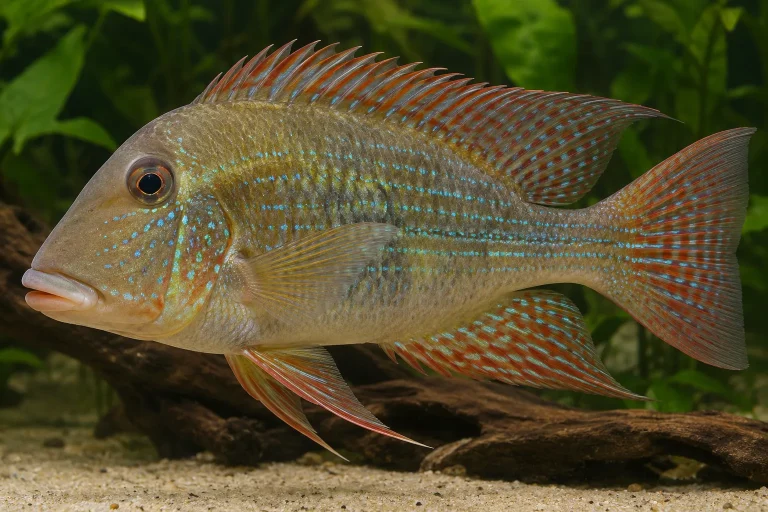
Geophagus altifrons