Skip to content
Menu

Species profile

Sparkling Gourami

Trichopsis pumila

Common names: Sparkling Gourami, Pygmy Gourami, Dwarf Croaking Gourami
Recognized speciesGouramis
Sparkling Gourami (Trichopsis pumila)

Adult size

Up to 4 cm

Typical adult length 3–4 cm.

Up to 4 cm

Countries of origin

  • See all stock from Cambodia
  • See all stock from Indonesia
  • See all stock from Laos
  • See all stock from Thailand
  • See all stock from Vietnam

Good fit for your tank?

Good fit for

  • A heavily planted nano aquarium
  • A small tank with very peaceful companions
  • A keeper who enjoys unusual behaviour and sounds

Think carefully if

  • Your tank has large or boisterous fish
  • Your filter creates a strong current
  • You want a bold, always visible display fish

A tiny gourami from the Mekong basin with iridescent spots. Small and quiet, it can make audible croaking sounds, and it is a good choice for a planted nano aquarium.

Appearance and Identification

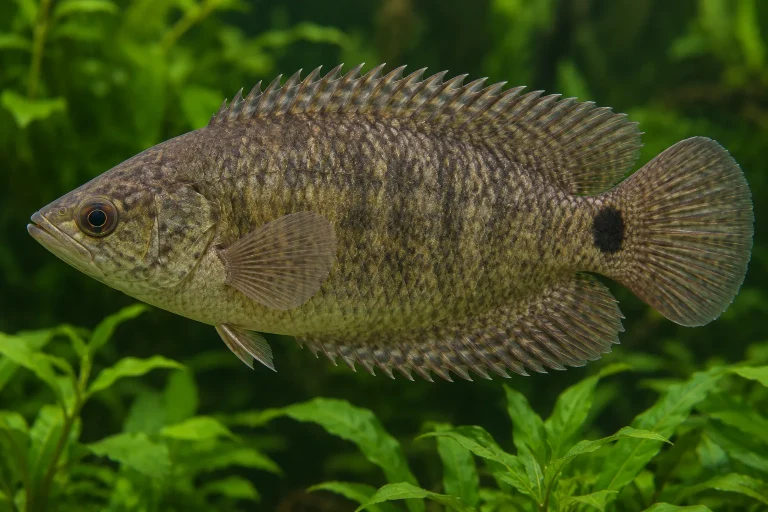
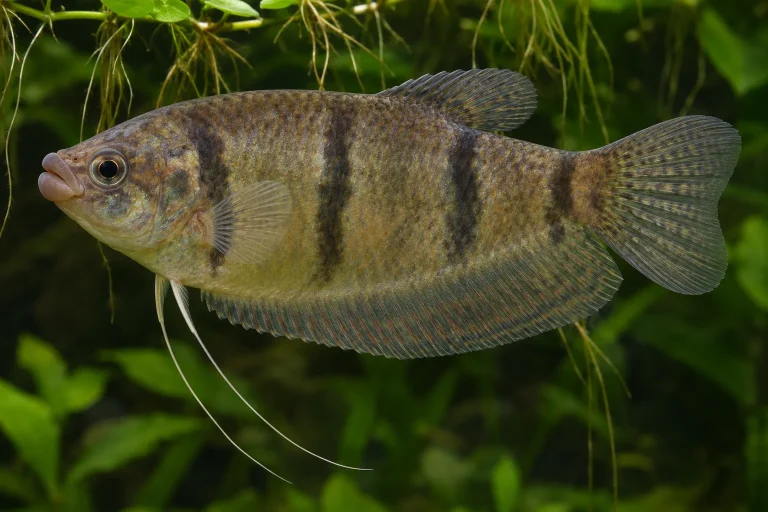
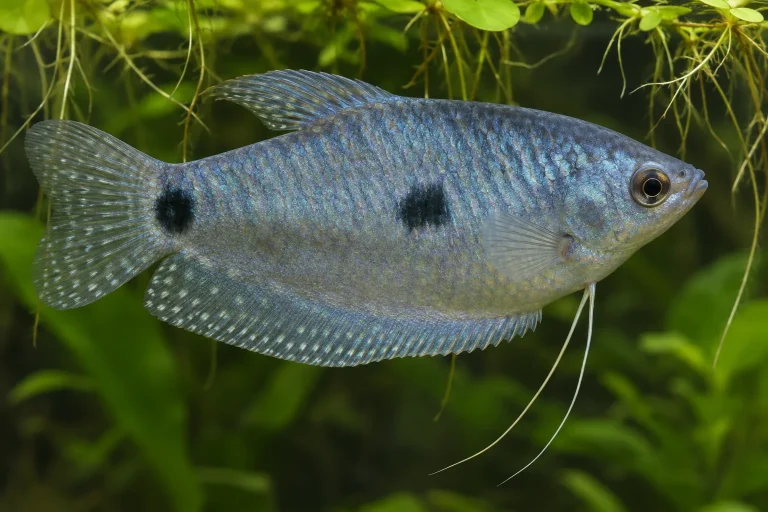
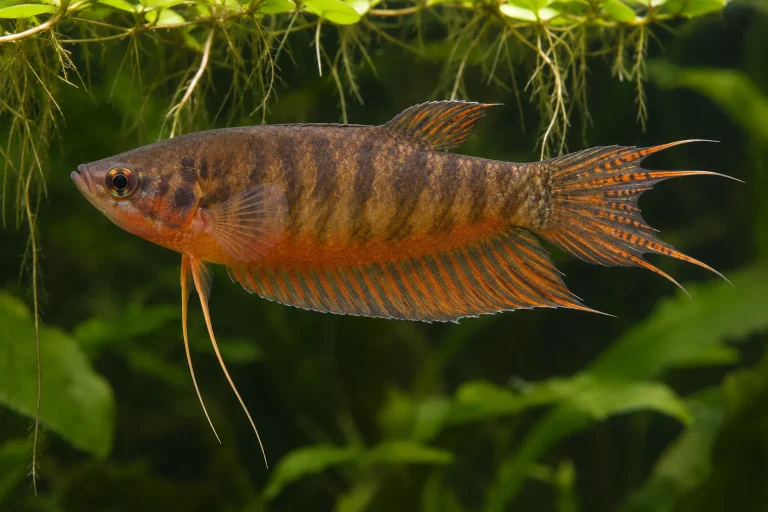
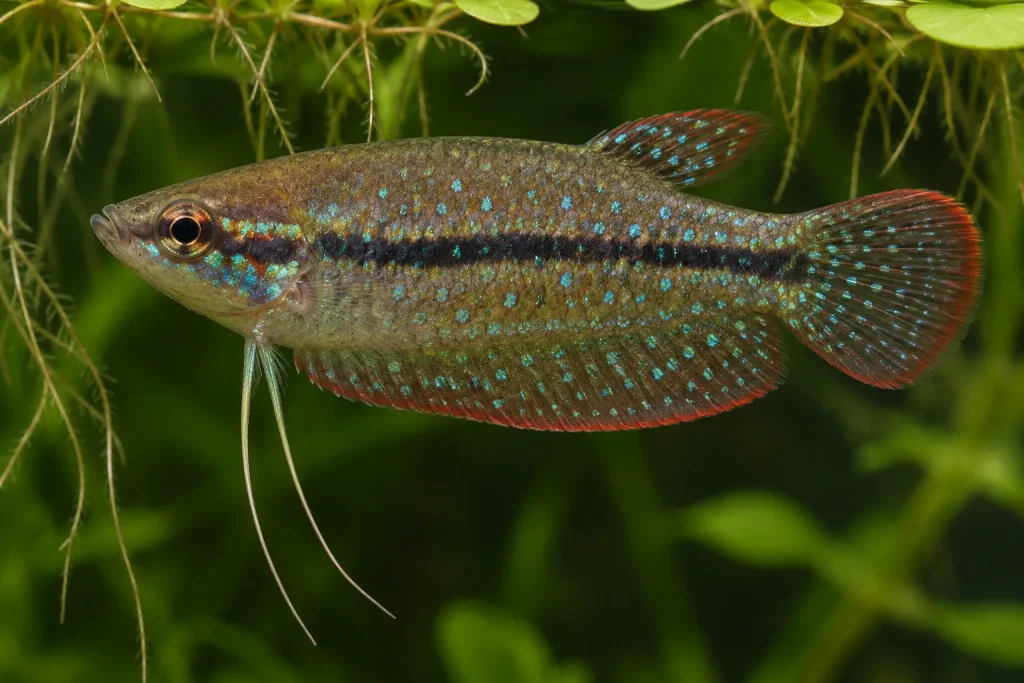
A very small, slim fish with a dark lateral stripe, iridescent blue-green spots, and red-edged fins that seem to sparkle under good lighting.

The Croaking Gourami, Trichopsis vittata, looks similar but grows larger. Check the size and fins when buying.

Hard to sex. Mature males show more intense colour and longer fins. Mature females can be identified by visible ovaries when strong light is placed behind the fish.

Tank Requirements

Suggested filter
About 80–120 litres an hour
Suggested heater
About 50–75 W for this tank
Minimum tank volume
40 litres
Minimum tank length
45 cm
Minimum group size
2
Recommended group size
6
Activity level
Low
Flow preference
Very low
Planting preference
Heavily planted
Hiding places
Yes
Lid recommended
Yes
Jumping risk
Low

Dense planting, floating cover, and a gentle sponge filter work well. A lid keeps the air warm, which matters for the fry and protects the labyrinth organ.

Behaviour and Tankmates

Quiet and often shy, spending time among plants. Males can produce audible croaks during displays.

Best kept in a pair or small group, either alone or with very peaceful, similarly sized fish.

Males may hold small territories and display at each other, but serious injury is unusual.

Suits small rasboras, ember tetras, otocinclus, and small peaceful catfish. Adult dwarf shrimp are generally fine, although shrimplets may be taken.

Check tankmates for this species

Water Parameters

Temperature
22–28 °C
pH
5–7.5
GH
1–12
Stability importance
Important

Soft to moderately hard water suits this fish. Keep the air and water temperature close to each other.

Parameter caveat
Small tanks change quickly, so keep up with gentle water changes. Gouramis breathe air from the surface, so keep the surface accessible and the air above it warm with a lid.

Feeding

Diet types
Insectivore, Omnivore
Feeding frequency
Once or twice daily
Preferred foods
  • Fine micro granules or crushed flakeUse a particle size the fish can swallow whole, and feed only what is eaten within a couple of minutes.
  • Frozen or live daphnia and cyclopsSmall crustaceans add variety and help bring adults into breeding condition.
  • Frozen or newly hatched brine shrimpA good small meat food a few times a week rather than the only food.

A micropredator that takes tiny invertebrates and small prepared foods.

Use very small foods, and make sure faster fish do not take them first.

Breeding

Breeding type
Bubble Nest
Breeding difficulty
Moderate
Brood or egg count
Typically dozens of small eggs
Incubation
2 days
Parental care
Bubble-nest care
Baby foods
  • Infusoria or parameciumEssential for the first days, because labyrinth fry are tiny and cannot yet take larger food.
  • Vinegar eels or microwormsIntroduce as the fry grow, and offer in small amounts to protect water quality.
  • Newly hatched brine shrimpIntroduce once the fry can swallow it, usually after one to two weeks.

A bubble nester. The male builds the nest, embraces the female to spawn, and then collects the eggs and returns them to the nest. Eggs hatch in 24 to 48 hours, and fry need very small food.

Habitat and Origin

Geographic origin
Cambodia, Indonesia, Laos, Southeast Asia, Thailand, Vietnam
Natural habitat
Pond, Rice Field, Swamp, Vegetated Shoreline
Aquarium contexts
Breeding Aquarium, Nano Aquarium, Planted Aquarium
Audience level
Intermediate

Classification

Profile type
Recognized species
Genus
Trichopsis
Family
Osphronemidae
Species group
Fish, Gouramis

Have you kept this species?

You can write a note about what worked for you, or send a photograph. We check everything before it appears here.

Share a note or photo

JPG, PNG, or WebP, up to 5 MB.